Genetika člověka
 Mikrobiologické aplikace
 NGS
 Rapid testy

 PCR plasty
 Pipetovací špičky
 Plasty pro buněčnou kultivaci
 Systém pro dlouhodobé skladování vzorků
 Zkumavky

 Třepačky
 Suché lázně
 Centrifugy
 End Point cyclery
 Real-time PCR cyclery
 Fluorometry
 Spektrofotometry
 Izolátory nukleových kyselin
 Pipetovací roboty
 Biobanking
 Live Cell Imaging

 Jednokanálové
 Multikanálové
 Sérologické pipety
 Jednorázové pipety

 Buněčné kultury
 PCR, qPCR, RT
 Detekce Mycoplasmat
 Reverzní transkripce

 Alergie
 Intolerance
 Elisa
 Imunologické analyzátory
 Veterinární imunologie
 Alergie u zvířat
 Intolerance u zvířat

 Čtečky identifikačních čipů
 Termočipy
 Biochemie
 Imunoanalýza


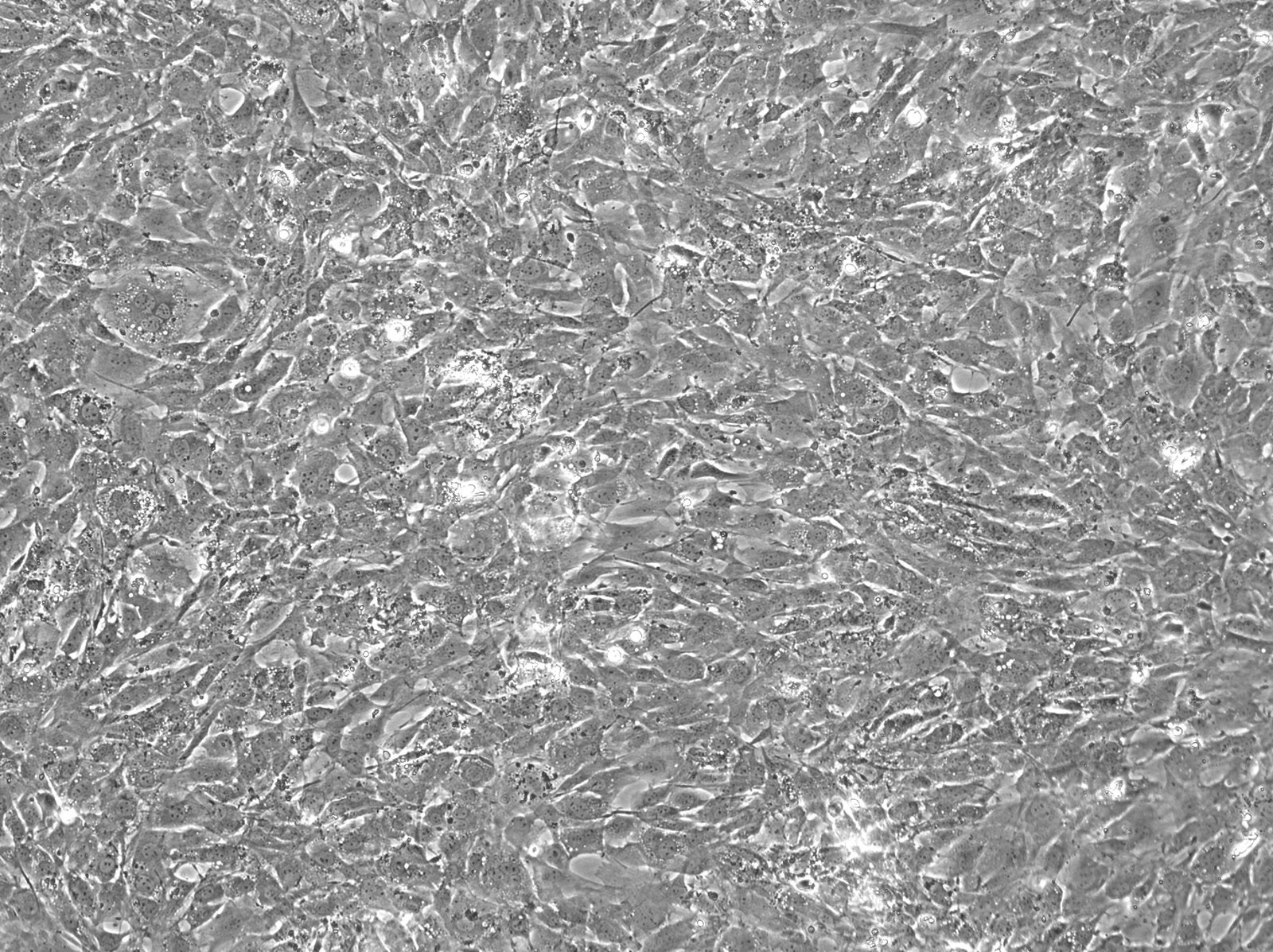

CASP-1-1 Cells
| Unit |
3 x 10^6 cells/ml |
|---|---|
| Cell Type |
Tumor Cells |
| Organism |
Mouse |
| Donor History |
Carcinoma |
| Growth Properties |
Adherent |
| Growth Conditions |
Culture medium: DMEM:Ham's F12 (1:1) ,w: 3.1 g/L Glucose ,w: 2.5 mM L-Glutamine ,w: 15 mM HEPES ,w: 0.5 mM Sodium pyruvate ,w: 1.2 g/L NaHCO3 (Cytion article number 820400a). Supplements: Supplement the medium with 10% FBS. Dissociation reagent: Accutase. Seeding density: 1-3*10^4/cm². Freeze medium: As a cryopreservation medium ,we use complete growth medium + 10% DMSO for adequate post-thaw viability. Incubation atmosphere: 37°C ,5% CO2 ,humidified atmosphere. |
| Immortalization Method | |
| Full Information |

The CASP-1-1 cell line is a genetically engineered mouse prostate epithelial cell model, part of the CASP series established from primary, androgen-dependent prostate tumors in mice. These cells were derived using tissue recombination methods involving the urogenital sinus mesenchyme (UGM), enabling the formation of prostatic ducts in vivo, thus confirming their epithelial identity. CASP-1-1 cells express epithelial markers such as E-cadherin and demonstrate tumorigenic potential through anchorage-independent growth in vitro and tumor formation upon orthotopic injection into mouse prostates. They are immortalized and stable in long-term culture, having been maintained for at least 30 passages.
Genetically, CASP-1-1 cells are characterized by a heterozygous Pten status (+/−) and show medium levels of activated Akt (p-Akt), reflecting functional PI3K/Akt signaling alterations common in prostate cancer models. The androgen receptor (AR) is both transcriptionally and translationally expressed in these cells, and sequencing has revealed no mutations in the AR coding region. However, despite expressing wild-type AR, CASP-1-1 is androgen-independent, meaning its proliferation is not reliant on exogenous androgens, and it does not exhibit androgen-responsive promoter activity under standard assay conditions. This makes CASP-1-1 particularly useful for studying the transition from androgen-dependent to androgen-independent prostate cancer and the role of Pten/PI3K/Akt and AR signaling in this progression.
Společnost Cytion vznikla v roce 2004 v německém Heidelbergu s jasným vědeckým posláním: dodávat ověřené lidské a zvířecí buněčné linie bez kontaminace, připravené za přísně kontrolovaných laboratorních podmínek.
Postupně se vypracovala ve spolehlivou buněčnou banku, která slouží akademickým laboratořím, biotechnologickým firmám i farmaceutickým výzkumným týmům po celém světě. Klade přitom důraz na reprodukovatelnost výsledků, přísnou kontrolu kvality a dlouhodobá partnerství.