
 Genetika člověka
 Mikrobiologické aplikace
 NGS
 Rapid testy

 PCR plasty
 Pipetovací špičky
 Plasty pro buněčnou kultivaci
 Systém pro dlouhodobé skladování vzorků
 Zkumavky

 Třepačky
 Suché lázně
 Centrifugy
 End Point cyclery
 Real-time PCR cyclery
 Fluorometry
 Spektrofotometry
 Izolátory nukleových kyselin
 Pipetovací roboty
 Biobanking
 Live Cell Imaging

 Jednokanálové
 Multikanálové
 Sérologické pipety
 Jednorázové pipety

 Buněčné kultury
 PCR, qPCR, RT
 Detekce Mycoplasmat
 Reverzní transkripce

 Alergie
 Intolerance
 Elisa
 Imunologické analyzátory
 Veterinární imunologie
 Alergie u zvířat
 Intolerance u zvířat

 Čtečky identifikačních čipů
 Termočipy
 Biochemie
 Imunoanalýza


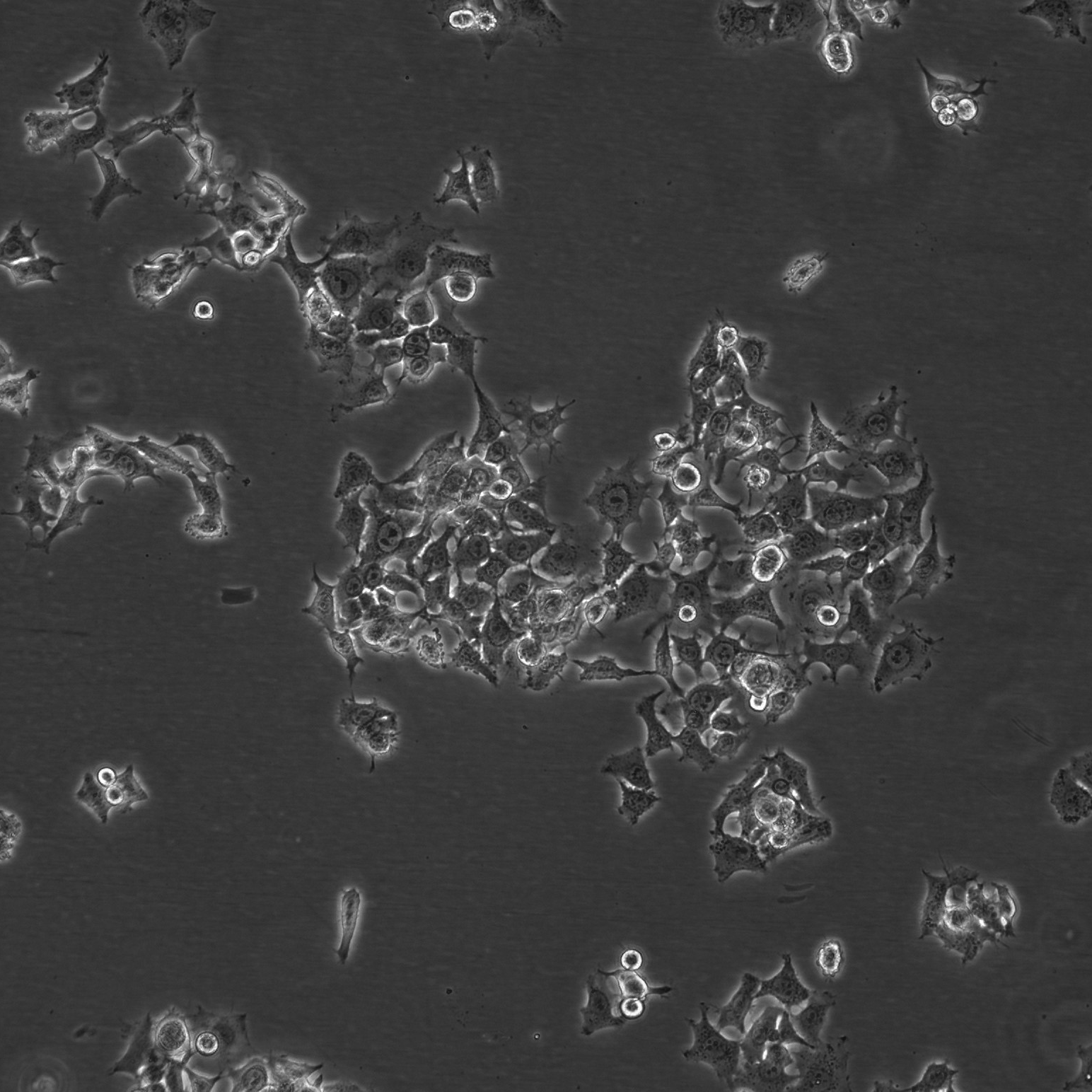

HCC1588 Cells
| Unit |
3 x 10^6 cells/ml |
|---|---|
| Cell Type |
Tumor Cells |
| Tissue Type |
Lung cancer cell lines |
| Organism |
Human |
| Donor History |
Lung squamous cell carcinoma |
| Growth Properties |
Adherent |
| Growth Conditions |
Culture medium: RPMI 1640 ,w: 2.0 mM stable Glutamine ,w: 2.0 g/L NaHCO3 (Cytion article number 820700a). Supplements: Supplement the medium with 10% FBS. Dissociation reagent: Accutase. Seeding density: 1 to 3 x 10⁴ cells/cm². Freeze medium: As a cryopreservation medium ,we use complete growth medium + 10% DMSO for adequate post-thaw viability. Incubation atmosphere: 37°C ,5% CO2 ,humidified atmosphere. |
| Immortalization Method | |
| Full Information |

HCC1588 is a human breast cancer cell line derived from a patient with primary breast carcinoma and is classified within the basal-like subtype of breast cancer. This cell line is representative of triple-negative breast cancer (TNBC), lacking expression of estrogen receptor (ER), progesterone receptor (PR), and HER2 amplification. As a basal-like model, HCC1588 exhibits molecular characteristics associated with aggressive tumor behavior, including high proliferative capacity, genomic instability, and enrichment of gene expression programs linked to epithelial-to-mesenchymal transition and stem-like phenotypes.
Molecular profiling of large cancer cell line panels has demonstrated that breast cancer cell lines such as HCC1588 contribute to the diversity of genomic and transcriptomic alterations used to model tumor heterogeneity and therapeutic response. Across integrated pharmacogenomic studies, cancer cell lines recapitulate key oncogenic alterations observed in primary tumors and are routinely used to correlate genetic features with drug sensitivity across hundreds of compounds. In addition, standardized annotation and authentication frameworks emphasize the importance of consistent molecular characterization, including short tandem repeat and SNP profiling, to ensure reproducibility and accurate lineage classification in widely used models such as HCC1588.
Functionally, HCC1588 is frequently employed in studies investigating mechanisms of tumor progression, DNA damage response, and resistance to chemotherapeutic and targeted agents in triple-negative breast cancer. Its basal-like phenotype and lack of hormone receptor signaling make it particularly valuable for evaluating novel therapeutic strategies aimed at aggressive, treatment-refractory breast cancer subtypes.
Společnost Cytion vznikla v roce 2004 v německém Heidelbergu s jasným vědeckým posláním: dodávat ověřené lidské a zvířecí buněčné linie bez kontaminace, připravené za přísně kontrolovaných laboratorních podmínek.
Postupně se vypracovala ve spolehlivou buněčnou banku, která slouží akademickým laboratořím, biotechnologickým firmám i farmaceutickým výzkumným týmům po celém světě. Klade přitom důraz na reprodukovatelnost výsledků, přísnou kontrolu kvality a dlouhodobá partnerství.