Genetika člověka
 Mikrobiologické aplikace
 NGS
 Rapid testy

 PCR plasty
 Pipetovací špičky
 Plasty pro buněčnou kultivaci
 Systém pro dlouhodobé skladování vzorků
 Zkumavky

 Třepačky
 Suché lázně
 Centrifugy
 End Point cyclery
 Real-time PCR cyclery
 Fluorometry
 Spektrofotometry
 Izolátory nukleových kyselin
 Pipetovací roboty
 Biobanking
 Live Cell Imaging

 Jednokanálové
 Multikanálové
 Sérologické pipety
 Jednorázové pipety

 Buněčné kultury
 PCR, qPCR, RT
 Detekce Mycoplasmat
 Reverzní transkripce

 Alergie
 Intolerance
 Elisa
 Imunologické analyzátory
 Veterinární imunologie
 Alergie u zvířat
 Intolerance u zvířat

 Čtečky identifikačních čipů
 Termočipy
 Biochemie
 Imunoanalýza


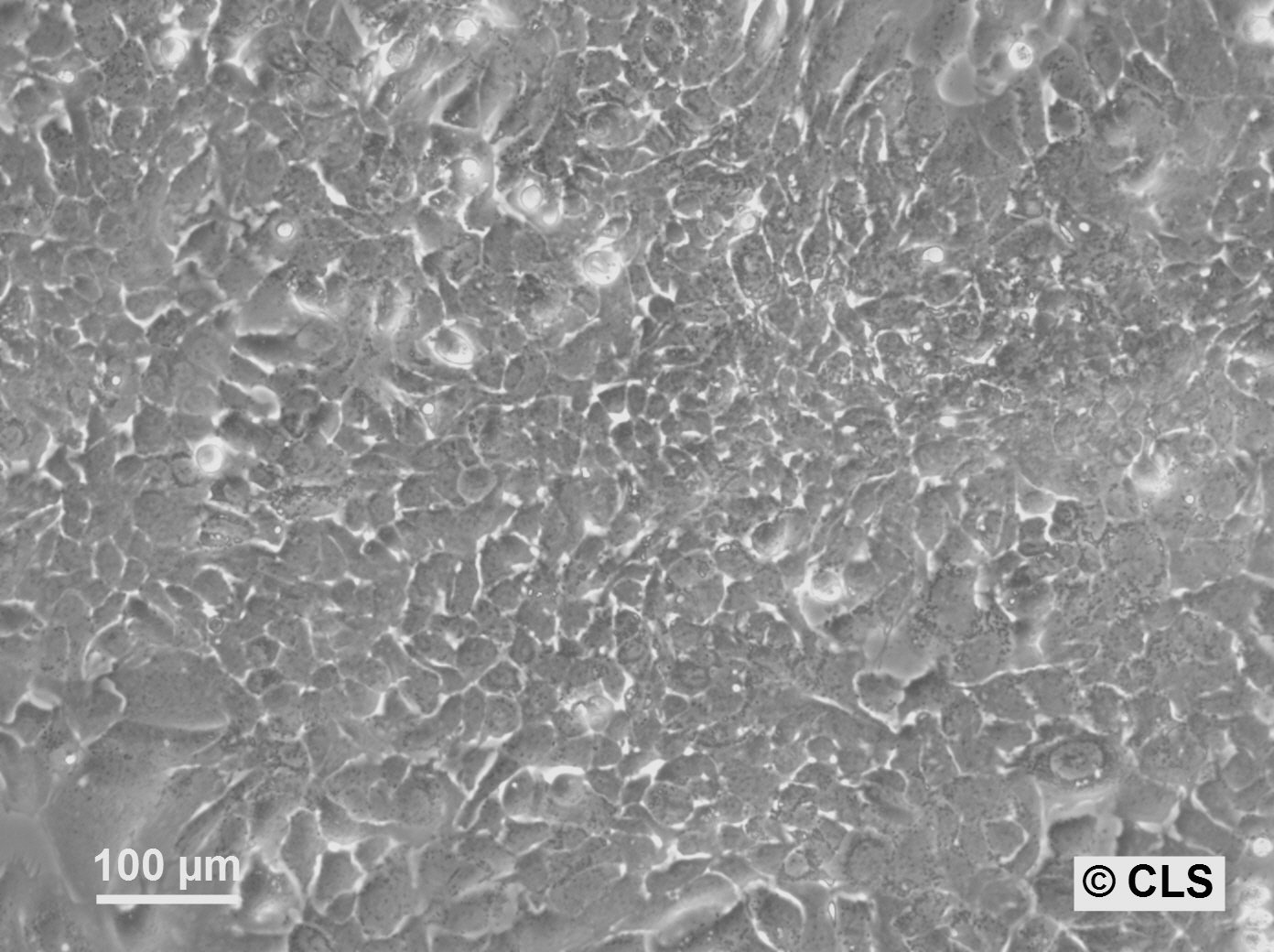

HROHep03 Cells
| Unit |
3 x 10^6 cells/ml |
|---|---|
| Cell Type |
Tumor Cells |
| Tissue Type |
Liver cancer cell lines |
| Organism |
Human |
| Donor History |
Primary adenocarcinoma ,T0NxMx stage ,grade 3 |
| Growth Properties |
Adherent |
| Growth Conditions |
Culture medium: DMEM:Ham's F12 (1:1) ,w: 3.1 g/L Glucose ,w: 2.5 mM L-Glutamine ,w: 15 mM HEPES ,w: 0.5 mM Sodium pyruvate ,w: 1.2 g/L NaHCO3 (Cytion article number 820400a). Supplements: Supplement the medium with 10% FBS. Dissociation reagent: Accutase. Seeding density: 2 x 10⁴ cells/cm². Freeze medium: As a cryopreservation medium ,we use complete growth medium (including FBS) + 10% DMSO for adequate post-thaw viability ,or CM-1 (Cytion catalog number 800100) ,which includes optimized osmoprotectants and metabolic stabilizers to enhance recovery and reduce cryo-induced stress. Incubation atmosphere: 37°C ,5% CO2 ,humidified atmosphere. |
| Immortalization Method | |
| Full Information |

HROHep03 is a human hepatocellular adenocarcinoma cell line established from the primary liver tumor of a 71-year-old Caucasian female patient within the HRO biobank series of patient-derived tumor cell lines developed by PD Dr. Michael Linnebacher since 2006. The tumor was classified as a primary adenocarcinoma at TNM stage T0NxMx, grade 3, reflecting a high-grade hepatic adenocarcinoma without confirmed distant metastasis at the time of tissue harvest. HROHep03 grows as an adherent monolayer with fibroblast-like morphology and was confirmed free of human pathogenic viruses HBV, HCV, and HIV, consistent with the stringent quality control standards of the Linnebacher biobank series.
HROHep03 is applicable in hepatocellular adenocarcinoma research, studies of high-grade liver tumor cell biology, drug sensitivity and resistance testing (sorafenib, cisplatin, 5-FU), liver tumor invasion and migration assays, and molecular pathway analysis. As part of the HRO biobank, this line provides a patient-specific biological resource that can be paired with matched immunological material from the same patient for personalized oncology research. Its fibroblast-like morphology distinguishes it phenotypically from the more common hepatocyte-like HCC lines and may reflect epithelial-to-mesenchymal features acquired during tumor progression or in vitro adaptation.
Společnost Cytion vznikla v roce 2004 v německém Heidelbergu s jasným vědeckým posláním: dodávat ověřené lidské a zvířecí buněčné linie bez kontaminace, připravené za přísně kontrolovaných laboratorních podmínek.
Postupně se vypracovala ve spolehlivou buněčnou banku, která slouží akademickým laboratořím, biotechnologickým firmám i farmaceutickým výzkumným týmům po celém světě. Klade přitom důraz na reprodukovatelnost výsledků, přísnou kontrolu kvality a dlouhodobá partnerství.