Genetika člověka
 Mikrobiologické aplikace
 NGS
 Rapid testy

 PCR plasty
 Pipetovací špičky
 Plasty pro buněčnou kultivaci
 Systém pro dlouhodobé skladování vzorků
 Zkumavky

 Třepačky
 Suché lázně
 Centrifugy
 End Point cyclery
 Real-time PCR cyclery
 Fluorometry
 Spektrofotometry
 Izolátory nukleových kyselin
 Pipetovací roboty
 Biobanking
 Live Cell Imaging

 Jednokanálové
 Multikanálové
 Sérologické pipety
 Jednorázové pipety

 Buněčné kultury
 PCR, qPCR, RT
 Detekce Mycoplasmat
 Reverzní transkripce

 Alergie
 Intolerance
 Elisa
 Imunologické analyzátory
 Veterinární imunologie
 Alergie u zvířat
 Intolerance u zvířat

 Čtečky identifikačních čipů
 Termočipy
 Biochemie
 Imunoanalýza


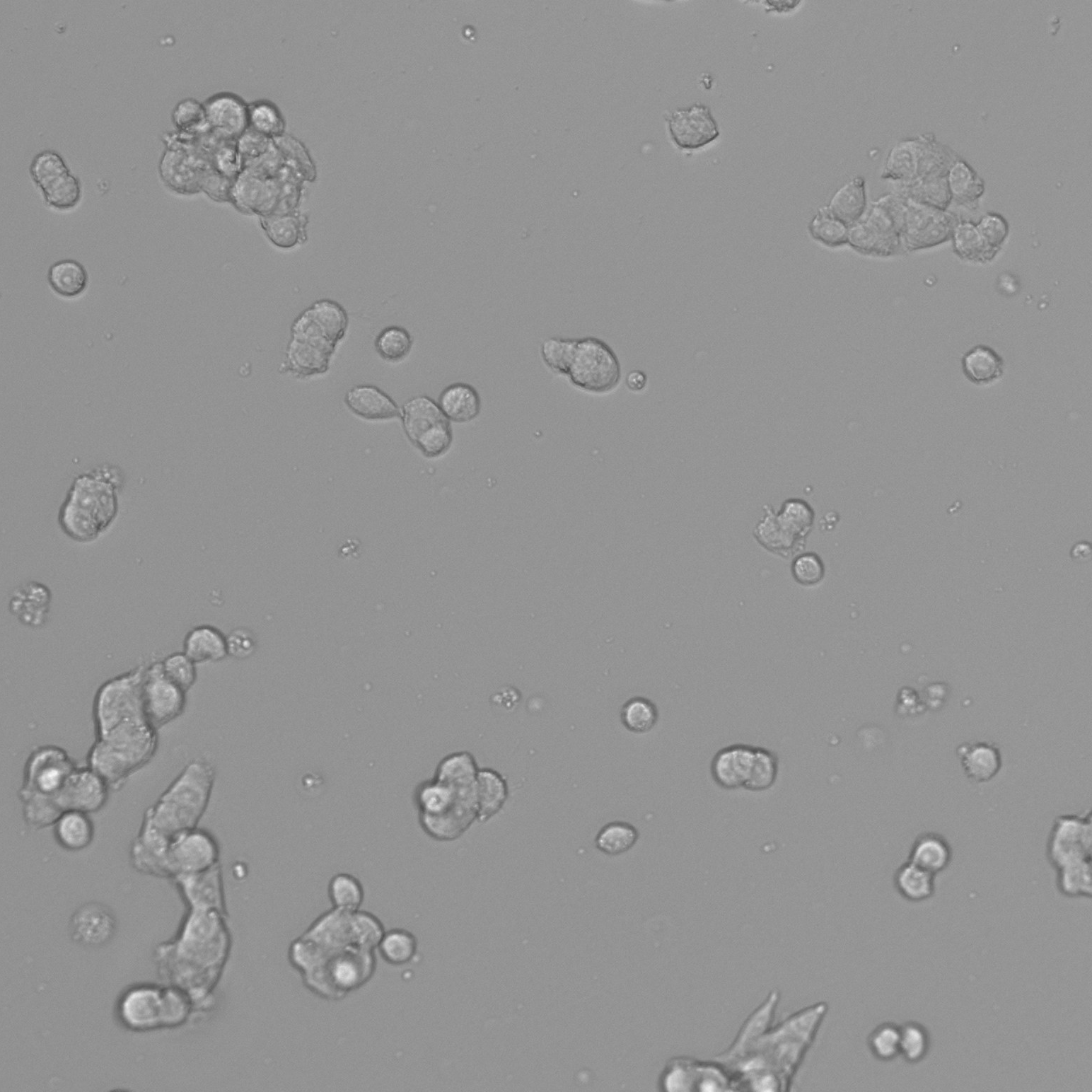

LS180 Cells
| Unit |
3 x 10^6 cells/ml |
|---|---|
| Cell Type |
Tumor Cells |
| Tissue Type |
Intestine cancer cell lines |
| Organism |
Human |
| Donor History |
Adenocarcinoma |
| Growth Properties |
Adherent |
| Growth Conditions |
Culture medium: EMEM (MEM Eagle) ,w: 2 mM L-Glutamine ,w: 2.2 g/L NaHCO3 ,w: EBSS (Cytion article number 820100a). Supplements: Supplement the medium with 10% FBS. Dissociation reagent: Accutase. Freeze medium: As a cryopreservation medium ,we use complete growth medium (including FBS) + 10% DMSO for adequate post-thaw viability ,or CM-1 (Cytion catalog number 800100) ,which includes optimized osmoprotectants and metabolic stabilizers to enhance recovery and reduce cryo-induced stress. Incubation atmosphere: 37°C ,5% CO2 ,humidified atmosphere. |
| Immortalization Method | |
| Full Information |

LS180 is a human colon adenocarcinoma cell line established from the primary tumor of an adult female patient with moderately well-differentiated colon adenocarcinoma that had metastasized to the pericolic adipose tissue. The cells are epithelial in morphology, with an oval to polygonal shape and diameters ranging from 20 to 40 μm. They exhibit ultrastructural characteristics typical of normal colonic mucosal cells, including abundant microvilli-particularly prominent in secretory cells-and the presence of intracytoplasmic mucin vacuoles. These cells display hallmark features of neoplasia, including high levels of carcinoembryonic antigen (CEA) production and the ability to form tumors in both hamster cheek pouches and immunodeficient mice, indicating their tumorigenic potential in vivo.
LS180 cells were notable for their exceptionally high levels of CEA production, releasing approximately 900 times more CEA per cell into the culture medium and carrying 30 times more cell-associated CEA than other colon cancer lines such as HT-29. This makes LS180 a valuable model for studying the biochemical, immunological, and functional properties of neoplastic colonic epithelium, particularly in relation to CEA-associated tumor markers. The cells have been karyotyped and confirmed to have abnormal chromosomal complements consistent with neoplastic transformation. Their epithelial identity and tumor-associated traits make them suitable for use in immunological assays, drug screening, and studies on colorectal cancer biology and therapeutic response.
Additionally, LS180 is part of the Cancer Cell Line Encyclopedia (CCLE), where it has been deeply characterized through multi-omics profiling including proteomics, transcriptomics, and mutation data. LS180 is classified as a microsatellite instable (MSI) cell line, a phenotype associated with a hypermutated genome and known to affect proteome organization and therapeutic vulnerabilities. The proteomic analysis of LS180 revealed that MSI cell lines, including LS180, exhibit significant dysregulation of protein complexes involved in mutation surveillance and translational control, offering insights into mechanisms of drug sensitivity and resistance. The proteomic data further support that large-scale pathway-level coordination in protein expression in LS180 is decoupled from RNA expression, underscoring the importance of direct protein-level investigations.
Společnost Cytion vznikla v roce 2004 v německém Heidelbergu s jasným vědeckým posláním: dodávat ověřené lidské a zvířecí buněčné linie bez kontaminace, připravené za přísně kontrolovaných laboratorních podmínek.
Postupně se vypracovala ve spolehlivou buněčnou banku, která slouží akademickým laboratořím, biotechnologickým firmám i farmaceutickým výzkumným týmům po celém světě. Klade přitom důraz na reprodukovatelnost výsledků, přísnou kontrolu kvality a dlouhodobá partnerství.