
 Genetika člověka
 Mikrobiologické aplikace
 NGS
 Rapid testy

 PCR plasty
 Pipetovací špičky
 Plasty pro buněčnou kultivaci
 Systém pro dlouhodobé skladování vzorků
 Zkumavky

 Třepačky
 Suché lázně
 Centrifugy
 End Point cyclery
 Real-time PCR cyclery
 Fluorometry
 Spektrofotometry
 Izolátory nukleových kyselin
 Pipetovací roboty
 Biobanking
 Live Cell Imaging

 Jednokanálové
 Multikanálové
 Sérologické pipety
 Jednorázové pipety

 Buněčné kultury
 PCR, qPCR, RT
 Detekce Mycoplasmat
 Reverzní transkripce

 Alergie
 Intolerance
 Elisa
 Imunologické analyzátory
 Veterinární imunologie
 Alergie u zvířat
 Intolerance u zvířat

 Čtečky identifikačních čipů
 Termočipy
 Biochemie
 Imunoanalýza


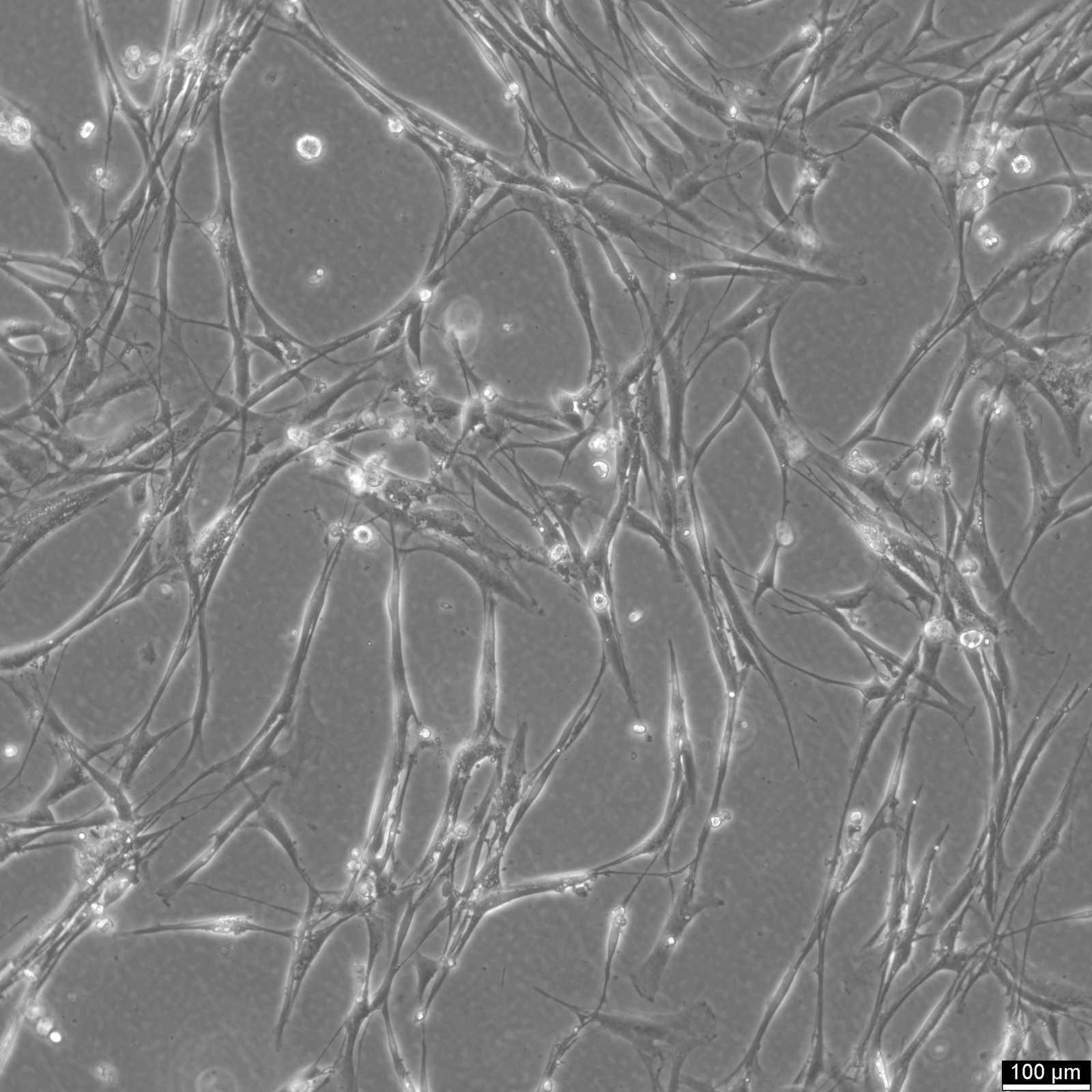

Wilms10M Cells
| Unit |
3 x 10^6 cells/ml |
|---|---|
| Cell Type |
Tumor Cells |
| Tissue Type |
Kidney cancer cell lines |
| Organism |
Human |
| Donor History |
Wilms tumor |
| Growth Properties |
Adherent |
| Growth Conditions |
Culture medium: MSCGM kit (from Lonza). Dissociation reagent: Accutase. Freeze medium: As a cryopreservation medium ,we use complete growth medium (including FBS) + 10% DMSO for adequate post-thaw viability ,or CM-1 (Cytion catalog number 800100) ,which includes optimized osmoprotectants and metabolic stabilizers to enhance recovery and reduce cryo-induced stress. Incubation atmosphere: 37°C ,5% CO2 ,humidified atmosphere. |
| Immortalization Method | |
| Full Information |

The Wilms10M cell line was established from a metastatic lung nodule of a patient with Wilms tumor (nephroblastoma). Like its primary tumor counterpart, Wilms10T, the Wilms10M cell line is characterized by a homozygous deletion of the WT1 gene, resulting in the complete absence of WT1 protein. WT1 is essential for normal kidney development, and its deletion is associated with more aggressive tumor behavior, particularly in metastatic settings. Additionally, Wilms10M cells exhibit loss of heterozygosity (LOH) in the 11p15 chromosomal region, which includes the IGF2 gene, further contributing to the malignant properties of these cells.
Wilms10M cells maintain a stable karyotype with no major chromosomal rearrangements apart from the specific deletion of the WT1 region. This cell line, derived from metastatic tissue, is particularly valuable for studying the molecular mechanisms that drive metastasis in Wilms tumor. The cells exhibit mesenchymal characteristics, expressing markers such as vimentin, while lacking epithelial markers like cytokeratin, which is indicative of their origin from the stromal component of the tumor.
Research on Wilms10M has focused on the signaling pathways that are active in these metastatic cells. Proteomic analyses have demonstrated the activation of several receptor tyrosine kinases (RTKs), including IGF1R, PDGFRβ, and AXL, which are involved in promoting cell survival, proliferation, and metastatic potential. The downstream MAPK and PI3K/AKT signaling pathways are also activated, playing a key role in maintaining the invasive and metastatic phenotype of Wilms10M cells. Given its metastatic origin, Wilms10M is an essential model for understanding the molecular events underlying Wilms tumor metastasis and for developing targeted therapeutic strategies against metastatic disease.
Společnost Cytion vznikla v roce 2004 v německém Heidelbergu s jasným vědeckým posláním: dodávat ověřené lidské a zvířecí buněčné linie bez kontaminace, připravené za přísně kontrolovaných laboratorních podmínek.
Postupně se vypracovala ve spolehlivou buněčnou banku, která slouží akademickým laboratořím, biotechnologickým firmám i farmaceutickým výzkumným týmům po celém světě. Klade přitom důraz na reprodukovatelnost výsledků, přísnou kontrolu kvality a dlouhodobá partnerství.