Genetika člověka
 Mikrobiologické aplikace
 NGS
 Rapid testy

 PCR plasty
 Pipetovací špičky
 Plasty pro buněčnou kultivaci
 Systém pro dlouhodobé skladování vzorků
 Zkumavky

 Třepačky
 Suché lázně
 Centrifugy
 End Point cyclery
 Real-time PCR cyclery
 Fluorometry
 Spektrofotometry
 Izolátory nukleových kyselin
 Pipetovací roboty
 Biobanking
 Live Cell Imaging

 Jednokanálové
 Multikanálové
 Sérologické pipety
 Jednorázové pipety

 Buněčné kultury
 PCR, qPCR, RT
 Detekce Mycoplasmat
 Reverzní transkripce

 Alergie
 Intolerance
 Elisa
 Imunologické analyzátory
 Veterinární imunologie
 Alergie u zvířat
 Intolerance u zvířat

 Čtečky identifikačních čipů
 Termočipy
 Biochemie
 Imunoanalýza


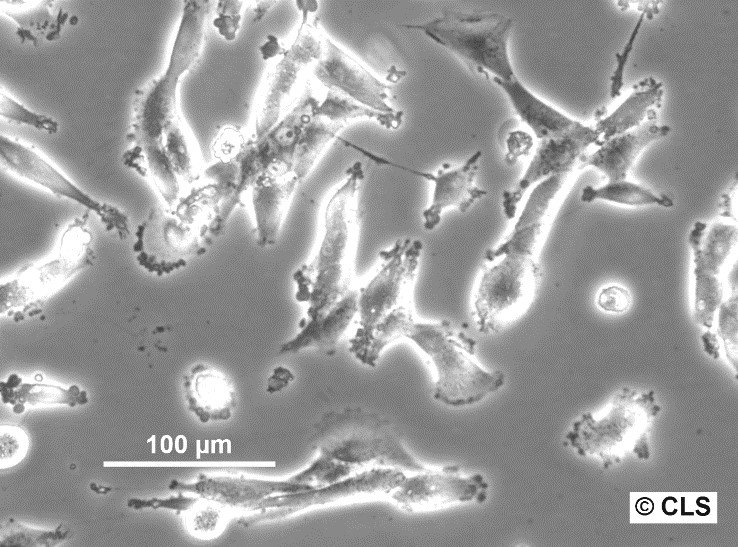

HS-683 Cells
| Unit |
3 x 10^6 cells/ml |
|---|---|
| Cell Type |
Tumor Cells |
| Tissue Type |
Brain cancer cell lines |
| Organism |
Human |
| Donor History |
Oligodendroglioma |
| Growth Properties |
Adherent |
| Growth Conditions |
Culture medium: DMEM ,w: 4.5 g/L Glucose ,w: 4 mM L-Glutamine ,w: 3.7 g/L NaHCO3 ,w: 1.0 mM Sodium pyruvate (Cytion article number 820300a). Supplements: Supplement the medium with 10% FBS. Dissociation reagent: Accutase. Seeding density: When seeded at 1 x 10⁴ cells/cm² the cells will reach 80% confluence within 3 to 4 d. Freeze medium: As a cryopreservation medium ,we use complete growth medium (including FBS) + 10% DMSO for adequate post-thaw viability ,or CM-1 (Cytion catalog number 800100) ,which includes optimized osmoprotectants and metabolic stabilizers to enhance recovery and reduce cryo-induced stress. Incubation atmosphere: 37°C ,5% CO2 ,humidified atmosphere. |
| Immortalization Method | |
| Full Information |

HS-683 is a human glioma cell line derived from the brain tissue of an adult patient diagnosed with glioblastoma multiforme. Glioblastoma multiforme is a highly aggressive type of brain cancer, known for its rapid growth and poor prognosis. The HS-683 cell line is valuable in cancer research due to its ability to provide insights into the molecular mechanisms driving glioma proliferation, invasion, and resistance to therapies.
HS-683 cells exhibit many characteristics typical of glioma cells, including high proliferative capacity and the expression of markers such as GFAP (glial fibrillary acidic protein), which is indicative of their glial origin. These cells are commonly used in studies investigating the efficacy of chemotherapeutic agents, radiation treatments, and novel targeted therapies. Researchers utilize HS-683 to explore genetic and epigenetic alterations, signal transduction pathways, and the tumor microenvironment’s role in glioma progression. The HS-683 cell line, therefore, serves as a crucial model for developing and testing new therapeutic strategies aimed at improving outcomes for patients with glioblastoma.
Společnost Cytion vznikla v roce 2004 v německém Heidelbergu s jasným vědeckým posláním: dodávat ověřené lidské a zvířecí buněčné linie bez kontaminace, připravené za přísně kontrolovaných laboratorních podmínek.
Postupně se vypracovala ve spolehlivou buněčnou banku, která slouží akademickým laboratořím, biotechnologickým firmám i farmaceutickým výzkumným týmům po celém světě. Klade přitom důraz na reprodukovatelnost výsledků, přísnou kontrolu kvality a dlouhodobá partnerství.