Genetika člověka
 Mikrobiologické aplikace
 NGS
 Rapid testy

 PCR plasty
 Pipetovací špičky
 Plasty pro buněčnou kultivaci
 Systém pro dlouhodobé skladování vzorků
 Zkumavky

 Třepačky
 Suché lázně
 Centrifugy
 End Point cyclery
 Real-time PCR cyclery
 Fluorometry
 Spektrofotometry
 Izolátory nukleových kyselin
 Pipetovací roboty
 Biobanking
 Live Cell Imaging

 Jednokanálové
 Multikanálové
 Sérologické pipety
 Jednorázové pipety

 Buněčné kultury
 PCR, qPCR, RT
 Detekce Mycoplasmat
 Reverzní transkripce

 Alergie
 Intolerance
 Elisa
 Imunologické analyzátory
 Veterinární imunologie
 Alergie u zvířat
 Intolerance u zvířat

 Čtečky identifikačních čipů
 Termočipy
 Biochemie
 Imunoanalýza


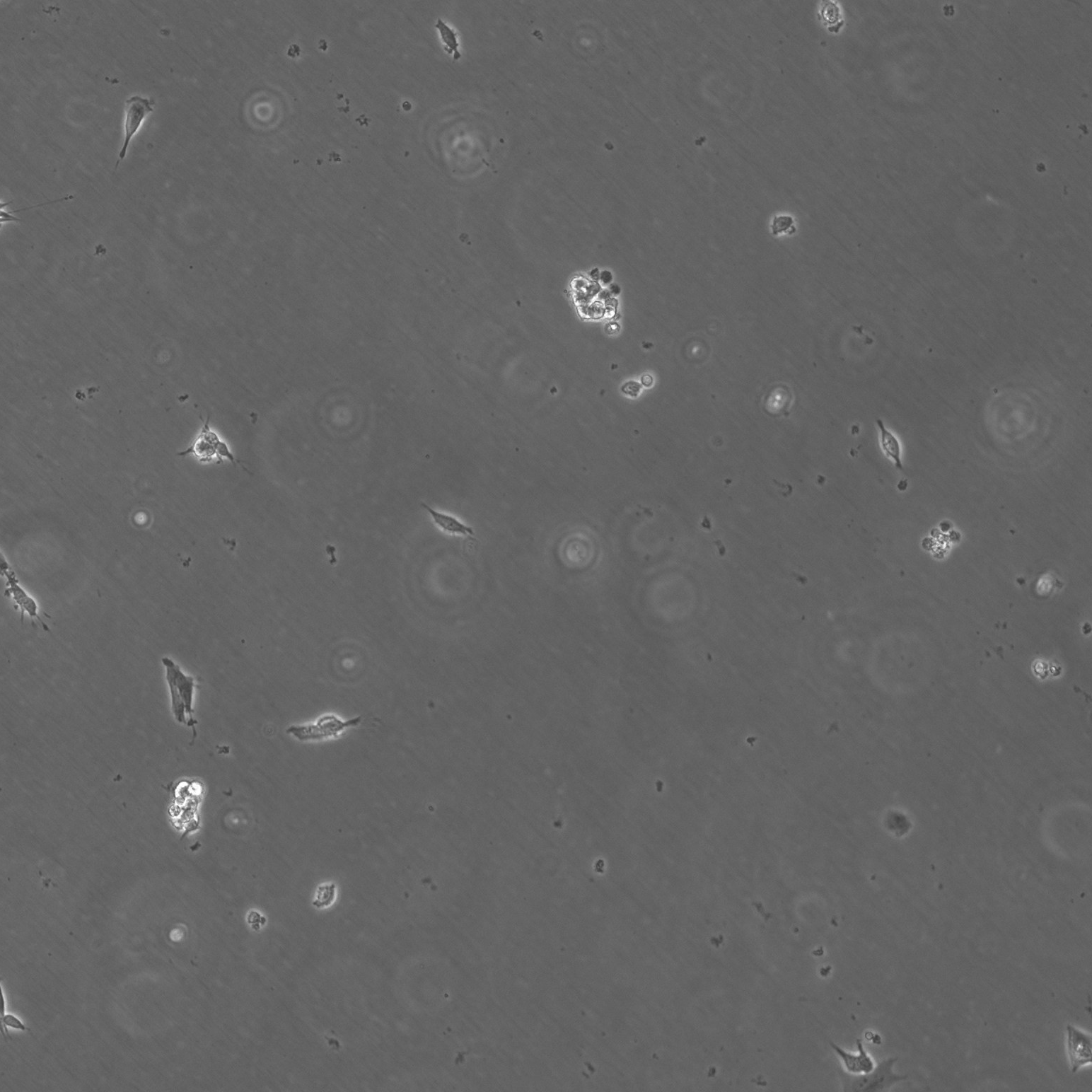

SH-SY5Y Cells
| Unit |
3 x 10^6 cells/ml |
|---|---|
| Cell Type |
Tumor Cells |
| Tissue Type |
Neuroblastoma cell lines |
| Organism |
Human |
| Donor History |
Neuroblastoma |
| Growth Properties |
Loosely adherent and form clumps at high cell density |
| Growth Conditions |
Culture medium: Please mix EMEM and Ham's F12 in a 50:50 ratio (Cytion article numbers 820100a and 820600a). Supplements: Supplement the medium with 15% FBS and 1% NEAA. Dissociation reagent: Accutase. Seeding density: Seeding density after thawing 6×10⁴ cells/cm² ,seed into 1x T25 cell culture flask. The cells will become 80-90% confluent within 1-2 weeks. Once the cells proliferate vigorously ,seed out the cells at a density of 1 – 2 x10⁴ cells/cm². Freeze medium: As a cryopreservation medium ,we use 50% basal medium + 40% FBS + 10% DMSO ,or CM-1 (Cytion catalog number 800100) ,which includes optimized osmoprotectants and metabolic stabilizers to enhance recovery and reduce cryo-induced stress. Incubation atmosphere: 37°C ,5% CO2 ,humidified atmosphere. |
| Immortalization Method | |
| Full Information |

SH-SY5Y cells, a subclone derived from the neuroblastoma cancer cell line SK-N-SH, are a valuable cell model for neurodegenerative disorders such as Parkinson’s and Alzheimer’s disease. The SK-N-SH cell line was established in 1970 from a biopsy of a metastatic bone tumor from a 4-year-old cancer patient. The human SH-SY5Y cell line offers a unique cell source for functional studies in neurobiology and neurodegenerative disease research.
SH-SY5Y cells grow both adherently and in suspension, forming clusters during division that differ significantly from the morphology of differentiated cells. These undifferentiated cells, before undergoing neuronal differentiation, serve as an essential foundation for neuroscientific studies.
The neuronal differentiation of SH-SY5Y cells, which transforms them into neuronal cell models resembling various functional neurons, is achieved through biochemical interconversion processes involving gradual serum deprivation, retinoic acid, neurotrophic factors like brain-derived neurotrophic factor, and extracellular matrix proteins. This differentiation is crucial for studying neuronal markers and conducting neurotoxicology research, especially concerning the impact of organic pollutants on human neuron-like cells.
The neurobiology of SH-SY5Y neuroblastoma cells, primarily known for their dopaminergic characteristics, can be explored for cholinergic properties under specific differentiation conditions. While these cells may express acetylcholinesterase, indicative of some cholinergic activity, their utility in studying cholinergic neurotransmission is less pronounced compared to their role in dopaminergic system studies.
As a neurotoxicological model, the SH-SY5Y neuroblastoma cell line is instrumental in examining the effects of compounds on acetylcholinesterase and butyryl cholinesterase activities, essential for neurotoxicology studies. The sy5y line’s contribution to understanding the biochemical pathways involved in neurodegenerative diseases, coupled with its role in the functional studies of dopaminergic and cholinergic systems, underscores its value in neuroscience research.
Společnost Cytion vznikla v roce 2004 v německém Heidelbergu s jasným vědeckým posláním: dodávat ověřené lidské a zvířecí buněčné linie bez kontaminace, připravené za přísně kontrolovaných laboratorních podmínek.
Postupně se vypracovala ve spolehlivou buněčnou banku, která slouží akademickým laboratořím, biotechnologickým firmám i farmaceutickým výzkumným týmům po celém světě. Klade přitom důraz na reprodukovatelnost výsledků, přísnou kontrolu kvality a dlouhodobá partnerství.