
 Genetika člověka
 Mikrobiologické aplikace
 NGS
 Rapid testy

 PCR plasty
 Pipetovací špičky
 Plasty pro buněčnou kultivaci
 Systém pro dlouhodobé skladování vzorků
 Zkumavky

 Třepačky
 Suché lázně
 Centrifugy
 End Point cyclery
 Real-time PCR cyclery
 Fluorometry
 Spektrofotometry
 Izolátory nukleových kyselin
 Pipetovací roboty
 Biobanking
 Live Cell Imaging

 Jednokanálové
 Multikanálové
 Sérologické pipety
 Jednorázové pipety

 Buněčné kultury
 PCR, qPCR, RT
 Detekce Mycoplasmat
 Reverzní transkripce

 Alergie
 Intolerance
 Elisa
 Imunologické analyzátory
 Veterinární imunologie
 Alergie u zvířat
 Intolerance u zvířat

 Čtečky identifikačních čipů
 Termočipy
 Biochemie
 Imunoanalýza


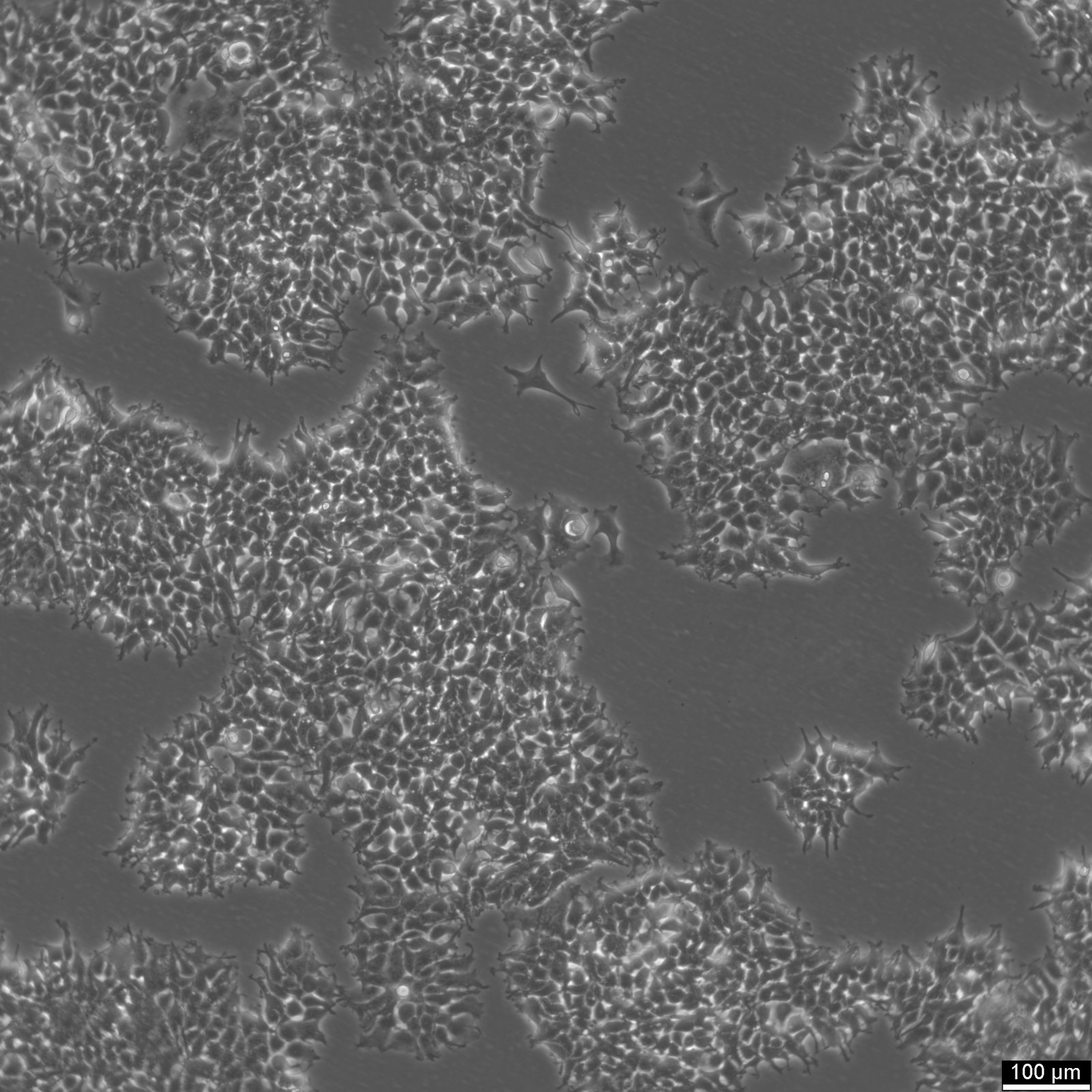

2V6.11 Cells
| Unit |
3 x 10^6 cells/ml |
|---|---|
| Cell Type |
Immortalized Cells |
| Tissue Type |
Human cells ,Kidney cancer cell lines ,Transformed cell lines |
| Organism |
Human |
| Donor History | |
| Growth Properties |
Adherent |
| Growth Conditions |
Culture medium: EMEM (MEM Eagle) ,w: 2 mM L-Glutamine ,w: 2.2 g/L NaHCO3 ,w: EBSS (Cytion article number 820100a). Supplements: Supplement the medium with 10% FBS and 1% NEAA. Dissociation reagent: Accutase. Seeding density: 1 to 3 × 10⁴ cells/cm². Freeze medium: As a cryopreservation medium ,we use complete growth medium (including FBS) + 10% DMSO for adequate post-thaw viability ,or CM-1 (Cytion catalog number 800100) ,which includes optimized osmoprotectants and metabolic stabilizers to enhance recovery and reduce cryo-induced stress. Incubation atmosphere: 37°C ,5% CO2 ,humidified atmosphere. |
| Immortalization Method | |
| Full Information |

2v6.11 cells were derived from the human embryonic kidney line HEK-293 in 2001. The 2V6.11 cell line is a valuable resource for studying the adenoviral E4 oncoprotein, particularly the E4 34K protein known to be involved in cellular genome maintenance and repair. 2V6.11 cells, obtained through transfection with the plasmid pVgRxR followed by pEKORF6, result in the inducible expression of the E4 34K protein, which is linked to the inhibition of cellular mechanisms that repair double strand-breaks in DNA. The 2V6.11 cell line demonstrated that the adenoviral proteins E4 34k and E1b 55k inhibit chromosomal DNA repair by disrupting non-homologous end joining (NHEJ) and destabilizing DNA repair proteins, extending their effect from extrachromosomal to cellular genomic DNA.
The 2V6.11 inducible cell line, with their adherent epithelial morphology, are ideal for investigating the behavior and characteristics of kidney-derived epithelial cells, including their response to infections by human adenovirus 40. This versatile cell line, which can be detected by western blot, enables researchers to delve into the molecular mechanisms by which the adenovirus E4 oncoprotein inhibits repair processes, thus contributing to our understanding of adenovirus pathology and the potential for developing new therapeutic strategies.
Společnost Cytion vznikla v roce 2004 v německém Heidelbergu s jasným vědeckým posláním: dodávat ověřené lidské a zvířecí buněčné linie bez kontaminace, připravené za přísně kontrolovaných laboratorních podmínek.
Postupně se vypracovala ve spolehlivou buněčnou banku, která slouží akademickým laboratořím, biotechnologickým firmám i farmaceutickým výzkumným týmům po celém světě. Klade přitom důraz na reprodukovatelnost výsledků, přísnou kontrolu kvality a dlouhodobá partnerství.