
 Genetika člověka
 Mikrobiologické aplikace
 NGS
 Rapid testy

 PCR plasty
 Pipetovací špičky
 Plasty pro buněčnou kultivaci
 Systém pro dlouhodobé skladování vzorků
 Zkumavky

 Třepačky
 Suché lázně
 Centrifugy
 End Point cyclery
 Real-time PCR cyclery
 Fluorometry
 Spektrofotometry
 Izolátory nukleových kyselin
 Pipetovací roboty
 Biobanking
 Live Cell Imaging

 Jednokanálové
 Multikanálové
 Sérologické pipety
 Jednorázové pipety

 Buněčné kultury
 PCR, qPCR, RT
 Detekce Mycoplasmat
 Reverzní transkripce

 Alergie
 Intolerance
 Elisa
 Imunologické analyzátory
 Veterinární imunologie
 Alergie u zvířat
 Intolerance u zvířat

 Čtečky identifikačních čipů
 Termočipy
 Biochemie
 Imunoanalýza


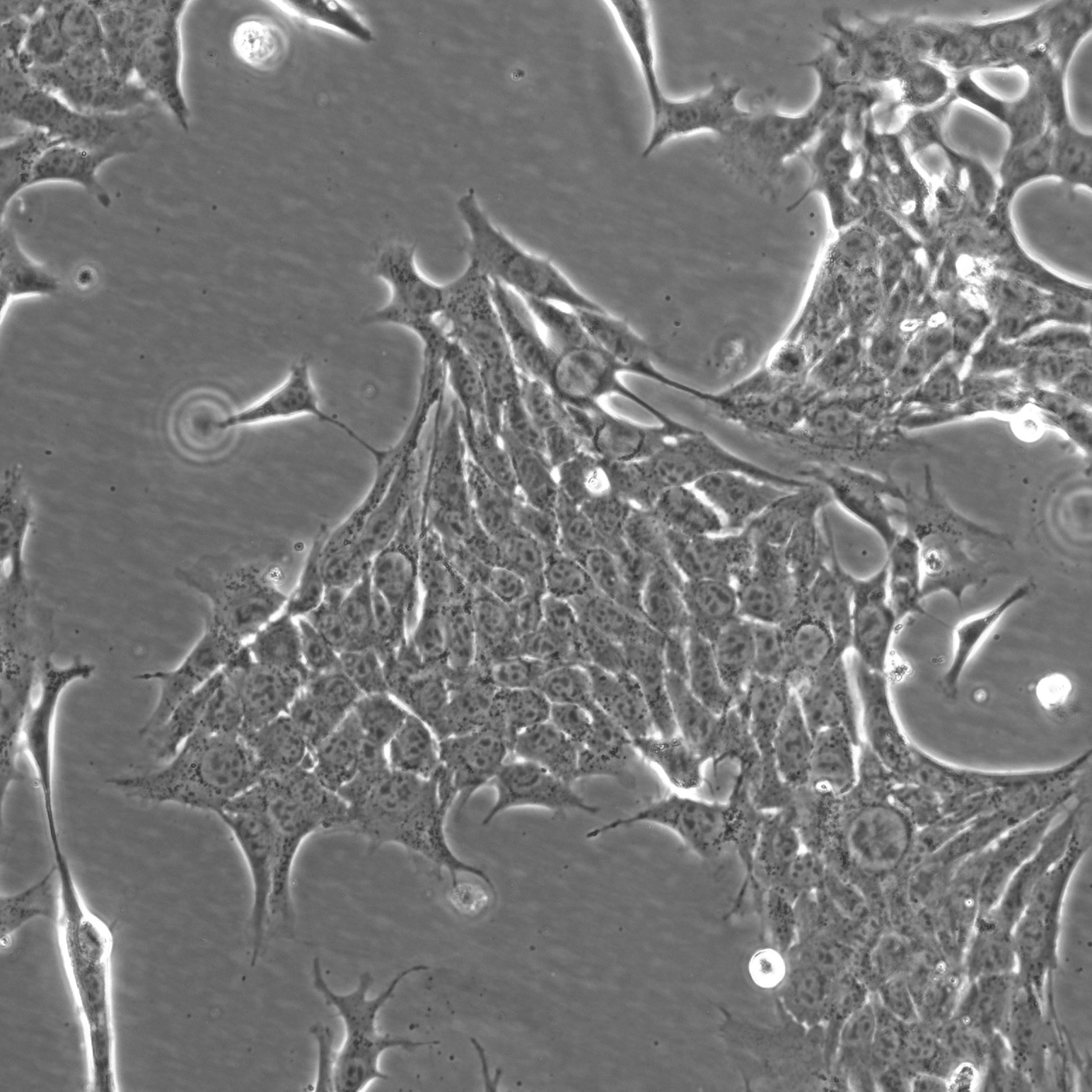

4T1-Luc Cells
| Unit |
3 x 10^6 cells/ml |
|---|---|
| Cell Type |
Stable (KO/Expressing) Cells |
| Tissue Type |
Mouse cell lines ,Reporter-labeled cells |
| Organism |
Mouse |
| Donor History |
Malignant neoplasms |
| Growth Properties |
Adherent |
| Growth Conditions |
Culture medium: RPMI 1640 ,w: 2.0 mM stable Glutamine ,w: 2.0 g/L NaHCO3 (Cytion article number 820700a). Supplements: Supplement the medium with 10% FBS. Dissociation reagent: Accutase. Seeding density: 1 to 3 x 10⁴ cells/cm². Freeze medium: As a cryopreservation medium ,we use complete growth medium + 10% DMSO for adequate post-thaw viability. Incubation atmosphere: 37°C ,5% CO2 ,humidified atmosphere. |
| Immortalization Method | |
| Full Information |

4T1-Luc is a genetically engineered variant of the murine 4T1 mammary carcinoma cell line, stably transduced to express a luciferase reporter gene. The parental 4T1 cell line is derived from a spontaneously arising mammary tumor in a mouse and is widely used as a model of stage IV triple-negative breast cancer. It closely mimics human disease in its aggressive growth, poor differentiation, and high metastatic potential, with the ability to spontaneously disseminate from the primary tumor site to distant organs such as lung, liver, bone, and brain. The luciferase-expressing derivative retains these core biological characteristics while enabling non-invasive tracking of tumor progression.
The introduction of the luciferase gene allows for sensitive bioluminescence imaging (BLI) following administration of a luciferin substrate, providing a quantitative and longitudinal readout of tumor burden in live animals. This modification enables real-time monitoring of primary tumor growth, metastatic spread, and therapeutic response without the need for invasive procedures. The luciferase signal correlates with viable cell number, making 4T1-Luciferase particularly useful for in vivo studies of metastasis, tumor kinetics, and drug efficacy in syngeneic immunocompetent mouse models. Stable integration ensures consistent reporter expression across passages, although signal intensity may vary depending on clone selection and experimental conditions.
4T1-Luc maintains the immunological and metastatic properties of the parental line, including resistance to many chemotherapeutic agents and the ability to interact with and modulate the host immune system. This makes it especially valuable for studies of tumor immunology, immune checkpoint therapies, and combination treatment strategies. The addition of a bioluminescent reporter significantly enhances experimental throughput and sensitivity, supporting applications in preclinical drug development, metastatic modeling, and real-time assessment of therapeutic interventions in breast cancer research.
Společnost Cytion vznikla v roce 2004 v německém Heidelbergu s jasným vědeckým posláním: dodávat ověřené lidské a zvířecí buněčné linie bez kontaminace, připravené za přísně kontrolovaných laboratorních podmínek.
Postupně se vypracovala ve spolehlivou buněčnou banku, která slouží akademickým laboratořím, biotechnologickým firmám i farmaceutickým výzkumným týmům po celém světě. Klade přitom důraz na reprodukovatelnost výsledků, přísnou kontrolu kvality a dlouhodobá partnerství.