Genetika člověka
 Mikrobiologické aplikace
 NGS
 Rapid testy

 PCR plasty
 Pipetovací špičky
 Plasty pro buněčnou kultivaci
 Systém pro dlouhodobé skladování vzorků
 Zkumavky

 Třepačky
 Suché lázně
 Centrifugy
 End Point cyclery
 Real-time PCR cyclery
 Fluorometry
 Spektrofotometry
 Izolátory nukleových kyselin
 Pipetovací roboty
 Biobanking
 Live Cell Imaging

 Jednokanálové
 Multikanálové
 Sérologické pipety
 Jednorázové pipety

 Buněčné kultury
 PCR, qPCR, RT
 Detekce Mycoplasmat
 Reverzní transkripce

 Alergie
 Intolerance
 Elisa
 Imunologické analyzátory
 Veterinární imunologie
 Alergie u zvířat
 Intolerance u zvířat

 Čtečky identifikačních čipů
 Termočipy
 Biochemie
 Imunoanalýza


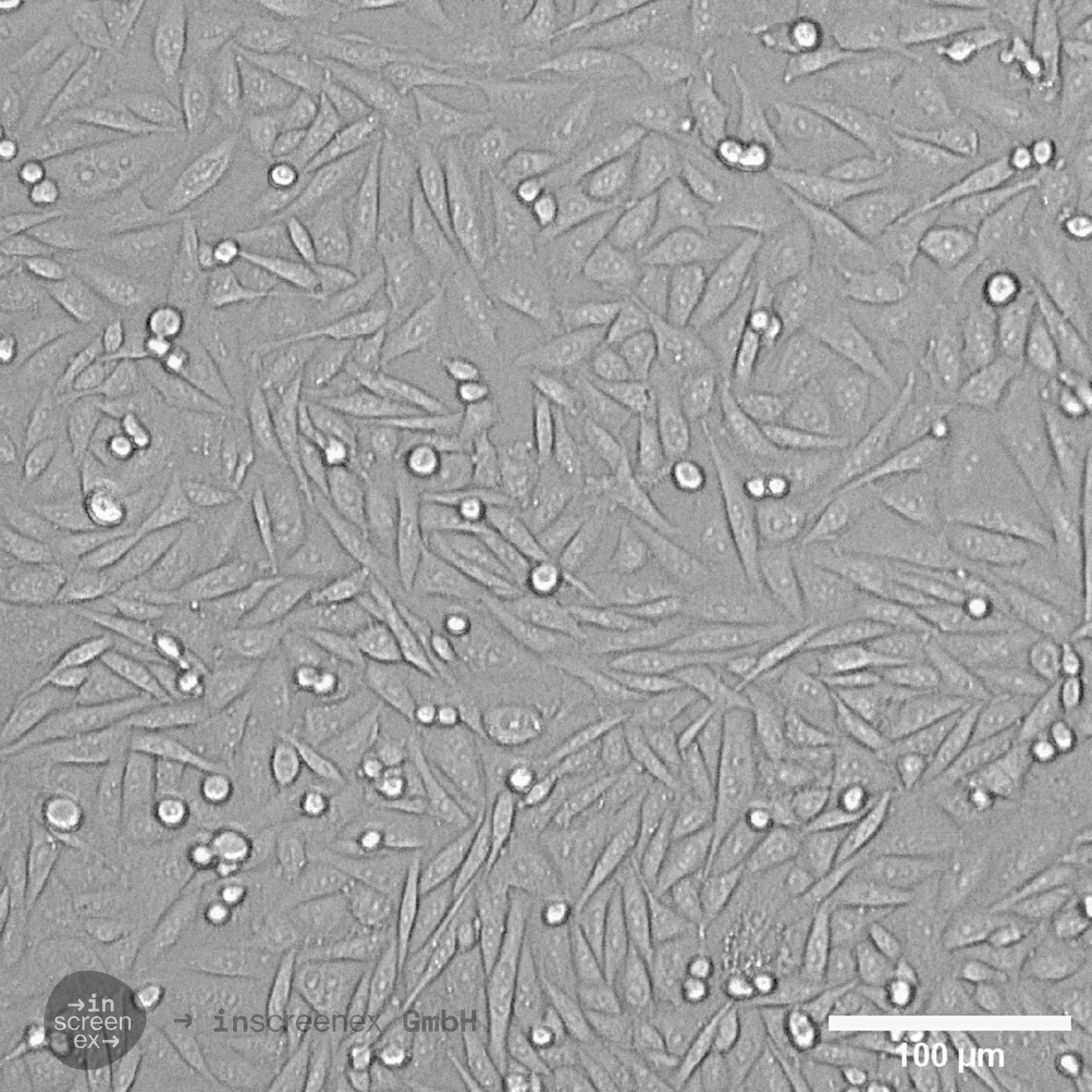

CHO-EPCAM Cells
| Unit |
3 x 10^6 cells/ml |
|---|---|
| Cell Type |
Stable (KO/Expressing) Cells |
| Tissue Type |
Hamster cell lines ,Reproductive system cancer cell lines ,Transformed cell lines |
| Organism |
Chinese hamster |
| Donor History |
Chinese hamster ovary ,non-neoplastic; genetically engineered for EpCAM (CD326) surface expression |
| Growth Properties |
Adherent/suspension |
| Growth Conditions |
Culture medium: For adherent cultures: DMEM:Ham's F12 (1:1) ,w: 3.1 g/L Glucose ,w: 2.5 mM L-Glutamine ,w: 15 mM HEPES ,w: 0.5 mM Sodium pyruvate ,w: 1.2 g/L NaHCO3 (Cytion article number 820400a)For suspension cultures: CHO Growth Medium A (from InSCREENeX; InSCREENeX catalog number INS-ME-1039). Supplements: For adherent cultures: Supplement the medium with 5% FBS. Add Geneticin (G418-Sulfat) to achieve a final concentration of 0.5 mg/mL. Dissociation reagent: For adherent cultures: Trypsin-EDTA. Seeding density: 2 to 5 x 10⁴ cells/cm². Freeze medium: As a cryopreservation medium ,we use complete growth medium (including FBS) + 10% DMSO for adequate post-thaw viability ,or CM-1 (Cytion catalog number 800100) ,which includes optimized osmoprotectants and metabolic stabilizers to enhance recovery and reduce cryo-induced stress. Incubation atmosphere: 37°C ,5% CO2 ,humidified atmosphere. |
| Immortalization Method | |
| Full Information |

Disclaimer: The prices displayed for cell lines are exclusively for academic/not-for-profit customers. For commercial entitites the price is approximately €6,250. If you represent a commercial entity or are unsure which category applies, please
contact us.
CHO-EPCAM cells are recombinant Chinese hamster ovary (CHO) cells engineered to stably express human epithelial cell adhesion molecule (EpCAM; CD326/TACSTD1), a transmembrane glycoprotein broadly expressed on epithelial tissues and highly upregulated in many epithelial-derived cancers. EpCAM is involved in cell-cell adhesion, proliferation, differentiation, and signaling pathways associated with tumor progression and metastasis. Stable CHO-EPCAM models are commonly generated to provide controlled and reproducible EpCAM surface expression for use in binding, targeting, and functional assays involving therapeutic antibodies and engineered immune cell therapies.
CHO-EPCAM cells are widely used in oncology and translational research for the development and characterization of anti-EpCAM monoclonal antibodies, antibody-drug conjugates, bispecific T-cell engagers, and CAR-T or CAR-NK cell therapies. The model is particularly useful for evaluating antigen-specific binding affinity, receptor occupancy, internalization kinetics, cytotoxicity, and immune synapse formation. In addition, these cells support flow cytometry assay development, high-throughput screening, and validation of EpCAM-targeted imaging agents or diagnostic platforms. Because CHO cells exhibit stable growth characteristics and minimal endogenous expression of many human epithelial markers, they provide a consistent background for recombinant antigen expression studies.
Společnost Cytion vznikla v roce 2004 v německém Heidelbergu s jasným vědeckým posláním: dodávat ověřené lidské a zvířecí buněčné linie bez kontaminace, připravené za přísně kontrolovaných laboratorních podmínek.
Postupně se vypracovala ve spolehlivou buněčnou banku, která slouží akademickým laboratořím, biotechnologickým firmám i farmaceutickým výzkumným týmům po celém světě. Klade přitom důraz na reprodukovatelnost výsledků, přísnou kontrolu kvality a dlouhodobá partnerství.