Genetika člověka
 Mikrobiologické aplikace
 NGS
 Rapid testy

 PCR plasty
 Pipetovací špičky
 Plasty pro buněčnou kultivaci
 Systém pro dlouhodobé skladování vzorků
 Zkumavky

 Třepačky
 Suché lázně
 Centrifugy
 End Point cyclery
 Real-time PCR cyclery
 Fluorometry
 Spektrofotometry
 Izolátory nukleových kyselin
 Pipetovací roboty
 Biobanking
 Live Cell Imaging

 Jednokanálové
 Multikanálové
 Sérologické pipety
 Jednorázové pipety

 Buněčné kultury
 PCR, qPCR, RT
 Detekce Mycoplasmat
 Reverzní transkripce

 Alergie
 Intolerance
 Elisa
 Imunologické analyzátory
 Veterinární imunologie
 Alergie u zvířat
 Intolerance u zvířat

 Čtečky identifikačních čipů
 Termočipy
 Biochemie
 Imunoanalýza


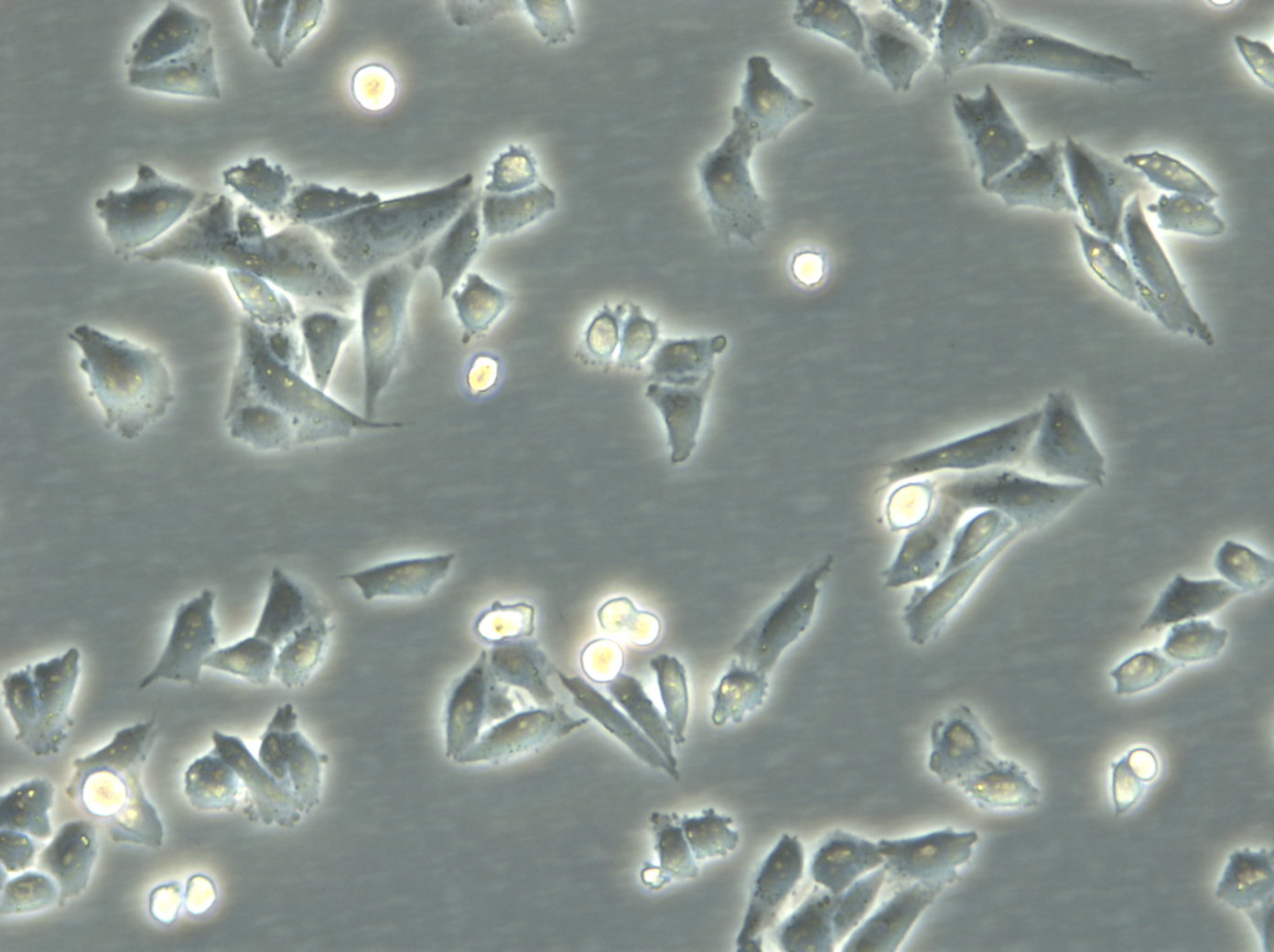

CHO-K1 Cells
| Unit |
3 x 10^6 cells/ml |
|---|---|
| Cell Type |
Immortalized Cells |
| Tissue Type |
Hamster cell lines |
| Organism |
Chinese hamster |
| Donor History | |
| Growth Properties |
Monolayer ,adherent |
| Growth Conditions |
Culture medium: Ham's F12 ,w: 1.0 mM stable Glutamine ,w: 1.0 mM Sodium pyruvate ,w: 1.1 g/L NaHCO3 (Cytion article number 820600a). Supplements: Supplement the medium with 10% FBS. Dissociation reagent: Accutase. Seeding density: 1 x 10⁴ cells/cm² will yield in a confluent layer in about 6 days. Freeze medium: As a cryopreservation medium ,we use complete growth medium (including FBS) + 10% DMSO for adequate post-thaw viability ,or CM-1 (Cytion catalog number 800100) ,which includes optimized osmoprotectants and metabolic stabilizers to enhance recovery and reduce cryo-induced stress. Incubation atmosphere: 37°C ,5% CO2 ,humidified atmosphere. |
| Immortalization Method | |
| Full Information |

CHO-K1 cells are a subline derived from the CHO cell line, which was originally established in the early 1950s from a Chinese hamster ovary. CHO-K1 cells are widely utilized in the production of therapeutic monoclonal antibodies and other biopharmaceuticals. Their extensive use in biopharmaceutical protein production and vaccines is attributed to their eukaryotic nature, which allows for proper folding, assembly, and post-translational modifications such as glycosylation, which influences the stability, efficacy, and safety of the produced proteins.
In the realm of recombinant protein production, the CHO-K1 cell line is used to express a wide array of proteins, including monoclonal antibodies, growth factors, cytokines, and enzymes. These proteins have applications in therapeutic treatments, diagnostic assays, and vaccine formulations.
CHO-K1 cells exhibit a robust growth rate and are adaptable to various culture conditions, including suspension and adherent cultures, making them highly valuable for large-scale bioproduction processes. They possess a high level of genetic stability and are used for stable cell line development as they are capable of amplifying and expressing exogenous genes efficiently, which is critical for producing high yields of recombinant proteins.
CHO-K1 chinese hamster cells can be easily transfected with a variety of vectors for gene expression, facillitating gene editing or knockdown. This flexibility allows researchers to introduce specific genes, silence genes, or even perform targeted gene editing using technologies like CRISPR-Cas9 in CHO-K1 host cells.
In conclusion, the chinese hamster CHO-K1 cells and CHO cells are pivotal in biotechnological research and biopharmaceutical production, offering a versatile platform for the study of gene function and the large-scale production of recombinant proteins.
Společnost Cytion vznikla v roce 2004 v německém Heidelbergu s jasným vědeckým posláním: dodávat ověřené lidské a zvířecí buněčné linie bez kontaminace, připravené za přísně kontrolovaných laboratorních podmínek.
Postupně se vypracovala ve spolehlivou buněčnou banku, která slouží akademickým laboratořím, biotechnologickým firmám i farmaceutickým výzkumným týmům po celém světě. Klade přitom důraz na reprodukovatelnost výsledků, přísnou kontrolu kvality a dlouhodobá partnerství.