Genetika člověka
 Mikrobiologické aplikace
 NGS
 Rapid testy

 PCR plasty
 Pipetovací špičky
 Plasty pro buněčnou kultivaci
 Systém pro dlouhodobé skladování vzorků
 Zkumavky

 Třepačky
 Suché lázně
 Centrifugy
 End Point cyclery
 Real-time PCR cyclery
 Fluorometry
 Spektrofotometry
 Izolátory nukleových kyselin
 Pipetovací roboty
 Biobanking
 Live Cell Imaging

 Jednokanálové
 Multikanálové
 Sérologické pipety
 Jednorázové pipety

 Buněčné kultury
 PCR, qPCR, RT
 Detekce Mycoplasmat
 Reverzní transkripce

 Alergie
 Intolerance
 Elisa
 Imunologické analyzátory
 Veterinární imunologie
 Alergie u zvířat
 Intolerance u zvířat

 Čtečky identifikačních čipů
 Termočipy
 Biochemie
 Imunoanalýza


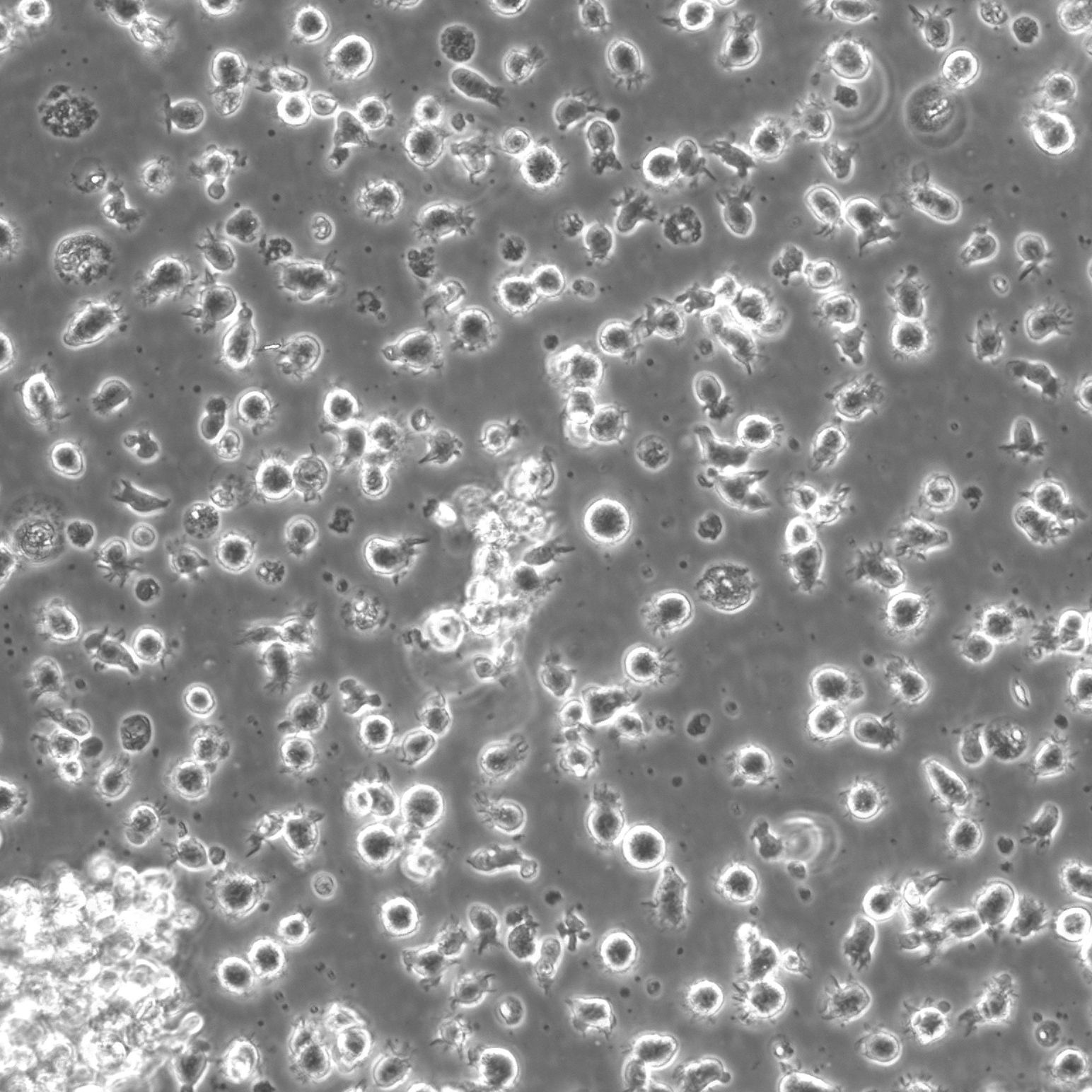

DAKIKI Cells
| Unit |
5 x 10^6 cells/ml |
|---|---|
| Cell Type |
Immortalized Cells |
| Tissue Type |
Human cells |
| Organism |
Human |
| Donor History | |
| Growth Properties |
Suspension |
| Growth Conditions |
Culture medium: RPMI 1640 ,w: 2.0 mM stable Glutamine ,w: 2.0 g/L NaHCO3 (Cytion article number 820700a). Supplements: Supplement the medium with 10% FBS. Seeding density: 2 to 5 x 10⁵ cells/cm². Freeze medium: As a cryopreservation medium ,we use complete growth medium + 10% DMSO for adequate post-thaw viability. Incubation atmosphere: 37°C ,5% CO2 ,humidified atmosphere. |
| Immortalization Method | |
| Full Information |

DAKIKI is a human Epstein-Barr virus (EBV)-positive B-lymphoblastoid cell line that expresses surface IgA1 and secretes polymeric IgA1. It was originally derived from peripheral lymphocytes of an adult patient with nasopharyngeal carcinoma and subsequently established as a continuously proliferating suspension culture. The cells exhibit typical lymphoblastoid morphology and grow in RPMI-based media supplemented with serum. DAKIKI has been widely used as a model of human IgA1-producing B cells, particularly for studies investigating immunoglobulin synthesis, regulation of secretion, and post-translational glycosylation.
Biochemical and lectin-based analyses have demonstrated that IgA1 secreted by DAKIKI cells displays galactose-deficient O-linked glycans within the hinge region. Monosaccharide compositional analysis and lectin ELISA confirm enrichment of terminal or α2,6-sialylated N-acetylgalactosamine (GalNAc) residues, a glycoform characteristic of aberrantly glycosylated IgA1 observed in IgA nephropathy. Neuraminidase treatment markedly increases Helix aspersa agglutinin reactivity, indicating the presence of sialylated GalNAc structures. Functional assays using Golgi-enriched fractions from DAKIKI cells demonstrate CMP-NeuAc:GalNAc-IgA1 α2,6-sialyltransferase activity, confirming the capacity of these cells to directly sialylate Gal-deficient O-glycans. Transcriptional analyses reveal expression of ST6-GalNAcII but not ST6-GalNAcI, supporting the role of ST6-GalNAcII in mediating α2,6 sialylation of hinge-region GalNAc in IgA1.
In addition to its utility in glycosylation research, DAKIKI has been evaluated for responsiveness to B-cell-inducing factors and phorbol esters, which can modulate immunoglobulin secretion in certain human B-cell lines. While DAKIKI constitutively secretes IgA, it has been included among EBV-transformed B-cell models used to study regulation of immunoglobulin production and differentiation states. Owing to its stable IgA1 secretion profile and reproducible production of galactose-deficient, α2,6-sialylated hinge-region glycans, DAKIKI represents a well-characterized in vitro system for investigating mechanisms of IgA1 glycosylation, B-cell differentiation, and the molecular pathogenesis of IgA-associated disorders.
Společnost Cytion vznikla v roce 2004 v německém Heidelbergu s jasným vědeckým posláním: dodávat ověřené lidské a zvířecí buněčné linie bez kontaminace, připravené za přísně kontrolovaných laboratorních podmínek.
Postupně se vypracovala ve spolehlivou buněčnou banku, která slouží akademickým laboratořím, biotechnologickým firmám i farmaceutickým výzkumným týmům po celém světě. Klade přitom důraz na reprodukovatelnost výsledků, přísnou kontrolu kvality a dlouhodobá partnerství.