Genetika člověka
 Mikrobiologické aplikace
 NGS
 Rapid testy

 PCR plasty
 Pipetovací špičky
 Plasty pro buněčnou kultivaci
 Systém pro dlouhodobé skladování vzorků
 Zkumavky

 Třepačky
 Suché lázně
 Centrifugy
 End Point cyclery
 Real-time PCR cyclery
 Fluorometry
 Spektrofotometry
 Izolátory nukleových kyselin
 Pipetovací roboty
 Biobanking
 Live Cell Imaging

 Jednokanálové
 Multikanálové
 Sérologické pipety
 Jednorázové pipety

 Buněčné kultury
 PCR, qPCR, RT
 Detekce Mycoplasmat
 Reverzní transkripce

 Alergie
 Intolerance
 Elisa
 Imunologické analyzátory
 Veterinární imunologie
 Alergie u zvířat
 Intolerance u zvířat

 Čtečky identifikačních čipů
 Termočipy
 Biochemie
 Imunoanalýza


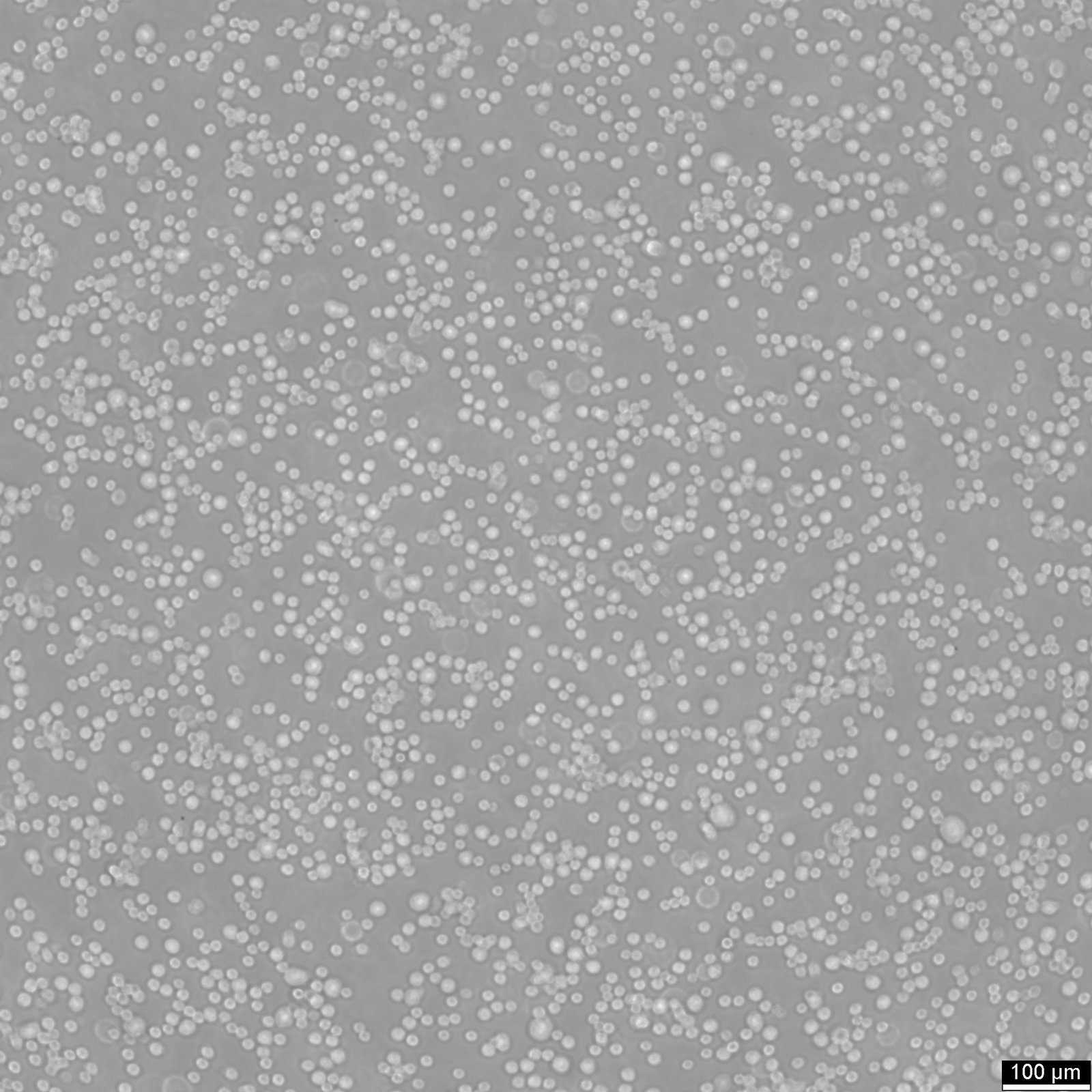

Daudi Cells
| Unit |
5 x 10^6 cells/ml |
|---|---|
| Cell Type |
Tumor Cells |
| Tissue Type |
Burkitt Lymphoma cell lines |
| Organism |
Human |
| Donor History |
Burkitt lymphoma |
| Growth Properties |
Suspension |
| Growth Conditions |
Culture medium: RPMI 1640 ,w: 2.0 mM stable Glutamine ,w: 2.0 g/L NaHCO3 (Cytion article number 820700a). Supplements: Supplement the medium with 10% heat-inactivated FBS. Seeding density: 3 x 10⁵ cells/ml. Freeze medium: As a cryopreservation medium ,we use complete growth medium (including FBS) + 10% DMSO for adequate post-thaw viability ,or CM-1 (Cytion catalog number 800100) ,which includes optimized osmoprotectants and metabolic stabilizers to enhance recovery and reduce cryo-induced stress. Incubation atmosphere: 37°C ,5% CO2 ,humidified atmosphere. |
| Immortalization Method | |
| Full Information |

The Daudi cell line was established in 1967 from a 16-year-old African boy diagnosed with Burkitt’s Lymphoma, a type of lymphoma. Named after the patient from whom it was derived, the Daudi cell line is characterized by its Epstein-Barr Virus (EBV) positivity, a common feature in Burkitt’s lymphoma and several other lymphoproliferative disorders. The EBV infection within these cells offers a unique model for studying the virus’s role in tumorigenesis, particularly in the context of B-cell malignancies.
Daudi human cells lack expression of the classical Major Histocompatibility Complex (MHC) class I molecules on their surface, which is attributed to the absence of beta-2-microglobulin, a crucial component responsible for the correct intracellular folding and processing of the MHC class I molecule in the endoplasmic reticulum. The lack of beta-2-microglobulin in the Daudi cell line leads to a lack of glycosyl modifications necessary for proper cell surface expression of these molecules.
The Daudi cell line is extensively utilized in immunology research, particularly in studies involving the immunodepletion of lymphocyte subpopulations, including lymphocytes, natural killer cells, and peripheral blood mononuclear cells.
In summary, the Daudi cell line serves as a critical resource for advancing our knowledge in various research fields, from the basic understanding of cell biology to the development of targeted therapies for cancer treatment.
Společnost Cytion vznikla v roce 2004 v německém Heidelbergu s jasným vědeckým posláním: dodávat ověřené lidské a zvířecí buněčné linie bez kontaminace, připravené za přísně kontrolovaných laboratorních podmínek.
Postupně se vypracovala ve spolehlivou buněčnou banku, která slouží akademickým laboratořím, biotechnologickým firmám i farmaceutickým výzkumným týmům po celém světě. Klade přitom důraz na reprodukovatelnost výsledků, přísnou kontrolu kvality a dlouhodobá partnerství.