Genetika člověka
 Mikrobiologické aplikace
 NGS
 Rapid testy

 PCR plasty
 Pipetovací špičky
 Plasty pro buněčnou kultivaci
 Systém pro dlouhodobé skladování vzorků
 Zkumavky

 Třepačky
 Suché lázně
 Centrifugy
 End Point cyclery
 Real-time PCR cyclery
 Fluorometry
 Spektrofotometry
 Izolátory nukleových kyselin
 Pipetovací roboty
 Biobanking
 Live Cell Imaging

 Jednokanálové
 Multikanálové
 Sérologické pipety
 Jednorázové pipety

 Buněčné kultury
 PCR, qPCR, RT
 Detekce Mycoplasmat
 Reverzní transkripce

 Alergie
 Intolerance
 Elisa
 Imunologické analyzátory
 Veterinární imunologie
 Alergie u zvířat
 Intolerance u zvířat

 Čtečky identifikačních čipů
 Termočipy
 Biochemie
 Imunoanalýza


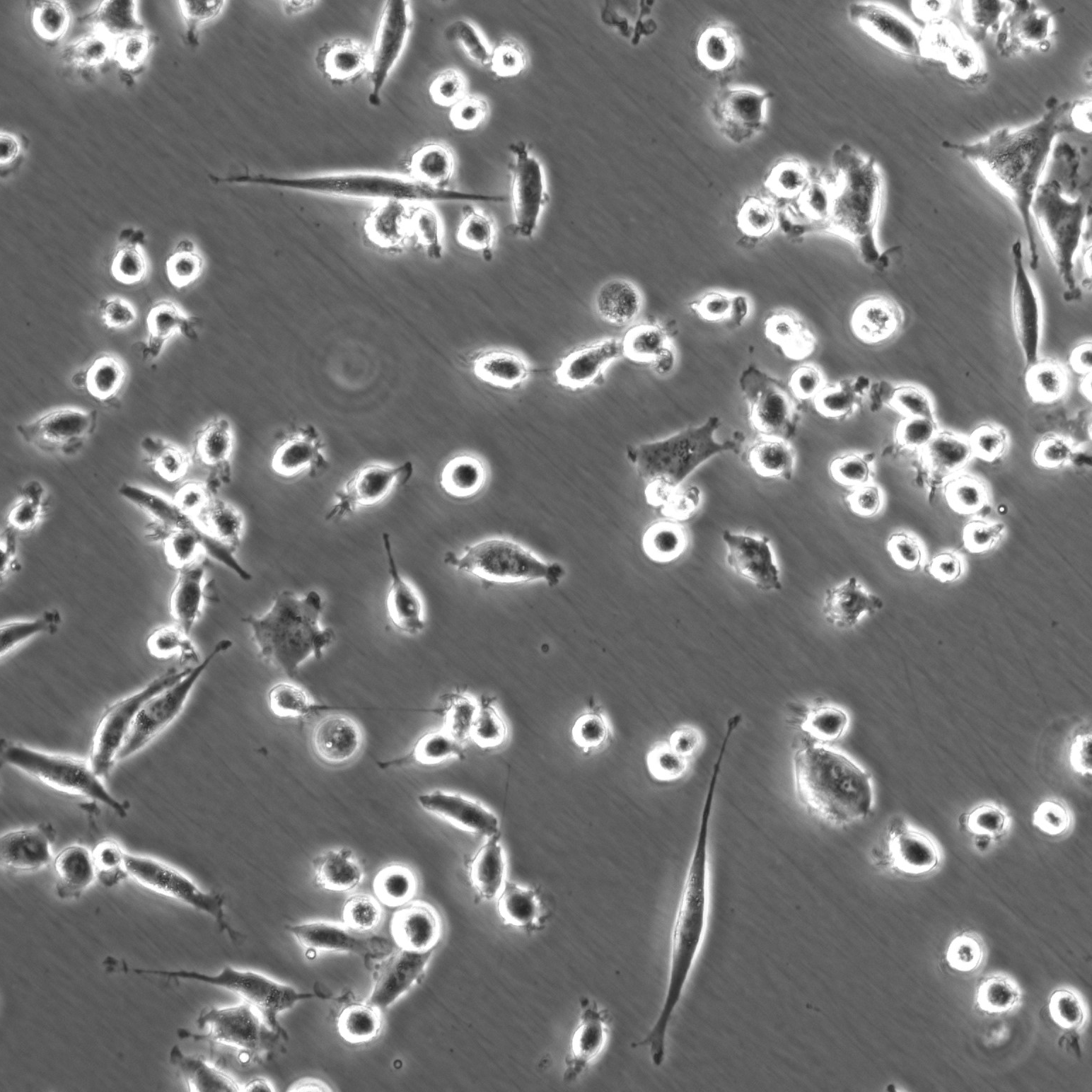

DH82 Cells
| Unit |
3 x 10^6 cells/ml |
|---|---|
| Cell Type |
Tumor Cells |
| Tissue Type |
Canine cell lines |
| Organism |
Dog |
| Donor History |
Canine histiocytic sarcom |
| Growth Properties |
Adherent |
| Growth Conditions |
Culture medium: EMEM (MEM Eagle) ,w: 2 mM L-Glutamine ,w: 2.2 g/L NaHCO3 ,w: EBSS (Cytion article number 820100a). Supplements: Supplement the medium with 10% FBS and 1% NEAA. Dissociation reagent: Accutase. Freeze medium: As a cryopreservation medium ,we use complete growth medium (including FBS) + 10% DMSO for adequate post-thaw viability ,or CM-1 (Cytion catalog number 800100) ,which includes optimized osmoprotectants and metabolic stabilizers to enhance recovery and reduce cryo-induced stress. Incubation atmosphere: 37°C ,5% CO2 ,humidified atmosphere. |
| Immortalization Method | |
| Full Information |

DH-82 cells, derived from the malignant histiocytosis of a ten-year-old male Golden Retriever, are a cornerstone in the study of canine immunology and related diseases.
These cells exhibit a macrophage-like morphology, mirroring the key functions of human macrophages, thereby providing a relevant model for investigating various aspects of canine health, particularly immune system-related conditions.
A defining characteristic of DH-82 cells is their capability to phagocytize latex particles, an essential function of macrophages responsible for the elimination of foreign substances in the body. This property positions DH-82 cells as a robust tool for delving into the immune responses of dogs, especially in the face of infections and inflammatory diseases. The expression of Fc gamma receptors in DH-82 cells is a notable trait.
These receptors are integral to immune responses, as they bind to antibodies and facilitate the phagocytosis of antibody-coated pathogens or particles. This makes DH-82 cells particularly valuable in studies focusing on immune responses and antibody-dependent cellular cytotoxicity (ADCC). In contrast, DH-82 cells do not express Fc mu and C3b receptors.
The absence of Fc mu receptors, typically found on B cells and involved in antigen presentation, and C3b receptors, which bind to complement proteins in immune responses, provides a controlled setting for examining specific immune mechanisms that might be influenced by these receptors.
Additionally, DH-82 cells are non-producers of IL-1, a pivotal cytokine in inflammatory responses. This feature offers a unique perspective for investigating the role of IL-1 in various biological processes and understanding IL-1-mediated diseases.
In the realm of infectious diseases, DH-82 cells have proven particularly useful in studying canine monocytic ehrlichiosis (CME), a tick-borne illness caused by Ehrlichia canis.
The cells provide a conducive environment for the bacterium's growth, aiding in the exploration of the disease's development and potential treatments. The doubling time of DH-82 cells, approximately 26 hours, is also a critical aspect in their use, influencing experimental design and the interpretation of results.
Společnost Cytion vznikla v roce 2004 v německém Heidelbergu s jasným vědeckým posláním: dodávat ověřené lidské a zvířecí buněčné linie bez kontaminace, připravené za přísně kontrolovaných laboratorních podmínek.
Postupně se vypracovala ve spolehlivou buněčnou banku, která slouží akademickým laboratořím, biotechnologickým firmám i farmaceutickým výzkumným týmům po celém světě. Klade přitom důraz na reprodukovatelnost výsledků, přísnou kontrolu kvality a dlouhodobá partnerství.