Genetika člověka
 Mikrobiologické aplikace
 NGS
 Rapid testy

 PCR plasty
 Pipetovací špičky
 Plasty pro buněčnou kultivaci
 Systém pro dlouhodobé skladování vzorků
 Zkumavky

 Třepačky
 Suché lázně
 Centrifugy
 End Point cyclery
 Real-time PCR cyclery
 Fluorometry
 Spektrofotometry
 Izolátory nukleových kyselin
 Pipetovací roboty
 Biobanking
 Live Cell Imaging

 Jednokanálové
 Multikanálové
 Sérologické pipety
 Jednorázové pipety

 Buněčné kultury
 PCR, qPCR, RT
 Detekce Mycoplasmat
 Reverzní transkripce

 Alergie
 Intolerance
 Elisa
 Imunologické analyzátory
 Veterinární imunologie
 Alergie u zvířat
 Intolerance u zvířat

 Čtečky identifikačních čipů
 Termočipy
 Biochemie
 Imunoanalýza


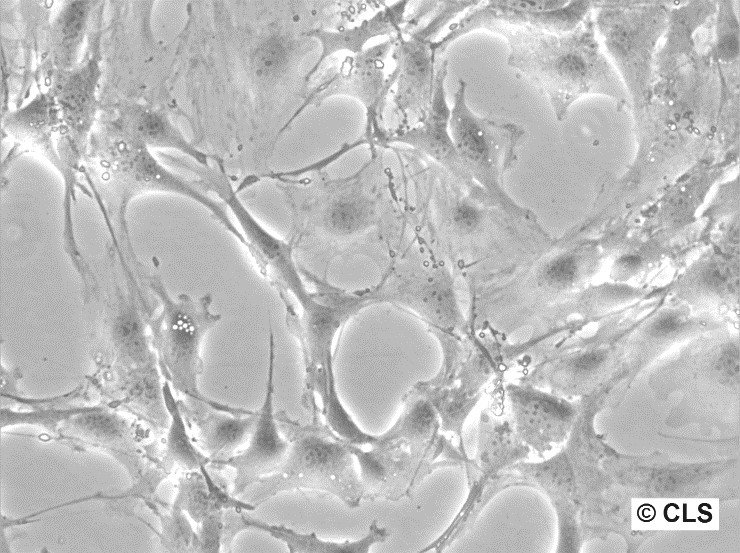

E11 Cells
| Unit |
3 x 10^6 cells/ml |
|---|---|
| Cell Type |
Immortalized Cells |
| Tissue Type |
Mouse cell lines |
| Organism |
Mouse |
| Donor History | |
| Growth Properties |
Adherent |
| Growth Conditions |
Culture medium: RPMI 1640 ,w: 2.0 mM stable Glutamine ,w: 2.0 g/L NaHCO3 (Cytion article number 820700a). Supplements: Supplement the medium with 10% FBS. Dissociation reagent: Accutase. Seeding density: Inocculate T75 cell culture flasks with 1x 10⁴ cells/cm² for the proliferation process. Keep the cells at 33 degree Celsius / 5% CO2 ,until the flask is about 75% confluent. Freeze medium: As a cryopreservation medium ,we use complete growth medium (including FBS) + 10% DMSO for adequate post-thaw viability ,or CM-1 (Cytion catalog number 800100) ,which includes optimized osmoprotectants and metabolic stabilizers to enhance recovery and reduce cryo-induced stress. Incubation atmosphere: 33°C ,5% CO2 ,humidified atmosphere. |
| Immortalization Method | |
| Full Information |

The E11 cell line is a highly specialized murine cell line developed for advanced studies in podocyte function and kidney disease mechanisms. Derived from the glomeruli of transgenic mice engineered to express a temperature-sensitive variant of the SV40 large T antigen, the E11 cells operate under the regulation of the IFN-g-inducible H-2kb promoter. This unique genetic framework facilitates the conditional proliferation of the cells, dependent on the environmental temperature, which aligns with the controlled expression of the T antigen.
One of the distinguishing features of the E11 cell line is its phenotypic stability across extensive passaging. Maintaining consistent expression and cellular characteristics through more than 40 passages, E11 cells have proven invaluable for long-term studies without the common issue of phenotypic drift seen in many cultured cell lines. This stability enhances their use in repetitive and extended biological experiments requiring consistent cell behavior.
In terms of protein expression, the E11 cell line exhibits a robust profile that is quintessential for podocyte-specific studies. The cells consistently express nephrin, an essential component of the slit diaphragm structure in podocytes, alongside a variety of other podocyte-specific proteins such as podocin, CD2AP, and synaptopodin. This comprehensive protein expression facilitates the study of podocyte biology in a controlled in vitro environment, closely simulating in vivo conditions. The ability of E11 cells to form extensive cell-cell contacts further underscores their suitability for modeling kidney filtration barrier functionalities.
Společnost Cytion vznikla v roce 2004 v německém Heidelbergu s jasným vědeckým posláním: dodávat ověřené lidské a zvířecí buněčné linie bez kontaminace, připravené za přísně kontrolovaných laboratorních podmínek.
Postupně se vypracovala ve spolehlivou buněčnou banku, která slouží akademickým laboratořím, biotechnologickým firmám i farmaceutickým výzkumným týmům po celém světě. Klade přitom důraz na reprodukovatelnost výsledků, přísnou kontrolu kvality a dlouhodobá partnerství.