Genetika člověka
 Mikrobiologické aplikace
 NGS
 Rapid testy

 PCR plasty
 Pipetovací špičky
 Plasty pro buněčnou kultivaci
 Systém pro dlouhodobé skladování vzorků
 Zkumavky

 Třepačky
 Suché lázně
 Centrifugy
 End Point cyclery
 Real-time PCR cyclery
 Fluorometry
 Spektrofotometry
 Izolátory nukleových kyselin
 Pipetovací roboty
 Biobanking
 Live Cell Imaging

 Jednokanálové
 Multikanálové
 Sérologické pipety
 Jednorázové pipety

 Buněčné kultury
 PCR, qPCR, RT
 Detekce Mycoplasmat
 Reverzní transkripce

 Alergie
 Intolerance
 Elisa
 Imunologické analyzátory
 Veterinární imunologie
 Alergie u zvířat
 Intolerance u zvířat

 Čtečky identifikačních čipů
 Termočipy
 Biochemie
 Imunoanalýza


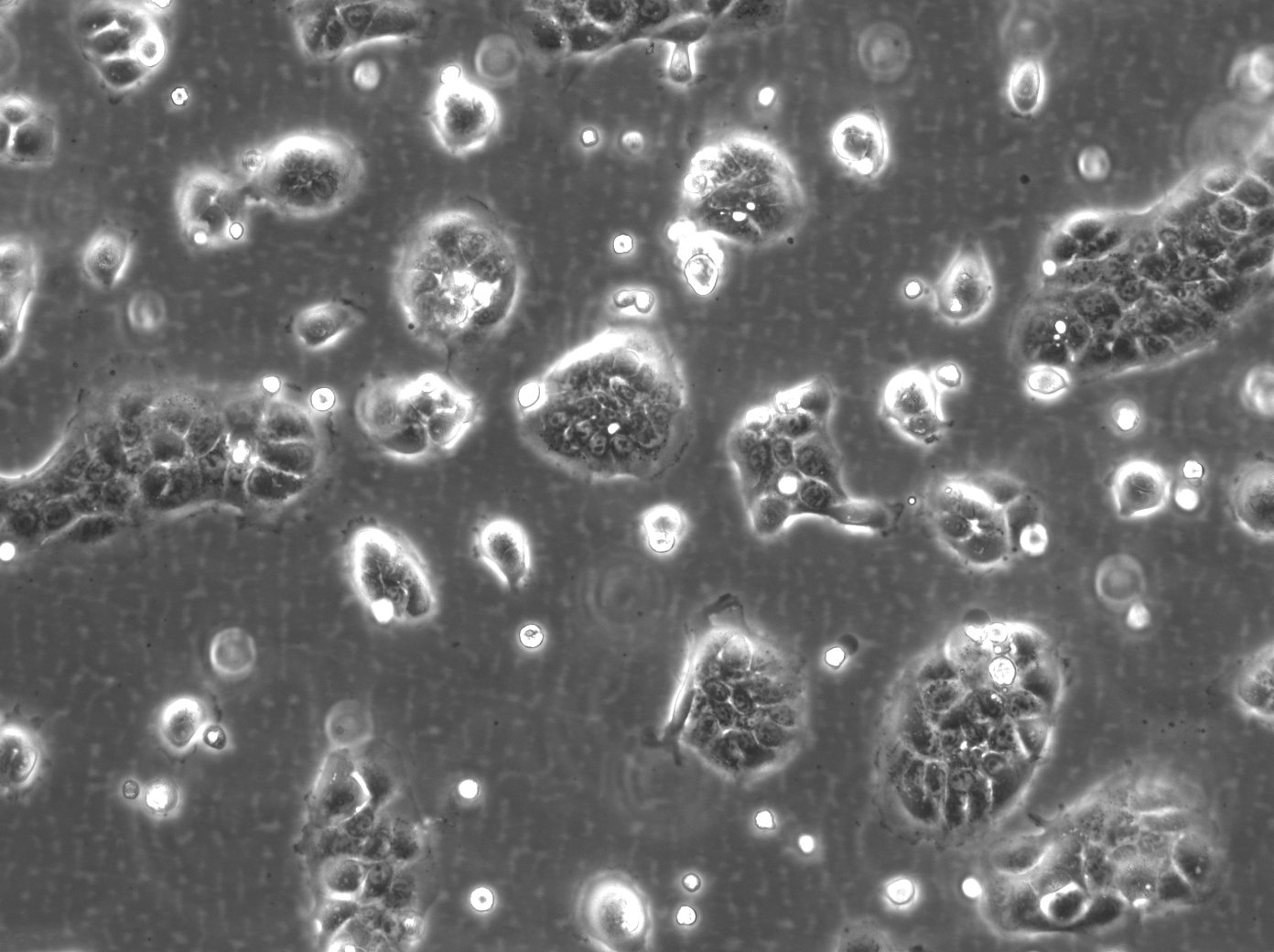

HaCaT-ras II-4 Cells
| Unit |
3 x 10^6 cells/ml |
|---|---|
| Cell Type |
Stable (KO/Expressing) Cells |
| Tissue Type |
HaCaT cell lines |
| Organism |
Human |
| Donor History | |
| Growth Properties |
Adherent |
| Growth Conditions |
Culture medium: DMEM ,w: 4.5 g/L Glucose ,w: 4 mM L-Glutamine ,w: 3.7 g/L NaHCO3 ,w: 1.0 mM Sodium pyruvate (Cytion article number 820300a). Supplements: Supplement the medium with 10% FBS. Dissociation reagent: The 1:1 mixture of EDTA (stock. 0.05%) and trypsin (stock: 0.1%) must be prepared each time ahead of detaching the cells using PBS without Ca2+ and Mg2+ to provide a physiologic osmolarity. Ready-to-use mixtures of trypsin/EDTA are not recommended ,as this may result in cell clumps. As an alternative ,TrypLETM Express (Life Technologies) instead of trypsin/EDTA can be used. The protocol of the manufacturer should be followed. Seeding density: 1 x 10⁴ cells/cm². Freeze medium: As a cryopreservation medium ,we use complete growth medium (including FBS) + 10% DMSO for adequate post-thaw viability ,or CM-1 (Cytion catalog number 800100) ,which includes optimized osmoprotectants and metabolic stabilizers to enhance recovery and reduce cryo-induced stress. Incubation atmosphere: 37°C ,5% CO2 ,humidified atmosphere. |
| Immortalization Method | |
| Full Information |

HaCaT-ras II-4 cells are a remarkable and extensively studied cellular model in biological science. These cells are derived from spontaneously immortalized human skin keratinocytes, known as HaCaT cells, which were modified through transfection with the c-Ha-ras (EJ) oncogene. The selection of these cells was based on their resistance to G418, a selective antibiotic, as described in the comprehensive study conducted by Boukamp et al. in 1990.
One notable characteristic of HaCaT-ras II-4 cells is their tumorigenic nature. When these clonal cells are injected into Balb/c-nu/nu mice, they exhibit a fascinating behaviour by forming highly differentiated and locally invasive squamous cell carcinomas. This unique property allows researchers to explore tumour development and progression mechanisms within a controlled experimental environment.
HaCaT-ras II-4 cells are predominantly derived from the Caucasian population, ensuring relevance to a specific ethnic group in scientific investigations. Their origin and characteristics make them an invaluable resource for researchers interested in studying various skin biology and differentiation aspects.
These cells possess a partially to fully differentiated phenotype under typical culture conditions. This phenotype is attributed to the abundant presence of calcium in both traditional media and fetal bovine serum, which provides an ideal environment for the cells to exhibit characteristics resembling those of mature skin cells. This feature allows researchers to investigate the intricate processes involved in skin development, wound healing, and epidermal differentiation.
With their tumorigenic nature and the ability to replicate skin biology in vitro, HaCaT-ras II-4 cells offer a unique opportunity to explore the molecular pathways associated with skin cancer and other skin-related disorders. By utilizing this exceptional cellular model, researchers can gain deeper insights into the underlying mechanisms of tumorigenesis, invasive potential, and therapeutic interventions.
HaCaT-ras II-4 cells are a vital tool for biological science research, specifically in skin biology and differentiation studies. Their origin from spontaneously immortalized human skin keratinocytes, modification with the c-Ha-ras (EJ) oncogene, and subsequent tumorigenic behaviour in mice make them invaluable for investigating skin-related diseases and therapeutic approaches. By harnessing the unique characteristics of HaCaT-ras II-4 cells, researchers can unlock a deeper understanding of skin biology and contribute to advancing medical knowledge and treatment options for various skin disorders.
Společnost Cytion vznikla v roce 2004 v německém Heidelbergu s jasným vědeckým posláním: dodávat ověřené lidské a zvířecí buněčné linie bez kontaminace, připravené za přísně kontrolovaných laboratorních podmínek.
Postupně se vypracovala ve spolehlivou buněčnou banku, která slouží akademickým laboratořím, biotechnologickým firmám i farmaceutickým výzkumným týmům po celém světě. Klade přitom důraz na reprodukovatelnost výsledků, přísnou kontrolu kvality a dlouhodobá partnerství.