Genetika člověka
 Mikrobiologické aplikace
 NGS
 Rapid testy

 PCR plasty
 Pipetovací špičky
 Plasty pro buněčnou kultivaci
 Systém pro dlouhodobé skladování vzorků
 Zkumavky

 Třepačky
 Suché lázně
 Centrifugy
 End Point cyclery
 Real-time PCR cyclery
 Fluorometry
 Spektrofotometry
 Izolátory nukleových kyselin
 Pipetovací roboty
 Biobanking
 Live Cell Imaging

 Jednokanálové
 Multikanálové
 Sérologické pipety
 Jednorázové pipety

 Buněčné kultury
 PCR, qPCR, RT
 Detekce Mycoplasmat
 Reverzní transkripce

 Alergie
 Intolerance
 Elisa
 Imunologické analyzátory
 Veterinární imunologie
 Alergie u zvířat
 Intolerance u zvířat

 Čtečky identifikačních čipů
 Termočipy
 Biochemie
 Imunoanalýza


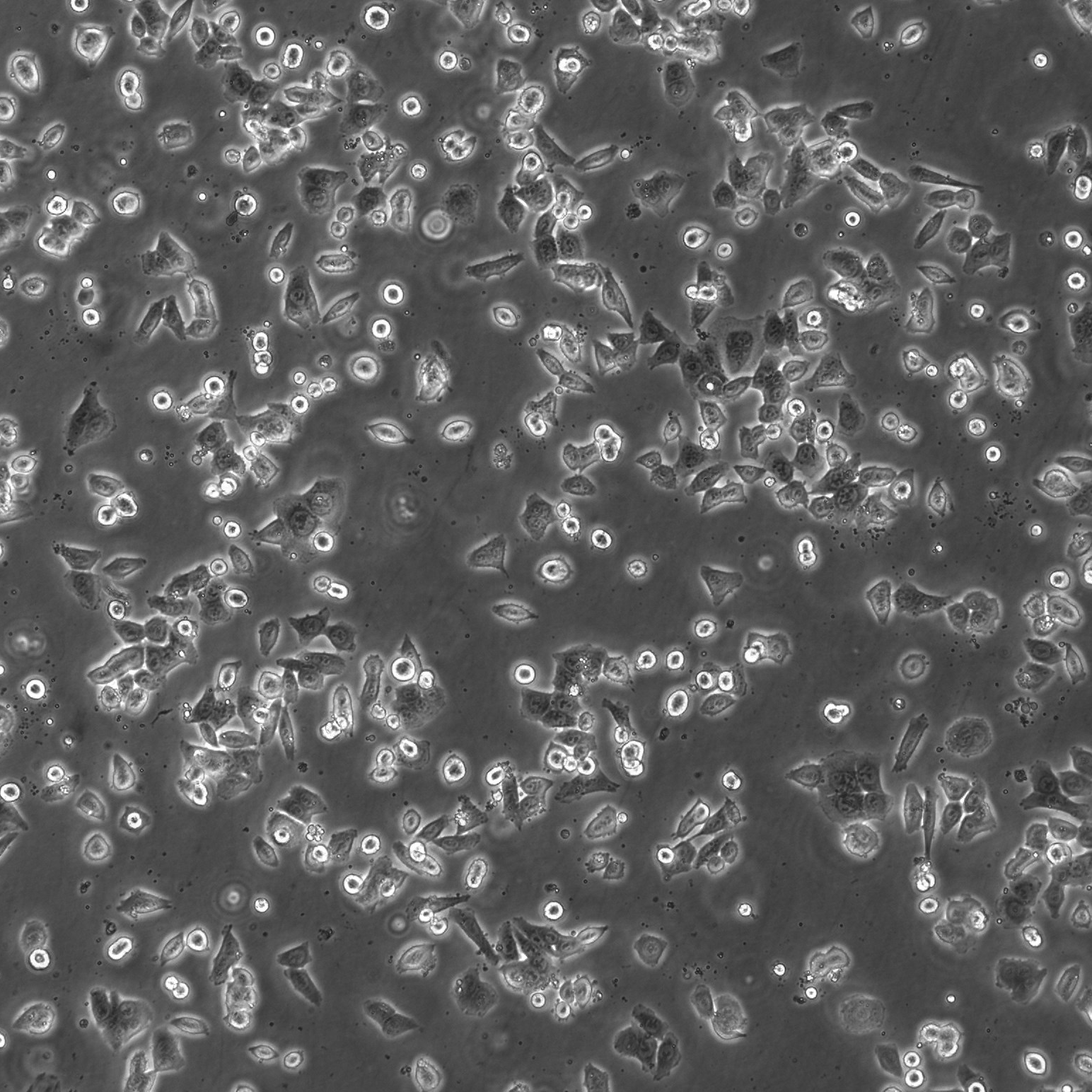

HCT116-GFP Cells
| Unit |
3 x 10^6 cells/ml |
|---|---|
| Cell Type |
Stable (KO/Expressing) Cells |
| Tissue Type |
Intestine cancer cell lines ,Reporter-labeled cells |
| Organism |
Human |
| Donor History |
Colon carcinoma |
| Growth Properties |
Adherent |
| Growth Conditions |
Culture medium: McCoys 5a ,w: 3.0 g/L Glucose ,w: stable Glutamine ,w: 2.0 mM Sodium pyruvate ,w: 2.2 g/L NaHCO3 (Cytion article number 820200a). Supplements: Supplement the medium with 10% FBS. Dissociation reagent: Accutase. Seeding density: 2 to 4 x 10⁴ cells/cm². Freeze medium: As a cryopreservation medium ,we use complete growth medium + 10% DMSO for adequate post-thaw viability. Incubation atmosphere: 37°C ,5% CO2 ,humidified atmosphere. |
| Immortalization Method | |
| Full Information |

HCT116-GFP is a genetically modified derivative of the human colorectal carcinoma cell line HCT116, engineered to constitutively express green fluorescent protein (GFP). The parental HCT116 line originates from a colon carcinoma of an adult patient and is widely used as a model of mismatch repair–deficient (MMR-deficient) colorectal cancer. Cytogenetic analyses have shown that HCT116 cells typically exhibit a near-diploid karyotype with defined chromosomal alterations, including structural rearrangements and copy number variations characteristic of microsatellite instability–positive colorectal tumors. Introduction of the GFP reporter gene enables real-time visualization of cellular behavior without substantially altering the intrinsic genetic and phenotypic properties of the parental line.
The GFP labeling in HCT116-GFP cells is commonly achieved through stable transfection, resulting in uniform fluorescence that facilitates live-cell imaging, cell tracking, and quantitative analysis of proliferation, migration, and tumor growth dynamics. This modification is particularly valuable in in vitro assays and in vivo xenograft models, where GFP expression allows non-invasive monitoring of tumor progression, metastatic dissemination, and response to therapeutic interventions. Fluorescence-based phenotypic profiling approaches have demonstrated that colon cancer cell lines, including HCT116, exhibit distinct intracellular signatures that can be captured through imaging-based methodologies, supporting the utility of fluorescent reporters such as GFP for high-content screening applications.
HCT116-GFP serves as a robust tool for investigating colorectal cancer biology, enabling detailed analysis of tumor cell behavior, microenvironmental interactions, and therapeutic efficacy in both basic and translational research contexts.
Genetic modification: Stably modified by replication-incompetent lentiviral transduction to express the ZsGreen1 green fluorescent protein reporter; maintained as a polyclonal population under puromycin selection (1–5 µg/mL). S1/BSL-1 containment.
Společnost Cytion vznikla v roce 2004 v německém Heidelbergu s jasným vědeckým posláním: dodávat ověřené lidské a zvířecí buněčné linie bez kontaminace, připravené za přísně kontrolovaných laboratorních podmínek.
Postupně se vypracovala ve spolehlivou buněčnou banku, která slouží akademickým laboratořím, biotechnologickým firmám i farmaceutickým výzkumným týmům po celém světě. Klade přitom důraz na reprodukovatelnost výsledků, přísnou kontrolu kvality a dlouhodobá partnerství.