
 Genetika člověka
 Mikrobiologické aplikace
 NGS
 Rapid testy

 PCR plasty
 Pipetovací špičky
 Plasty pro buněčnou kultivaci
 Systém pro dlouhodobé skladování vzorků
 Zkumavky

 Třepačky
 Suché lázně
 Centrifugy
 End Point cyclery
 Real-time PCR cyclery
 Fluorometry
 Spektrofotometry
 Izolátory nukleových kyselin
 Pipetovací roboty
 Biobanking
 Live Cell Imaging

 Jednokanálové
 Multikanálové
 Sérologické pipety
 Jednorázové pipety

 Buněčné kultury
 PCR, qPCR, RT
 Detekce Mycoplasmat
 Reverzní transkripce

 Alergie
 Intolerance
 Elisa
 Imunologické analyzátory
 Veterinární imunologie
 Alergie u zvířat
 Intolerance u zvířat

 Čtečky identifikačních čipů
 Termočipy
 Biochemie
 Imunoanalýza


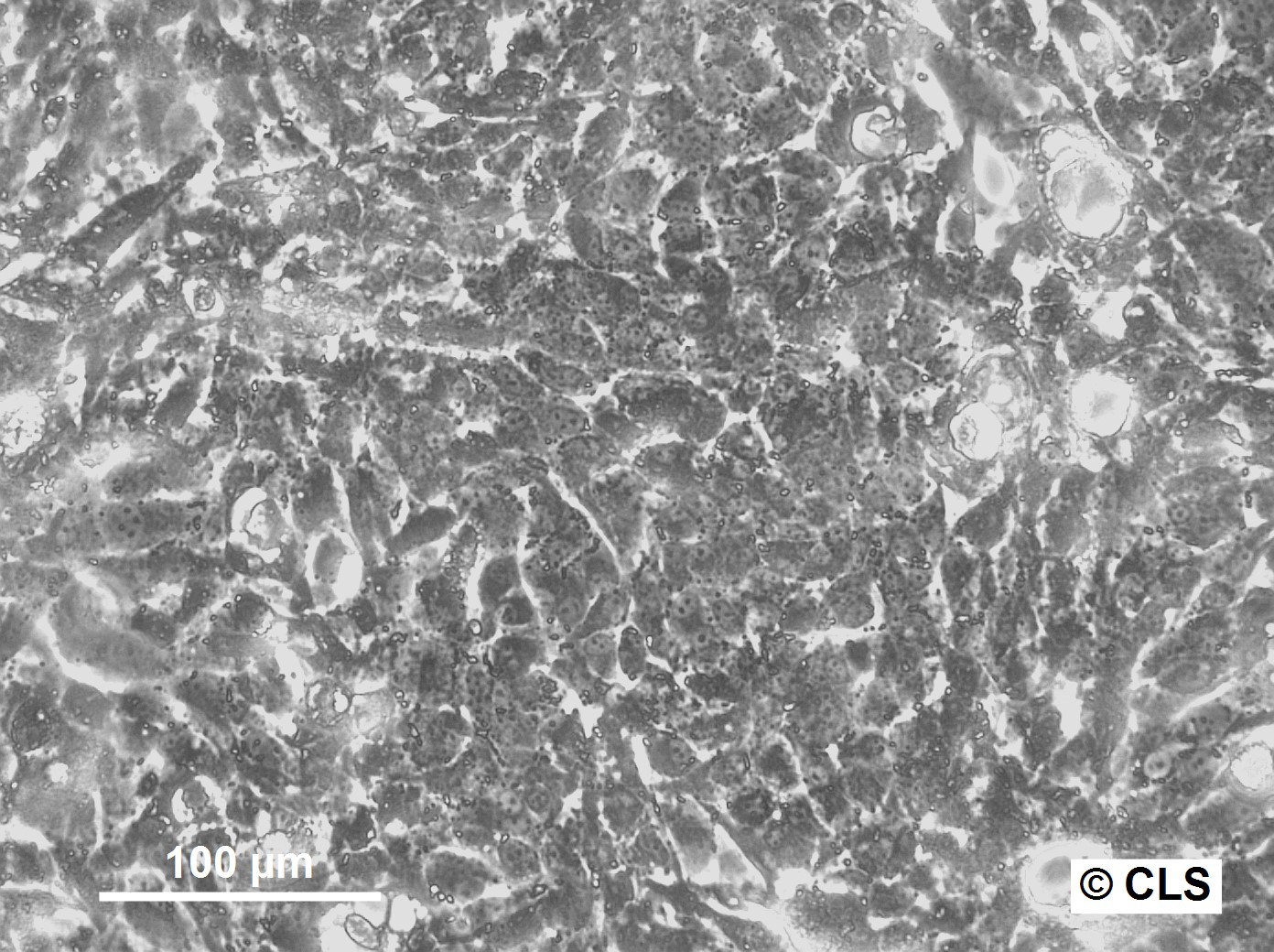

Hep-56.1B Cells
| Unit |
3 x 10^6 cells/ml |
|---|---|
| Cell Type |
Tumor Cells |
| Tissue Type |
Mouse cell lines |
| Organism |
Mouse |
| Donor History |
Hepatocellular carcinoma |
| Growth Properties |
Adherent |
| Growth Conditions |
Culture medium: DMEM ,w: 4.5 g/L Glucose ,w: 4 mM L-Glutamine ,w: 3.7 g/L NaHCO3 ,w: 1.0 mM Sodium pyruvate (Cytion article number 820300a). Supplements: Supplement the medium with 10% FBS. Dissociation reagent: Accutase. Seeding density: 1 x 10⁴ cells/cm². Freeze medium: As a cryopreservation medium ,we use complete growth medium (including FBS) + 10% DMSO for adequate post-thaw viability ,or CM-1 (Cytion catalog number 800100) ,which includes optimized osmoprotectants and metabolic stabilizers to enhance recovery and reduce cryo-induced stress. Incubation atmosphere: 37°C ,5% CO2 ,humidified atmosphere. |
| Immortalization Method | |
| Full Information |

The Hep-70.4 hepatoma cell line is derived from a mouse liver tumor, specifically from the C57BL/6J mouse strain. This cell line is notable for its mutations in the p53 gene, which were identified at different passages during in vitro propagation. At passage number 8, a weak additional signal was detected in the single-strand conformation polymorphism (SSCP) analysis, indicating the presence of a p53 mutation. By passage number 38, two distinct p53 point mutations were identified: a G:C to C:G transversion at codon 135 and a C:G to G:C transversion at codon 138 of exon 5. These mutations led to amino acid changes from alanine to proline and cysteine to tryptophan, respectively.
The Hep-70.4 cell line displays a morphological phenotype that varies significantly during its propagation. Some sublines exhibit an epithelial morphology, while others show a fibroblast-like appearance. This heterogeneity reflects the complex nature of the cell line and its adaptability under different culture conditions. The presence of both normal and mutated p53 alleles in the early passages suggests that the mutations confer a selective growth advantage, leading to the predominance of mutated clones over time.
Intermediate filament protein analysis of the Hep-70.4 cell line revealed the expression of simple keratins K8 and K18, which are typical of normal liver cells, as well as vimentin and keratin K19 to varying degrees. These protein patterns confirm the hepatocytic origin of the cell line and its classification as a hepatoma line. The genomic stability of Hep-70.4 was further assessed through DNA fingerprint analysis, which did not reveal any major structural abnormalities, although changes in the relative intensities of certain bands were observed with increasing passage numbers.
Společnost Cytion vznikla v roce 2004 v německém Heidelbergu s jasným vědeckým posláním: dodávat ověřené lidské a zvířecí buněčné linie bez kontaminace, připravené za přísně kontrolovaných laboratorních podmínek.
Postupně se vypracovala ve spolehlivou buněčnou banku, která slouží akademickým laboratořím, biotechnologickým firmám i farmaceutickým výzkumným týmům po celém světě. Klade přitom důraz na reprodukovatelnost výsledků, přísnou kontrolu kvality a dlouhodobá partnerství.