Genetika člověka
 Mikrobiologické aplikace
 NGS
 Rapid testy

 PCR plasty
 Pipetovací špičky
 Plasty pro buněčnou kultivaci
 Systém pro dlouhodobé skladování vzorků
 Zkumavky

 Třepačky
 Suché lázně
 Centrifugy
 End Point cyclery
 Real-time PCR cyclery
 Fluorometry
 Spektrofotometry
 Izolátory nukleových kyselin
 Pipetovací roboty
 Biobanking
 Live Cell Imaging

 Jednokanálové
 Multikanálové
 Sérologické pipety
 Jednorázové pipety

 Buněčné kultury
 PCR, qPCR, RT
 Detekce Mycoplasmat
 Reverzní transkripce

 Alergie
 Intolerance
 Elisa
 Imunologické analyzátory
 Veterinární imunologie
 Alergie u zvířat
 Intolerance u zvířat

 Čtečky identifikačních čipů
 Termočipy
 Biochemie
 Imunoanalýza


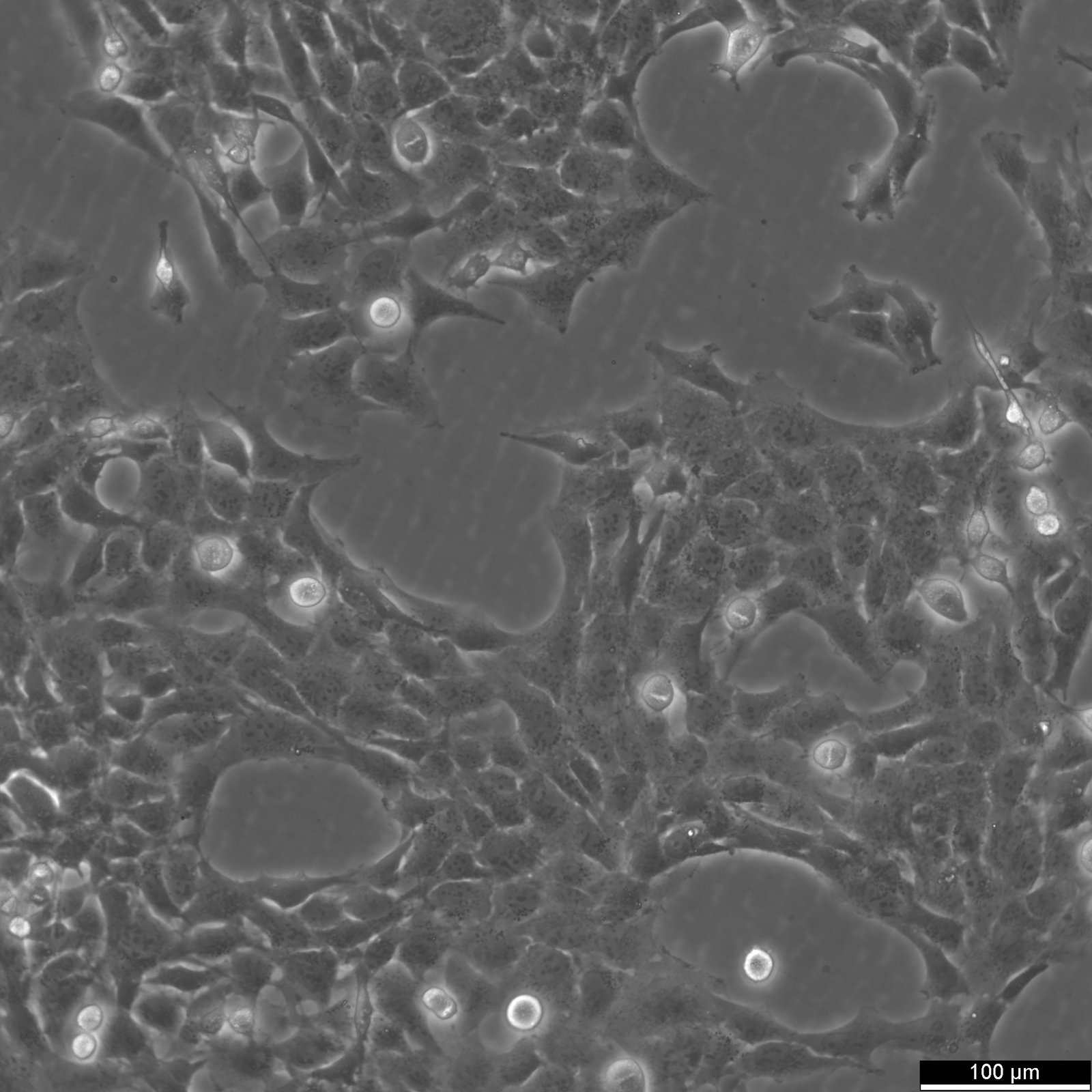

HTR-8/SVneo Cells
| Unit |
3 x 10^6 cells/ml |
|---|---|
| Cell Type |
Immortalized Cells |
| Tissue Type |
Transformed cell lines |
| Organism |
Human |
| Donor History | |
| Growth Properties |
Adherent |
| Growth Conditions |
Culture medium: RPMI 1640 ,w: 2.0 mM stable Glutamine ,w: 2.0 g/L NaHCO3 (Cytion article number 820700a). Supplements: Supplement the medium with 10% FBS. Dissociation reagent: Accutase. Freeze medium: As a cryopreservation medium ,we use complete growth medium (including FBS) + 10% DMSO for adequate post-thaw viability ,or CM-1 (Cytion catalog number 800100) ,which includes optimized osmoprotectants and metabolic stabilizers to enhance recovery and reduce cryo-induced stress. Incubation atmosphere: 37°C ,5% CO2 ,humidified atmosphere. |
| Immortalization Method | |
| Full Information |

HTR-8/SVneo is a human trophoblast cell line derived from the chorionic villi of a first-trimester placenta, specifically from a 6-to-12-week-old embryo. These cells were immortalized by transfecting them with the gene encoding the simian virus 40 (SV40) large T antigen, which extends their lifespan while maintaining characteristics typical of extravillous invasive trophoblasts. This cell line expresses several key markers associated with extravillous trophoblasts, including insulin-like growth factor II (IGF-II), NDOG-5, proliferating cell nuclear antigen (PCNA), and a range of integrins (α1, α3, α5, αv, and β1 subunits, along with the αvβ3/β5 vitronectin receptor). It is negative for macrophage marker 63/D3, endothelial cell marker factor VIII, and α6 and β4 integrin subunits, confirming its trophoblast lineage and distinguishing it from other cell types such as macrophages and endothelial cells.
HTR-8/SVneo cells are widely used as a model to study trophoblast invasion and placental biology, particularly the epithelial-to-mesenchymal transition (EMT), which is crucial for trophoblasts’ invasive behavior during placental development. Research has shown that these cells exhibit a mixed population of epithelial and mesenchymal phenotypes, with the ability to undergo EMT under standard culture conditions. This transition is mediated by TGF-β signaling, which promotes the mesenchymal phenotype, as evidenced by the upregulation of mesenchymal markers such as vimentin and the downregulation of epithelial markers like E-cadherin. This makes HTR-8/SVneo a valuable in vitro model for studying the molecular mechanisms underlying EMT in trophoblasts and its implications in both normal placental development and pregnancy-related disorders.
Studies have further demonstrated that HTR-8/SVneo cells can form spheroids, which predominantly express epithelial markers. When these spheroids are re-plated in 2D culture, the cells exhibit a shift towards a mesenchymal phenotype, indicating an ongoing EMT process. This cell line’s unique properties, including its responsiveness to TGF-β and its mixed epithelial-mesenchymal nature, provide critical insights into the complex cellular dynamics of trophoblast invasion and the regulation of placental development, offering a robust platform for investigating pregnancy-related pathologies such as pre-eclampsia and intrauterine growth restriction.
Společnost Cytion vznikla v roce 2004 v německém Heidelbergu s jasným vědeckým posláním: dodávat ověřené lidské a zvířecí buněčné linie bez kontaminace, připravené za přísně kontrolovaných laboratorních podmínek.
Postupně se vypracovala ve spolehlivou buněčnou banku, která slouží akademickým laboratořím, biotechnologickým firmám i farmaceutickým výzkumným týmům po celém světě. Klade přitom důraz na reprodukovatelnost výsledků, přísnou kontrolu kvality a dlouhodobá partnerství.