Genetika člověka
 Mikrobiologické aplikace
 NGS
 Rapid testy

 PCR plasty
 Pipetovací špičky
 Plasty pro buněčnou kultivaci
 Systém pro dlouhodobé skladování vzorků
 Zkumavky

 Třepačky
 Suché lázně
 Centrifugy
 End Point cyclery
 Real-time PCR cyclery
 Fluorometry
 Spektrofotometry
 Izolátory nukleových kyselin
 Pipetovací roboty
 Biobanking
 Live Cell Imaging

 Jednokanálové
 Multikanálové
 Sérologické pipety
 Jednorázové pipety

 Buněčné kultury
 PCR, qPCR, RT
 Detekce Mycoplasmat
 Reverzní transkripce

 Alergie
 Intolerance
 Elisa
 Imunologické analyzátory
 Veterinární imunologie
 Alergie u zvířat
 Intolerance u zvířat

 Čtečky identifikačních čipů
 Termočipy
 Biochemie
 Imunoanalýza


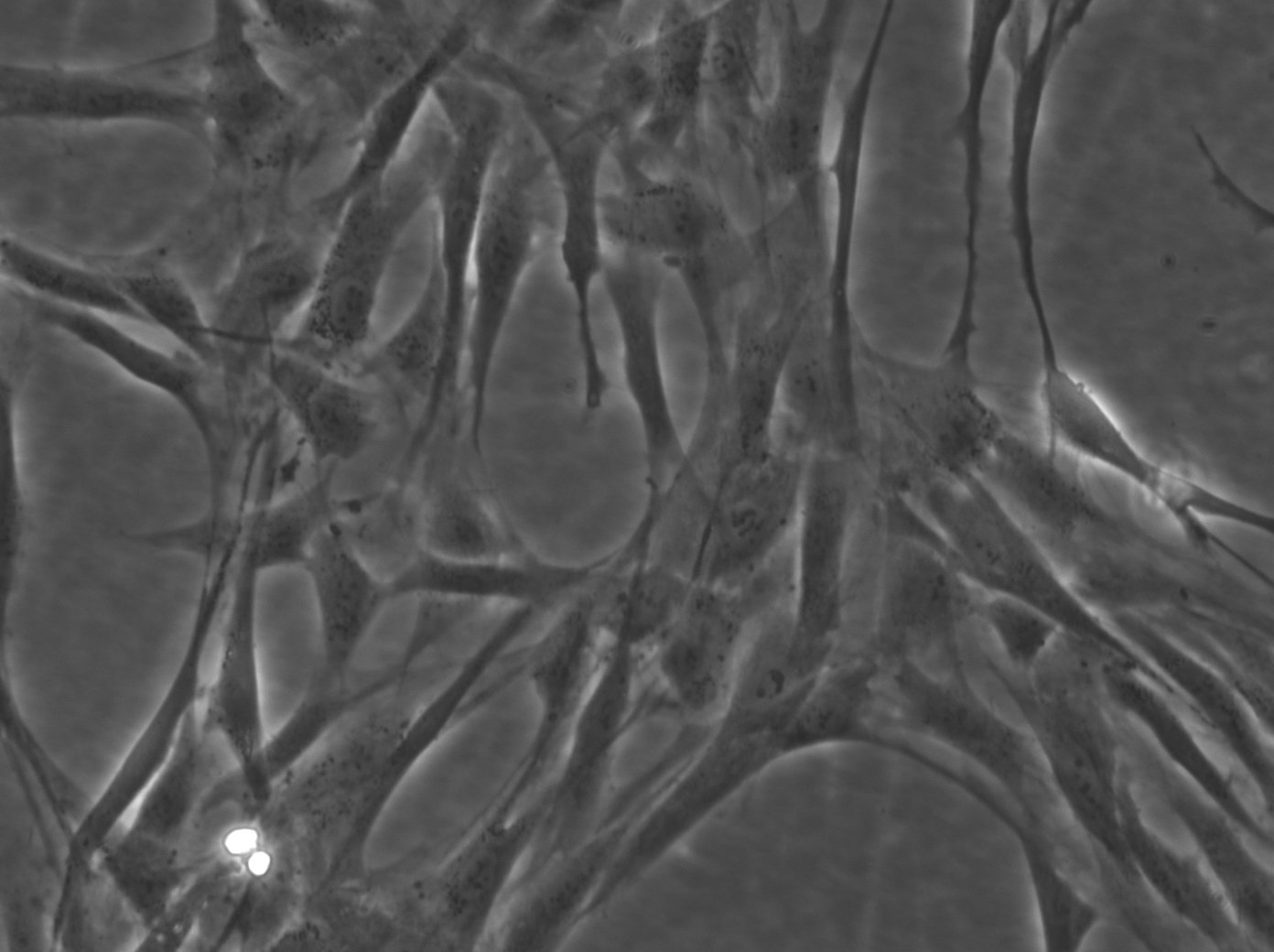

Human Foreskin Fibroblast Cells (HFFC)
| Unit |
3 x 10^6 cells/ml |
|---|---|
| Cell Type |
Primary Cells |
| Tissue Type |
Fibroblasts ,Primary Cells |
| Organism |
Human |
| Donor History | |
| Growth Properties |
Adherent |
| Growth Conditions |
Culture medium: DMEM:Ham's F12 (1:1) ,w: 3.1 g/L Glucose ,w: 2.5 mM L-Glutamine ,w: 15 mM HEPES ,w: 0.5 mM Sodium pyruvate ,w: 1.2 g/L NaHCO3 (Cytion article number 820400a). Supplements: Supplement the medium with 10% FBS ,10 ng/mL bFGF ,10 microgram/L Insulin. Dissociation reagent: Accutase. Freeze medium: As a cryopreservation medium ,we use 90% FBS + 10% DMSO to maintain viability ,or CM-1 (Cytion catalog number 800100) ,which includes optimized osmoprotectants and metabolic stabilizers to enhance recovery and reduce cryo-induced stress. Incubation atmosphere: 37°C ,5% CO2 ,humidified atmosphere. |
| Immortalization Method | |
| Full Information |
https://www.cytion.com/Human-Foreskin-Fibroblast-Cells-HFFC/300715 |

Human Foreskin Fibroblast Cells (HFFC) are derived from the fibroblastic tissue of juvenile foreskin. These cells are an essential tool in the study of human biology, particularly in research related to wound healing, skin biology, and cellular senescence. Fibroblasts play a critical role in the synthesis of the extracellular matrix and collagen, which are crucial components of the connective tissue. HFFC are often utilized in experiments exploring the mechanisms of skin development, dermal remodeling, and the cellular responses to various growth factors and cytokines.
HFFC are characterized by their spindle-shaped morphology and their ability to proliferate rapidly in vitro, making them suitable for various experimental applications, including tissue engineering, regenerative medicine, and drug screening. These cells are also valuable in studies investigating the effects of UV radiation on skin cells, the pathophysiology of fibrotic diseases, and the aging process of skin. Due to their neonatal origin, HFFC are less likely to have accumulated mutations compared to adult fibroblasts, making them an ideal model for studying primary cellular functions.
Společnost Cytion vznikla v roce 2004 v německém Heidelbergu s jasným vědeckým posláním: dodávat ověřené lidské a zvířecí buněčné linie bez kontaminace, připravené za přísně kontrolovaných laboratorních podmínek.
Postupně se vypracovala ve spolehlivou buněčnou banku, která slouží akademickým laboratořím, biotechnologickým firmám i farmaceutickým výzkumným týmům po celém světě. Klade přitom důraz na reprodukovatelnost výsledků, přísnou kontrolu kvality a dlouhodobá partnerství.