Genetika člověka
 Mikrobiologické aplikace
 NGS
 Rapid testy

 PCR plasty
 Pipetovací špičky
 Plasty pro buněčnou kultivaci
 Systém pro dlouhodobé skladování vzorků
 Zkumavky

 Třepačky
 Suché lázně
 Centrifugy
 End Point cyclery
 Real-time PCR cyclery
 Fluorometry
 Spektrofotometry
 Izolátory nukleových kyselin
 Pipetovací roboty
 Biobanking
 Live Cell Imaging

 Jednokanálové
 Multikanálové
 Sérologické pipety
 Jednorázové pipety

 Buněčné kultury
 PCR, qPCR, RT
 Detekce Mycoplasmat
 Reverzní transkripce

 Alergie
 Intolerance
 Elisa
 Imunologické analyzátory
 Veterinární imunologie
 Alergie u zvířat
 Intolerance u zvířat

 Čtečky identifikačních čipů
 Termočipy
 Biochemie
 Imunoanalýza


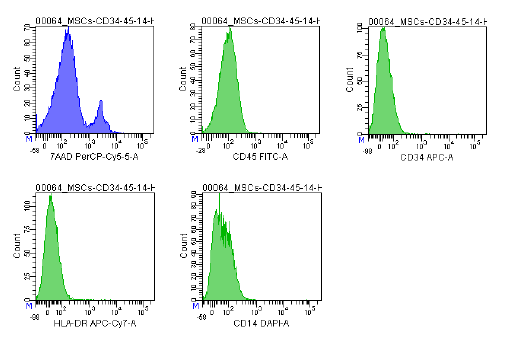

Human Mesenchymal Stem Cells – Chorion Villi
| Unit |
3 x 10^6 cells/ml |
|---|---|
| Cell Type |
Primary Cells |
| Tissue Type |
Stem Cells |
| Organism |
Human |
| Donor History | |
| Growth Properties |
Adherent |
| Growth Conditions |
Culture medium: Alpha MEM ,w: 2.0 mM stable Glutamine ,w/o: Ribonucleosides ,w/o: Deoxyribonucleosides ,w: 1.0 mM Sodium pyruvate ,w: 2.2g/L NaHCO3. Supplements: Supplement the medium with 10% FBS ,2 ng/mL bFGF. Dissociation reagent: Trypsin-EDTA. Seeding density: 1 to 3 x 10⁴ cells/cm². Freeze medium: As a cryopreservation medium ,we use 80% FBS + 10% basal medium + 10% DMSO to maintain viability ,or CM-1 (Cytion catalog number 800100) for superior cryoprotection ,preventing unwanted differentiation while preserving pluripotency. Incubation atmosphere: 37°C ,5% CO2 ,humidified atmosphere. |
| Immortalization Method | |
| Full Information |
https://www.cytion.com/Human-Mesenchymal-Stem-Cells-Chorion-Villi/300646 |

Human Mesenchymal Stem Cells (MSCs) derived from chorion villi represent a highly versatile population of multipotent stromal cells capable of differentiating into multiple lineages, including adipocytes, osteoblasts, and chondrocytes. These cells are isolated from the chorionic villi, a part of the placenta that plays a critical role in maternal-fetal exchange. Chorion villi are unique in that they are composed of both fetal and maternal tissues, providing a distinct microenvironment that contributes to the robust self-renewing and differentiation capabilities of the MSCs derived from this source. The MSCs from chorion villi exhibit a more primitive phenotype compared to MSCs derived from adult tissues, often displaying a higher proliferation rate and broader differentiation potential. These characteristics make them particularly valuable for research in regenerative medicine, tissue engineering, and disease modeling.
These MSCs have been rigorously demonstrated in vitro to differentiate into adipocytes, osteoblasts, and chondrocytes when cultured in lineage-specific differentiation media, underscoring their potential for applications in tissue regeneration and disease modeling. The unique origin of these cells from the chorionic villi imparts them with specific immunomodulatory properties, which may differ from MSCs derived from other sources such as bone marrow or adipose tissue. This distinction is crucial for studies focusing on immune-related conditions or developing allogeneic cell therapies.
MSCs are cryopreserved at early passages in a specialized cryomedium, ensuring their viability and functionality post-thaw. Each cryovial contains a minimum of 1 x 10⁶ cells with a viability rate ranging between 92% and 95%, as determined by the Trypan Blue dye exclusion test. These cells are sourced from healthy donors who have provided informed consent, ensuring ethical collection practices. Each batch undergoes stringent quality control assessments, including thorough testing for cell identification, purity, potency, and viability. These measures guarantee that the cultured MSCs are of high quality and appropriate for research applications, excluding therapeutic or in vivo use.
Společnost Cytion vznikla v roce 2004 v německém Heidelbergu s jasným vědeckým posláním: dodávat ověřené lidské a zvířecí buněčné linie bez kontaminace, připravené za přísně kontrolovaných laboratorních podmínek.
Postupně se vypracovala ve spolehlivou buněčnou banku, která slouží akademickým laboratořím, biotechnologickým firmám i farmaceutickým výzkumným týmům po celém světě. Klade přitom důraz na reprodukovatelnost výsledků, přísnou kontrolu kvality a dlouhodobá partnerství.