
 Genetika člověka
 Mikrobiologické aplikace
 NGS
NGS Rapid testy
 PCR plasty
 Pipetovací špičky
 Plasty pro buněčnou kultivaci
 Systém pro dlouhodobé skladování vzorků
 Zkumavky
 Třepačky
 Suché lázně
 Centrifugy
 End Point cyclery
 Real-time PCR cyclery
 Fluorometry
 Spektrofotometry
 Izolátory nukleových kyselin
 Pipetovací roboty
 Biobanking
 Live Cell Imaging
 Jednokanálové
 Multikanálové
 Sérologické pipety
 Jednorázové pipety
 Buněčné kultury
 PCR, qPCR, RT
 Detekce Mycoplasmat
 Reverzní transkripce
 Alergie
 Intolerance
 Elisa
Elisa Imunologické analyzátory
 Veterinární imunologie
 Alergie u zvířat
 Intolerance u zvířat
 Biochemie
 Imunoanalýza

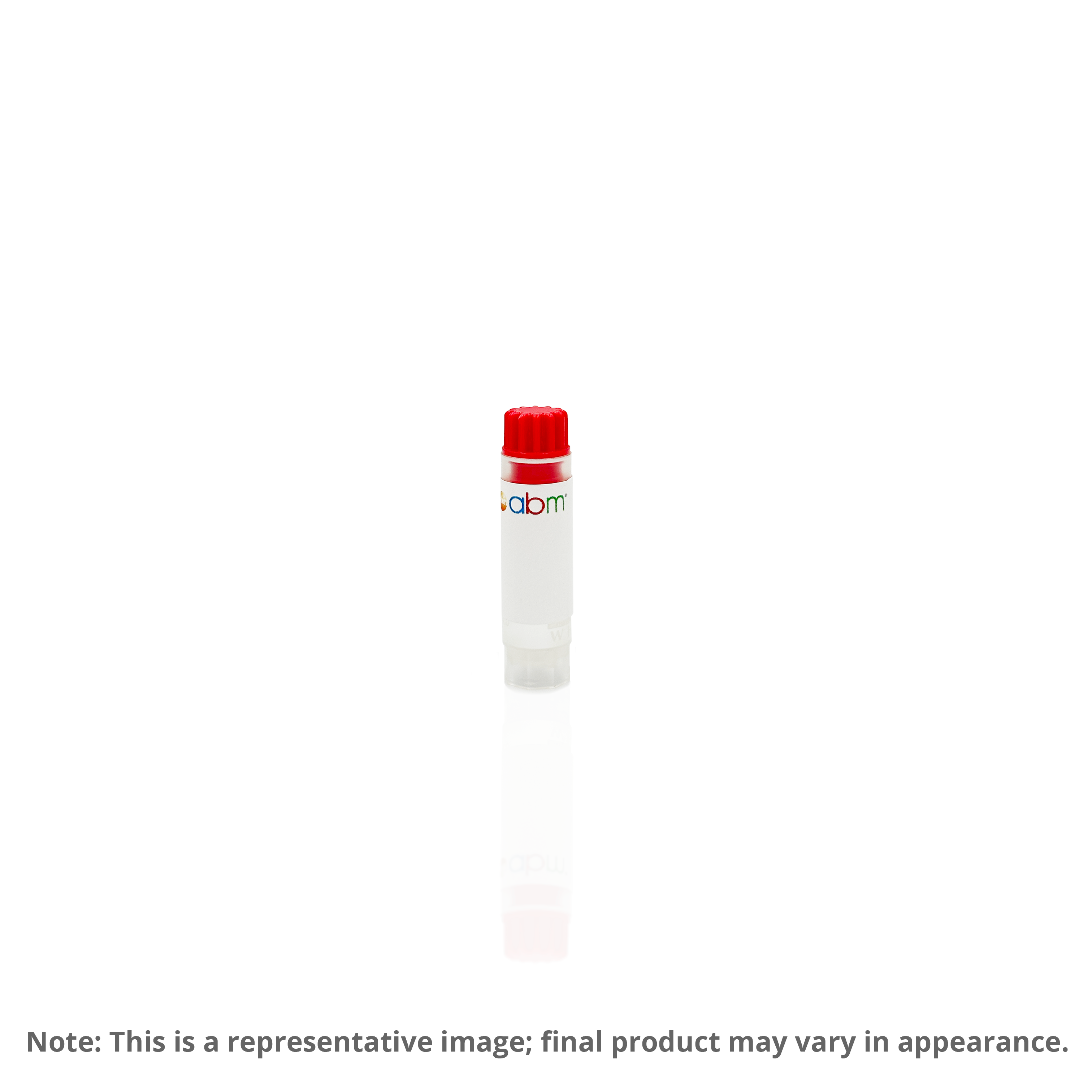

Huntingtin 150Q Stable PC12 Cell Line
| Unit |
1×10⁶ cells / 1.0 ml |
|---|---|
| Cell Type |
Stable (KO/Expressing) Cells |
| Tissue Type |
Adrenal Gland |
| Organism |
Rat (R. norvegicus) |
| Donor History |
Male ,NEDH rat ,Adrenal gland pheochromocytoma |
| Growth Properties |
Adherent ,small and irregular shaped |
| Growth Conditions |
PriCoat™ T25 Flasks (G299) or Applied Cell Extracellular Matrix (G422) are recommended for optimal cell culture. Dulbecco's Modified Eagle Medium (DMEM) ,High Glucose (TM500) + 5% FBS + 10% Horse Serum + 1% Penicillin/Streptomycin Solution (G255) ,37.0°C ,5% CO₂. |
| Immortalization Method | |
| Full Information |
https://www.abmgood.com/huntingtin-150q-stable-pc12-cell-line.html |

Huntington disease (HD) is an autosomally dominant degenerative disorder resulting from polyglutamine expansion (>37units) in the huntingtin gene. The repeat is often localized in the N-terminal region of huntingtin and the resulting N-terminal fragments accumulate in the nucleus and become toxic to the cells. The HD 150Q protein is predominantly present in the nuclei and as a result, these cells lack normal neurite development. Its control cell line, the Huntingtin 20Q Stable PC12 cell line, in contrast, displays the HD 20Q proteins evenly in the cytoplasm. The two cell lines together provide a valuable model for studies relating to altered gene expression caused by the polyglutamine tracts and the pathology of HD. Generated by the co-transfection of a pCIS expression vector expressing a partial huntingtin cDNA containing 150 CAG repeats and a pCDNA3 expression vector carrying G418 resistance.