Genetika člověka
 Mikrobiologické aplikace
 NGS
 Rapid testy

 PCR plasty
 Pipetovací špičky
 Plasty pro buněčnou kultivaci
 Systém pro dlouhodobé skladování vzorků
 Zkumavky

 Třepačky
 Suché lázně
 Centrifugy
 End Point cyclery
 Real-time PCR cyclery
 Fluorometry
 Spektrofotometry
 Izolátory nukleových kyselin
 Pipetovací roboty
 Biobanking
 Live Cell Imaging

 Jednokanálové
 Multikanálové
 Sérologické pipety
 Jednorázové pipety

 Buněčné kultury
 PCR, qPCR, RT
 Detekce Mycoplasmat
 Reverzní transkripce

 Alergie
 Intolerance
 Elisa
 Imunologické analyzátory
 Veterinární imunologie
 Alergie u zvířat
 Intolerance u zvířat

 Čtečky identifikačních čipů
 Termočipy
 Biochemie
 Imunoanalýza


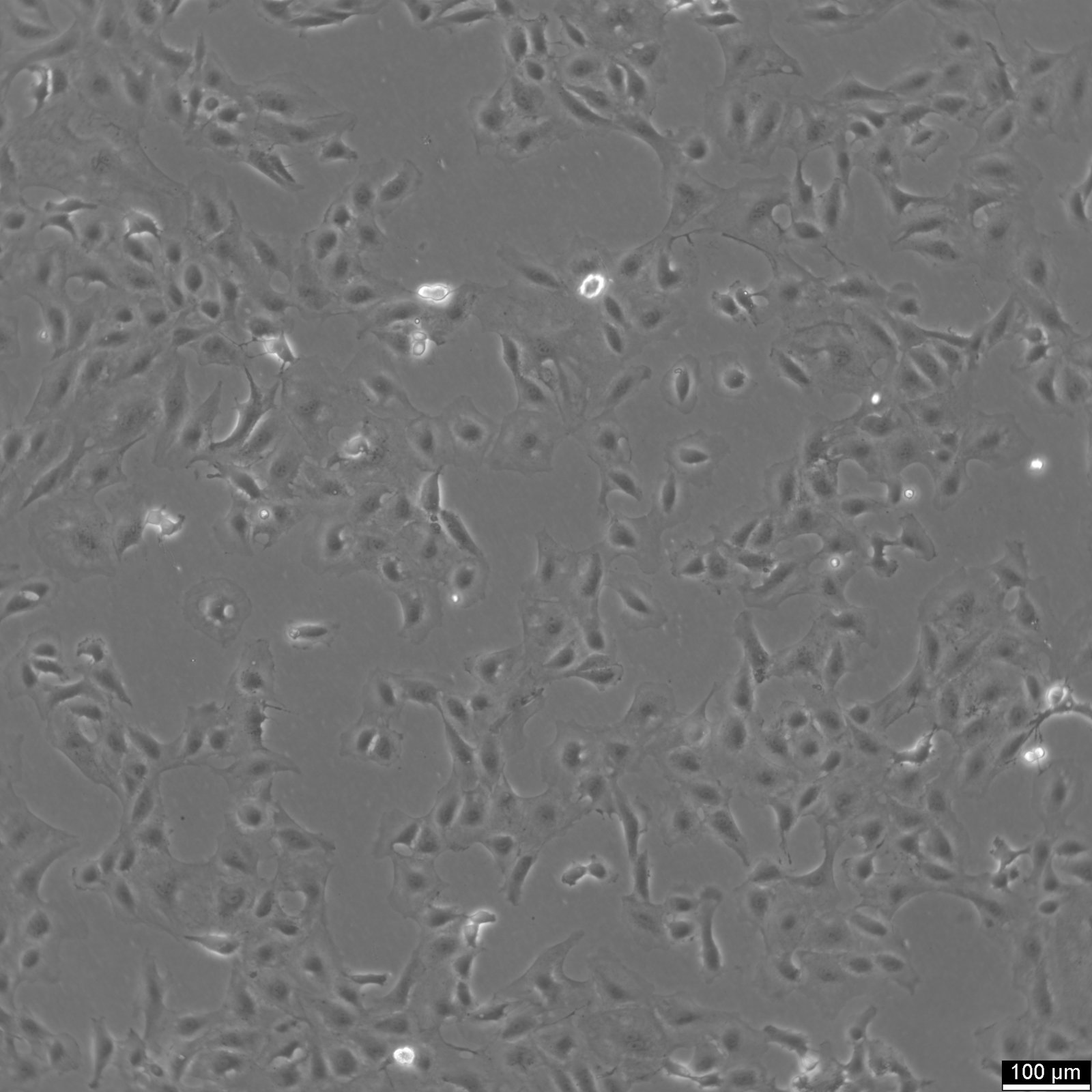

IEC-18 Cells
| Unit |
3 x 10^6 cells/ml |
|---|---|
| Cell Type |
Immortalized Cells |
| Tissue Type |
Rat cell lines |
| Organism |
Rat |
| Donor History |
Normal |
| Growth Properties |
Adherent |
| Growth Conditions |
Culture medium: DMEM ,w: 4.5 g/L Glucose ,w: 4 mM L-Glutamine ,w: 3.7 g/L NaHCO3 ,w: 1.0 mM Sodium pyruvate (Cytion article number 820300a). Supplements: Supplement the medium with 10% FBS. Dissociation reagent: Accutase. Seeding density: 2 x 10⁴ cells/cm². Freeze medium: As a cryopreservation medium ,we use complete growth medium (including FBS) + 10% DMSO for adequate post-thaw viability ,or CM-1 (Cytion catalog number 800100) ,which includes optimized osmoprotectants and metabolic stabilizers to enhance recovery and reduce cryo-induced stress. Incubation atmosphere: 37°C ,5% CO2 ,humidified atmosphere. |
| Immortalization Method | |
| Full Information |

The IEC-18 cell line is a non-transformed epithelial cell line derived from the crypt cells of rat small intestine. These cells have been shown to effectively model the physiological properties of the small intestinal epithelium, particularly with respect to chloride ion (Cl⁻) transport. Chloride channels in IEC-18 cells exhibit distinct types of conductances that respond to various stimuli such as cell swelling, increased intracellular calcium (Ca²⁺), and elevated cyclic AMP (cAMP). For instance, swelling-activated Cl⁻ currents in IEC-18 cells are characterized by outward rectification and voltage independence. Moreover, IEC-18 cells express cystic fibrosis transmembrane conductance regulator (CFTR) channels, evidenced by the presence of cAMP-activated Cl⁻ conductance which can be inhibited by glibenclamide and 5-nitro-2-(3-phenylpropylamino) benzoic acid (NPPB), but not affected by DIDS.
IEC-18 cells have also been used to explore cell survival mechanisms under detachment-induced stress, known as anoikis. Research indicates that prostaglandin E2 (PGE2) can promote cell viability and aggregation in detached IEC-18 cells through cAMP-mediated signaling pathways. This protection from anoikis is associated with the activation of adenylate cyclase and protein kinase A (PKA), enhancing cell adhesion and viability even in suspended states. Such findings are significant for understanding inflammation-related processes and potential contributions to carcinogenesis in intestinal tissues.
Furthermore, IEC-18 monolayers have been employed to study the transport of various molecules across the intestinal barrier. Compared to the Caco-2 cell line, IEC-18 cells provide a more accurate model for passive transcellular and paracellular transport due to their structural similarities to small intestine crypt cells. Unlike Caco-2 cells, which possess significant active transport capabilities, IEC-18 cells demonstrate minimal carrier-mediated transport, making them a more suitable choice for analyzing the passive permeability of hydrophilic macromolecules.
Společnost Cytion vznikla v roce 2004 v německém Heidelbergu s jasným vědeckým posláním: dodávat ověřené lidské a zvířecí buněčné linie bez kontaminace, připravené za přísně kontrolovaných laboratorních podmínek.
Postupně se vypracovala ve spolehlivou buněčnou banku, která slouží akademickým laboratořím, biotechnologickým firmám i farmaceutickým výzkumným týmům po celém světě. Klade přitom důraz na reprodukovatelnost výsledků, přísnou kontrolu kvality a dlouhodobá partnerství.