
 Genetika člověka
 Mikrobiologické aplikace
 NGS
 Rapid testy

 PCR plasty
 Pipetovací špičky
 Plasty pro buněčnou kultivaci
 Systém pro dlouhodobé skladování vzorků
 Zkumavky

 Třepačky
 Suché lázně
 Centrifugy
 End Point cyclery
 Real-time PCR cyclery
 Fluorometry
 Spektrofotometry
 Izolátory nukleových kyselin
 Pipetovací roboty
 Biobanking
 Live Cell Imaging

 Jednokanálové
 Multikanálové
 Sérologické pipety
 Jednorázové pipety

 Buněčné kultury
 PCR, qPCR, RT
 Detekce Mycoplasmat
 Reverzní transkripce

 Alergie
 Intolerance
 Elisa
 Imunologické analyzátory
 Veterinární imunologie
 Alergie u zvířat
 Intolerance u zvířat

 Čtečky identifikačních čipů
 Termočipy
 Biochemie
 Imunoanalýza


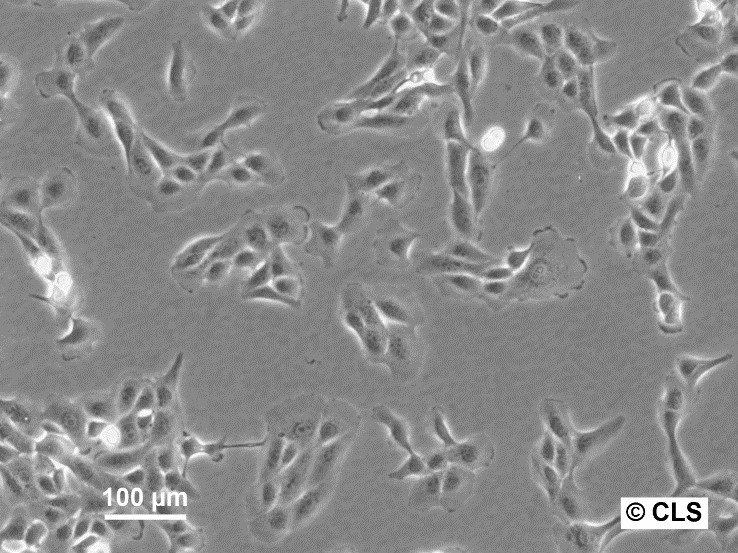

MDBK (NBL-1) Cells
| Unit |
3 x 10^6 cells/ml |
|---|---|
| Cell Type |
Immortalized Cells |
| Tissue Type |
Bovine cell lines |
| Organism |
Bovine |
| Donor History | |
| Growth Properties |
Monolayer ,adherent |
| Growth Conditions |
Culture medium: EMEM (MEM Eagle) ,w: 2 mM L-Glutamine ,w: 2.2 g/L NaHCO3 ,w: EBSS (Cytion article number 820100a). Supplements: Supplement the medium with 10% FBS and 1% NEAA. Dissociation reagent: Accutase. Seeding density: 1 x 10⁴ cells/cm². Freeze medium: As a cryopreservation medium ,we use complete growth medium (including FBS) + 10% DMSO for adequate post-thaw viability ,or CM-1 (Cytion catalog number 800100) ,which includes optimized osmoprotectants and metabolic stabilizers to enhance recovery and reduce cryo-induced stress. Incubation atmosphere: 37°C ,5% CO2 ,humidified atmosphere. |
| Immortalization Method | |
| Full Information |

MDBK cells, short for Madin-Darby Bovine Kidney cells (also known as NBL-1), are an exceptional biological resource derived from the kidneys of apparently healthy adult Bos taurus, specifically male individuals. These cells grow adherently and possess an epithelial-like morphology.
One of the remarkable applications of MDBK cells lies in their ability to facilitate in vitro studies on the expression of Eimeria bovis-derived antigens on the host cell surface membrane. Additionally, MDBK cells have been employed in investigations centred around the ubiquitination and degradation of signal transducer and activator of transcription 1 and 2 (STAT1 and STAT2) by the V proteins of paramyxoviruses, such as simian virus five and human parainfluenza virus type 2.
With an average doubling time ranging from 24 to 35 hours, MDBK cells exhibit a moderate proliferation rate. The establishment of the MDBK cell line dates back to February 18, 1957, when S.H. Madin and N.B. Darby successfully derived it from the kidney of a healthy adult steer. Since then, these cells have become a cornerstone in biological research, enabling numerous breakthroughs in various scientific fields.
The karyotype analysis of MDBK cells reveals a modal chromosome number of 51, indicating a hypodiploid state. Within the cell population, the hypodiploid condition manifests as a stemline chromosome number of 2n = 60, with a 2S component occurring in approximately 5% of the cells. Moreover, 11-14 marker chromosomes are typically present, comprising a combination of metacentric, submetacentric, and acro-telocentric chromosomes. Notably, the x chromosome appears monosomic, while no HSR chromosomes or DM’s (double minutes) are observed.
MDBK cells exhibit an array of applications in the realm of biological research. Their utility extends to 3D cell culture, enabling scientists to recreate complex tissue-like structures for advanced studies. Furthermore, MDBK cells are invaluable in high-throughput screening, facilitating the rapid and efficient screening of compounds or agents for various purposes. Additionally, these cells play a crucial role in toxicology studies, essential for evaluating the safety and potential adverse effects of substances on living organisms.Regarding viral susceptibility, MDBK cells demonstrate receptiveness to several pathogens, including Vesicular stomatitis Orsay (Indiana) virus, infectious bovine rhinotracheitis virus, bovine rhinotracheitis virus, bovine parvovirus, bovine adenovirus 2 and 3, bovine viral diarrhoea virus 1, and parainfluenza three virus. This susceptibility to a diverse range of viruses makes MDBK cells invaluable for investigating viral pathogenesis and evaluating antiviral strategies.
Společnost Cytion vznikla v roce 2004 v německém Heidelbergu s jasným vědeckým posláním: dodávat ověřené lidské a zvířecí buněčné linie bez kontaminace, připravené za přísně kontrolovaných laboratorních podmínek.
Postupně se vypracovala ve spolehlivou buněčnou banku, která slouží akademickým laboratořím, biotechnologickým firmám i farmaceutickým výzkumným týmům po celém světě. Klade přitom důraz na reprodukovatelnost výsledků, přísnou kontrolu kvality a dlouhodobá partnerství.