Genetika člověka
 Mikrobiologické aplikace
 NGS
 Rapid testy

 PCR plasty
 Pipetovací špičky
 Plasty pro buněčnou kultivaci
 Systém pro dlouhodobé skladování vzorků
 Zkumavky

 Třepačky
 Suché lázně
 Centrifugy
 End Point cyclery
 Real-time PCR cyclery
 Fluorometry
 Spektrofotometry
 Izolátory nukleových kyselin
 Pipetovací roboty
 Biobanking
 Live Cell Imaging

 Jednokanálové
 Multikanálové
 Sérologické pipety
 Jednorázové pipety

 Buněčné kultury
 PCR, qPCR, RT
 Detekce Mycoplasmat
 Reverzní transkripce

 Alergie
 Intolerance
 Elisa
 Imunologické analyzátory
 Veterinární imunologie
 Alergie u zvířat
 Intolerance u zvířat

 Čtečky identifikačních čipů
 Termočipy
 Biochemie
 Imunoanalýza


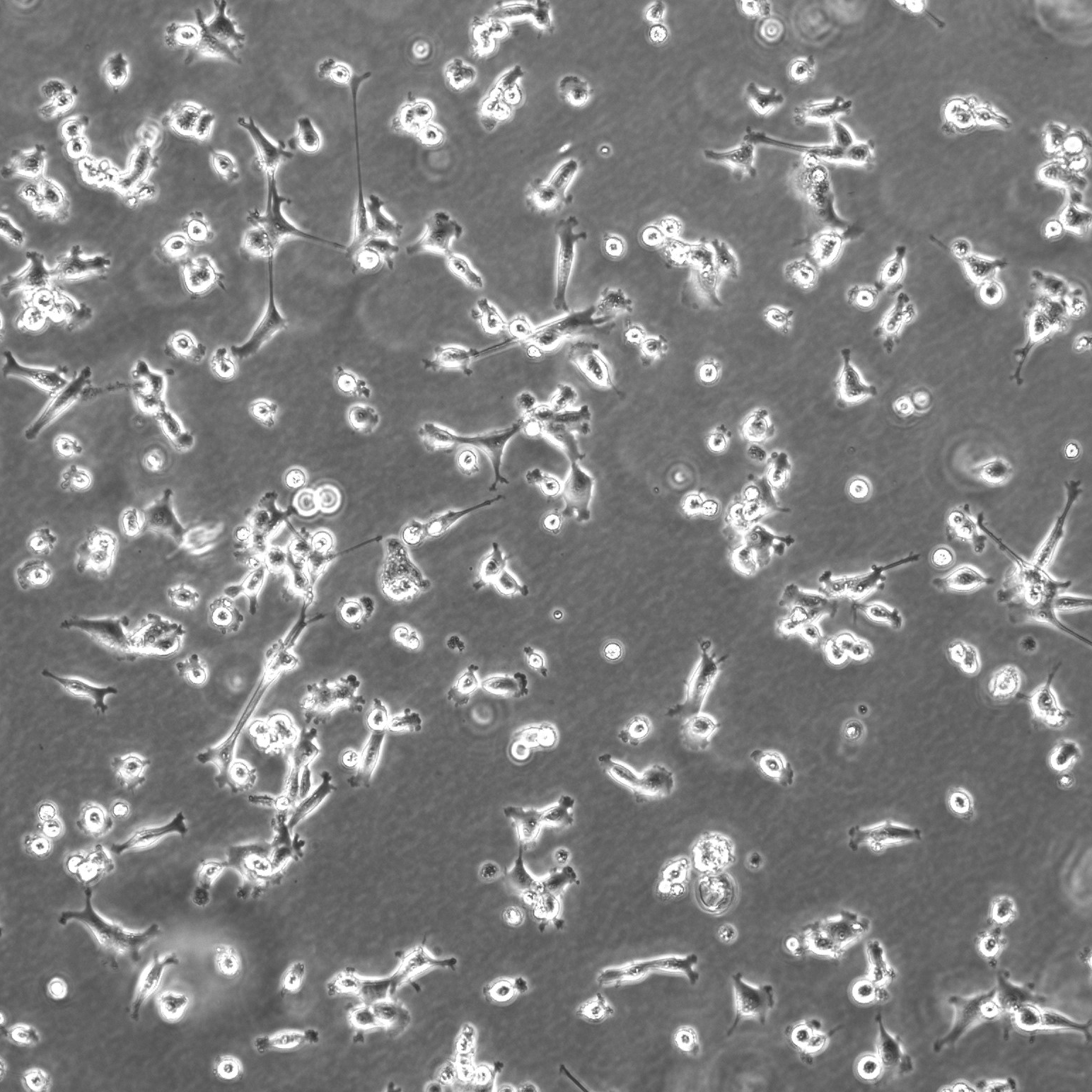

MSTO-211H Cells
| Unit |
3 x 10^6 cells/ml |
|---|---|
| Cell Type |
Tumor Cells |
| Tissue Type |
Lung cancer cell lines |
| Organism |
Human |
| Donor History |
Pleural mesothelioma |
| Growth Properties |
Adherent |
| Growth Conditions |
Culture medium: RPMI 1640 ,w: 2.0 mM stable Glutamine ,w: 2.0 g/L NaHCO3 (Cytion article number 820700a). Supplements: Supplement the medium with 10% FBS. Dissociation reagent: Accutase. Seeding density: 1 x 10⁴ cells/cm². Freeze medium: As a cryopreservation medium ,we use complete growth medium (including FBS) + 10% DMSO for adequate post-thaw viability ,or CM-1 (Cytion catalog number 800100) ,which includes optimized osmoprotectants and metabolic stabilizers to enhance recovery and reduce cryo-induced stress. Incubation atmosphere: 37°C ,5% CO2 ,humidified atmosphere. |
| Immortalization Method | |
| Full Information |

The MSTO-211H cell line is derived from a patient with biphasic mesothelioma, specifically from a pleural effusion. It is classified as metastatic, and the patient had not undergone prior radiation or chemotherapy treatments before the establishment of the cell line. MSTO-211H cells are notable for expressing several markers that are significant in understanding both their biological behavior and their potential utility in cancer research. These cells possess high-affinity binding sites for epidermal growth factor (EGF), a property that may contribute to their proliferative capabilities, as EGF is a key regulator of cell growth and differentiation. The presence of EGF receptors suggests these cells could be useful in studying pathways related to growth factor signaling in cancer. In addition to EGF receptors, MSTO-211H cells express neuron-specific enolase (NSE), an enzyme typically found in neurons and neuroendocrine cells. NSE expression in MSTO-211H cells may be indicative of a neuroendocrine differentiation potential, a feature that can be significant for understanding the heterogeneity of mesothelioma tumors. Furthermore, the cells express both the alpha and beta subunits of human chorionic gonadotropin (HCG), a hormone typically produced during pregnancy but also known to be secreted by certain cancers. The expression of HCG subunits in MSTO-211H cells suggests a possible role in tumor biology, potentially related to immune evasion or tumor progression mechanisms. These markers collectively highlight the complex nature of this cell line, making it a valuable model for investigating mesothelioma biology and the effects of therapeutic agents.
Společnost Cytion vznikla v roce 2004 v německém Heidelbergu s jasným vědeckým posláním: dodávat ověřené lidské a zvířecí buněčné linie bez kontaminace, připravené za přísně kontrolovaných laboratorních podmínek.
Postupně se vypracovala ve spolehlivou buněčnou banku, která slouží akademickým laboratořím, biotechnologickým firmám i farmaceutickým výzkumným týmům po celém světě. Klade přitom důraz na reprodukovatelnost výsledků, přísnou kontrolu kvality a dlouhodobá partnerství.