
 Genetika člověka
 Mikrobiologické aplikace
 NGS
 Rapid testy

 PCR plasty
 Pipetovací špičky
 Plasty pro buněčnou kultivaci
 Systém pro dlouhodobé skladování vzorků
 Zkumavky

 Třepačky
 Suché lázně
 Centrifugy
 End Point cyclery
 Real-time PCR cyclery
 Fluorometry
 Spektrofotometry
 Izolátory nukleových kyselin
 Pipetovací roboty
 Biobanking
 Live Cell Imaging

 Jednokanálové
 Multikanálové
 Sérologické pipety
 Jednorázové pipety

 Buněčné kultury
 PCR, qPCR, RT
 Detekce Mycoplasmat
 Reverzní transkripce

 Alergie
 Intolerance
 Elisa
 Imunologické analyzátory
 Veterinární imunologie
 Alergie u zvířat
 Intolerance u zvířat

 Čtečky identifikačních čipů
 Termočipy
 Biochemie
 Imunoanalýza


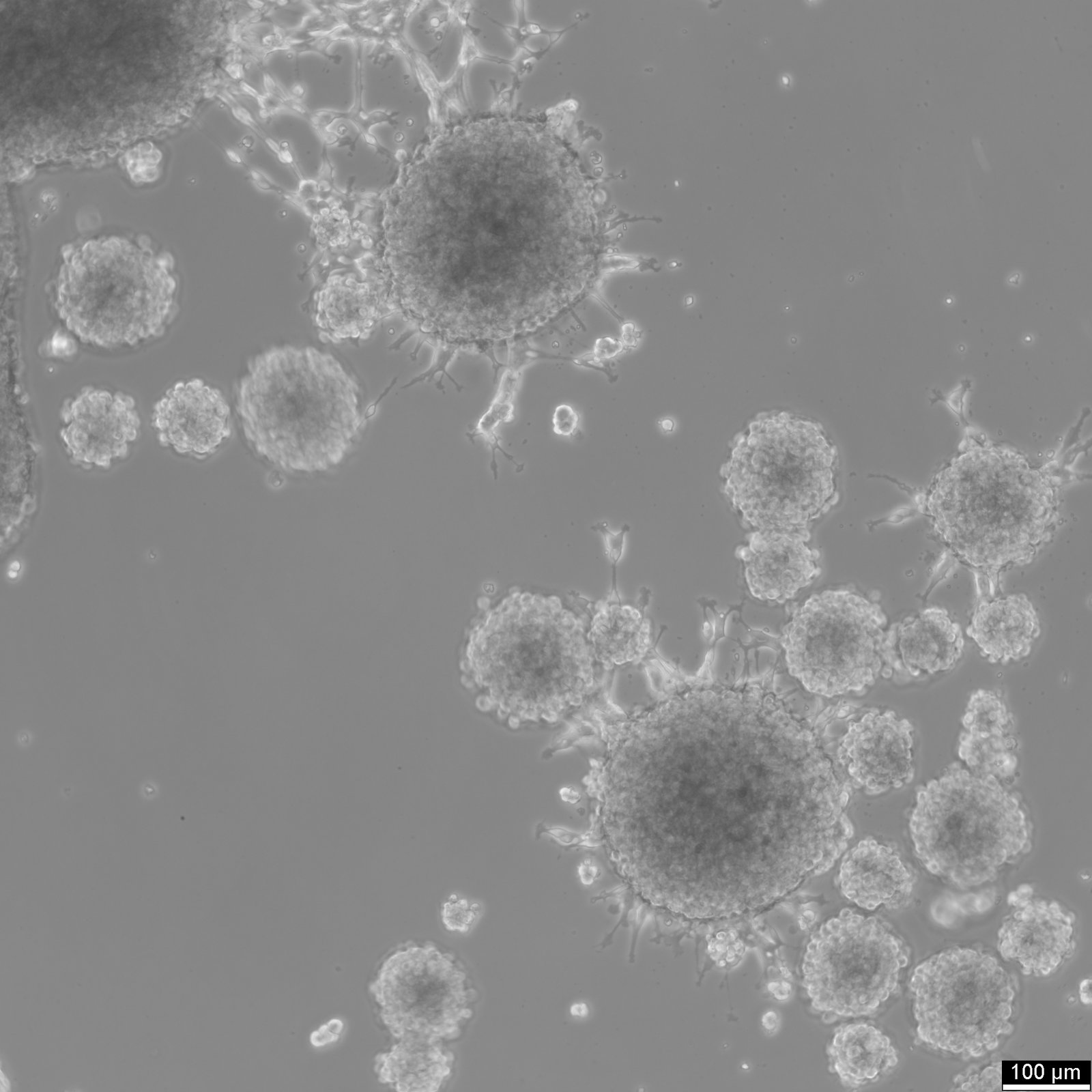

NCH612 Cells
| Unit |
5 x 10^6 cells/ml |
|---|---|
| Cell Type |
Tumor Cells |
| Tissue Type |
Brain cancer cell lines |
| Organism |
Human |
| Donor History |
Anaplastic oligodendroglioma ,WHO grade III ,IDH1 mutant (R132H) |
| Growth Properties |
Spheroid culture |
| Growth Conditions |
Culture medium: DMEM:Ham's F12 (1:1) ,w: 3.1 g/L Glucose ,w: 2.5 mM L-Glutamine ,w: 15 mM HEPES ,w: 0.5 mM Sodium pyruvate ,w: 1.2 g/L NaHCO3 (Cytion article number 820400a). Supplements: Supplement the medium with 5 mg/L Heparin ,20 ng/mL bFGF ,20 microgram/L EGF ,5 mg/L Insulin ,100 mg/L Transferrin ,5 ,2 microgram/L Na-selenit ,6 ,3 microgram/L Progesteron ,161 ,1 microgram/L Putrescin ,50 mg/L Hydrocortinson. Seeding density: 1 x 10⁵ cells/mL. Freeze medium: As a cryopreservation medium ,we use 50% basal medium + 40% FBS + 10% DMSO ,or CM-1 (Cytion catalog number 800100) ,which includes optimized osmoprotectants and metabolic stabilizers to enhance recovery and reduce cryo-induced stress. Incubation atmosphere: 37°C ,5% CO2 ,humidified atmosphere. |
| Immortalization Method | |
| Full Information |

NCH612 is a patient-derived oligodendrocytic cell line that originates from human brain tissue and serves as a relevant research model for anaplastic oligodendroglioma (WHO grade III). This cell line harbors the IDH1 R132H mutation, a hallmark genetic alteration frequently associated with oligodendrogliomas. The mutation leads to epigenetic modifications, including the glioma CpG island methylator phenotype (G-CIMP), which contributes to tumor development and progression. Notably, NCH612 exhibits a partial deletion of chromosome arms 1p and 19q, a genetic characteristic commonly found in oligodendrogliomas and associated with better prognosis and response to certain therapies.
Studies have demonstrated that NCH612 is particularly sensitive to the DNA methyltransferase inhibitor decitabine (DAC). Treatment with DAC results in reduced cell proliferation and colony formation, primarily through the downregulation of TERT (telomerase reverse transcriptase) and the upregulation of p21, a cyclin-dependent kinase inhibitor involved in the DNA damage response. Interestingly, this sensitivity appears to be linked to the presence of both the IDH1 mutation and 1p/19q codeletion, as other IDH1-mutant glioma cell lines without this deletion, such as NCH1681, exhibit resistance to DAC. These findings suggest that epigenetic therapies like DAC could be particularly effective in IDH1-mutant anaplastic oligodendrogliomas with 1p/19q codeletion.
Further molecular investigations reveal that DAC treatment in NCH612 cells leads to the enrichment of pathways related to DNA replication, cell cycle regulation, and lysosomal function, shedding light on the drug’s mechanism of action. The repression of TERT by DAC is mediated by p21, emphasizing the critical role of this pathway in the response to epigenetic therapy. Given its well-defined genetic and epigenetic profile, NCH612 represents a valuable in vitro model for studying the biology of anaplastic oligodendrogliomas and for developing targeted therapies aimed at IDH1-mutant tumors with 1p/19q codeletion.
Společnost Cytion vznikla v roce 2004 v německém Heidelbergu s jasným vědeckým posláním: dodávat ověřené lidské a zvířecí buněčné linie bez kontaminace, připravené za přísně kontrolovaných laboratorních podmínek.
Postupně se vypracovala ve spolehlivou buněčnou banku, která slouží akademickým laboratořím, biotechnologickým firmám i farmaceutickým výzkumným týmům po celém světě. Klade přitom důraz na reprodukovatelnost výsledků, přísnou kontrolu kvality a dlouhodobá partnerství.