Genetika člověka
 Mikrobiologické aplikace
 NGS
 Rapid testy

 PCR plasty
 Pipetovací špičky
 Plasty pro buněčnou kultivaci
 Systém pro dlouhodobé skladování vzorků
 Zkumavky

 Třepačky
 Suché lázně
 Centrifugy
 End Point cyclery
 Real-time PCR cyclery
 Fluorometry
 Spektrofotometry
 Izolátory nukleových kyselin
 Pipetovací roboty
 Biobanking
 Live Cell Imaging

 Jednokanálové
 Multikanálové
 Sérologické pipety
 Jednorázové pipety

 Buněčné kultury
 PCR, qPCR, RT
 Detekce Mycoplasmat
 Reverzní transkripce

 Alergie
 Intolerance
 Elisa
 Imunologické analyzátory
 Veterinární imunologie
 Alergie u zvířat
 Intolerance u zvířat

 Čtečky identifikačních čipů
 Termočipy
 Biochemie
 Imunoanalýza


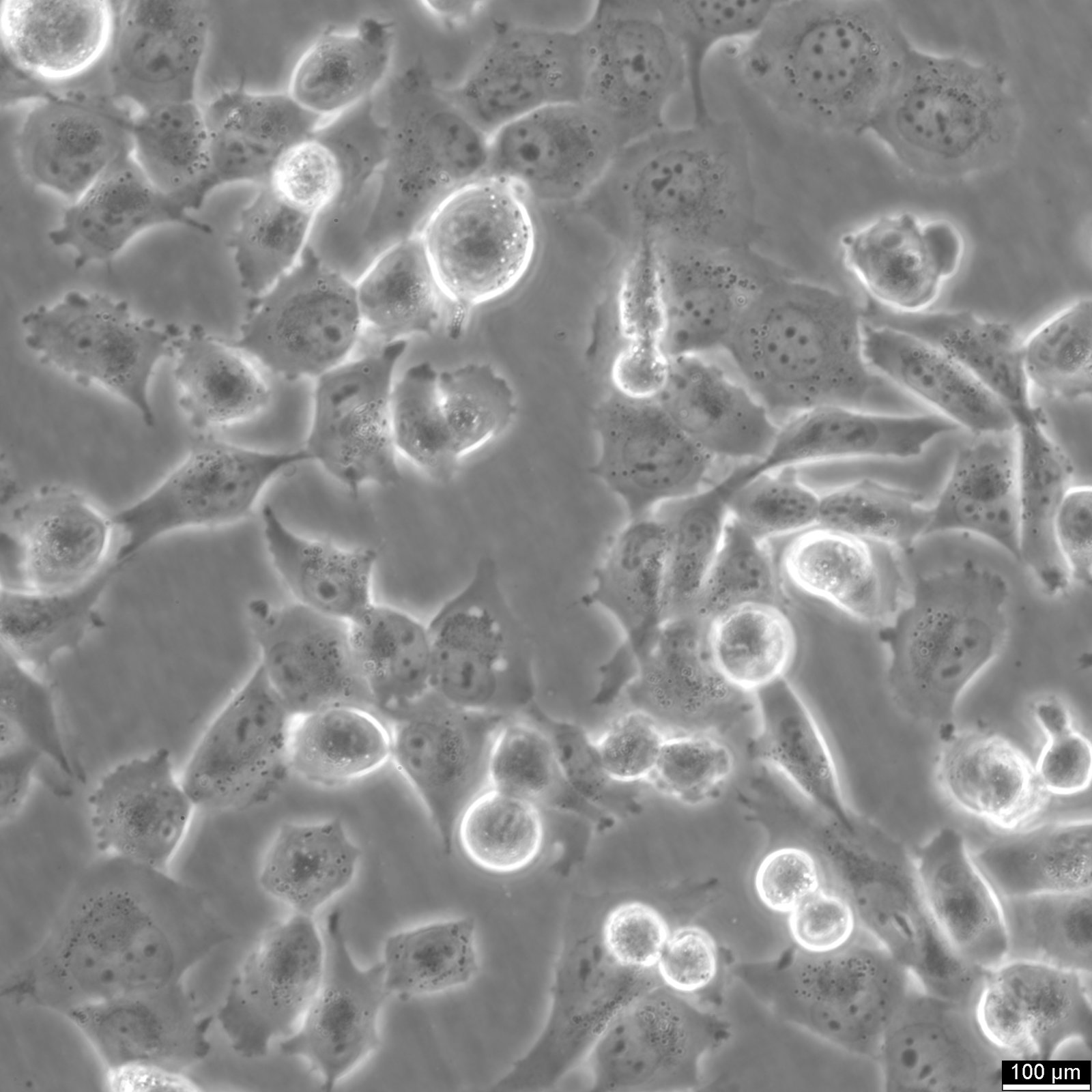

NCI-H1299 Cells
| Unit |
3 x 10^6 cells/ml |
|---|---|
| Cell Type |
Tumor Cells |
| Tissue Type |
Lung cancer cell lines ,NCI cell lines |
| Organism |
Human |
| Donor History |
Carcinoma |
| Growth Properties |
Adherent |
| Growth Conditions |
Culture medium: RPMI 1640 ,w: 2.0 mM stable Glutamine ,w: 2.0 g/L NaHCO3 (Cytion article number 820700a). Supplements: Supplement the medium with 10% FBS ,add 2.5 g/L glucose and 10 mM HEPES. Dissociation reagent: Accutase. Freeze medium: As a cryopreservation medium ,we use complete growth medium (including FBS) + 10% DMSO for adequate post-thaw viability ,or CM-1 (Cytion catalog number 800100) ,which includes optimized osmoprotectants and metabolic stabilizers to enhance recovery and reduce cryo-induced stress. Incubation atmosphere: 37°C ,5% CO2 ,humidified atmosphere. |
| Immortalization Method | |
| Full Information |

NCI-H1299, also known as H1299, is a human non-small cell lung cancer (NSCLC) cell line established from a lymph node metastasis derived from an adult male patient with lung carcinoma. Along with H292 cells, H1299 is widely used as an NSCLC model in cancer biology and immuno-oncology research. The cell line exhibits an epithelial-like morphology characterized by adherent, flattened cells with a thickness of less than 5 µm and an approximate doubling time of 22–30 hours. H1299 cells express keratin and vimentin but are negative for neurofilament triplet protein, reflecting a phenotype with both epithelial and mesenchymal characteristics.
Genetically, H1299 cells harbor a homozygous partial deletion in the TP53 gene, resulting in complete loss of p53 protein expression. The line is also characterized by wild-type KRAS status, distinguishing it from other NSCLC models such as A549 cells, which carry endogenous KRAS mutations. Due to the absence of functional p53 signaling combined with intact KRAS, H1299 cells are frequently used to study tumor suppressor biology, oncogenic signaling pathways, apoptosis, metastasis, and therapeutic resistance mechanisms. Compared with more epithelial NSCLC cell lines such as A549, H1299 cells display a more mesenchymal phenotype with reduced epithelial marker expression, making them particularly useful for investigations into epithelial-to-mesenchymal transition (EMT), invasion, and metastatic progression.
H1299 cells have also been reported to synthesize the neuropeptide neuromedin B (NMB) at low levels, while lacking detectable gastrin-releasing peptide (GRP) production. Their robust growth characteristics, high transfectability, and well-characterized molecular background have contributed to their broad use in studies involving targeted therapies, gene editing, immune-mediated cytotoxicity, and downstream KRAS-associated signaling pathways. As with all long-term cultured tumor cell models, periodic authentication and confirmation of key molecular features are recommended to ensure experimental reproducibility.
Společnost Cytion vznikla v roce 2004 v německém Heidelbergu s jasným vědeckým posláním: dodávat ověřené lidské a zvířecí buněčné linie bez kontaminace, připravené za přísně kontrolovaných laboratorních podmínek.
Postupně se vypracovala ve spolehlivou buněčnou banku, která slouží akademickým laboratořím, biotechnologickým firmám i farmaceutickým výzkumným týmům po celém světě. Klade přitom důraz na reprodukovatelnost výsledků, přísnou kontrolu kvality a dlouhodobá partnerství.