Genetika člověka
 Mikrobiologické aplikace
 NGS
 Rapid testy

 PCR plasty
 Pipetovací špičky
 Plasty pro buněčnou kultivaci
 Systém pro dlouhodobé skladování vzorků
 Zkumavky

 Třepačky
 Suché lázně
 Centrifugy
 End Point cyclery
 Real-time PCR cyclery
 Fluorometry
 Spektrofotometry
 Izolátory nukleových kyselin
 Pipetovací roboty
 Biobanking
 Live Cell Imaging

 Jednokanálové
 Multikanálové
 Sérologické pipety
 Jednorázové pipety

 Buněčné kultury
 PCR, qPCR, RT
 Detekce Mycoplasmat
 Reverzní transkripce

 Alergie
 Intolerance
 Elisa
 Imunologické analyzátory
 Veterinární imunologie
 Alergie u zvířat
 Intolerance u zvířat

 Čtečky identifikačních čipů
 Termočipy
 Biochemie
 Imunoanalýza


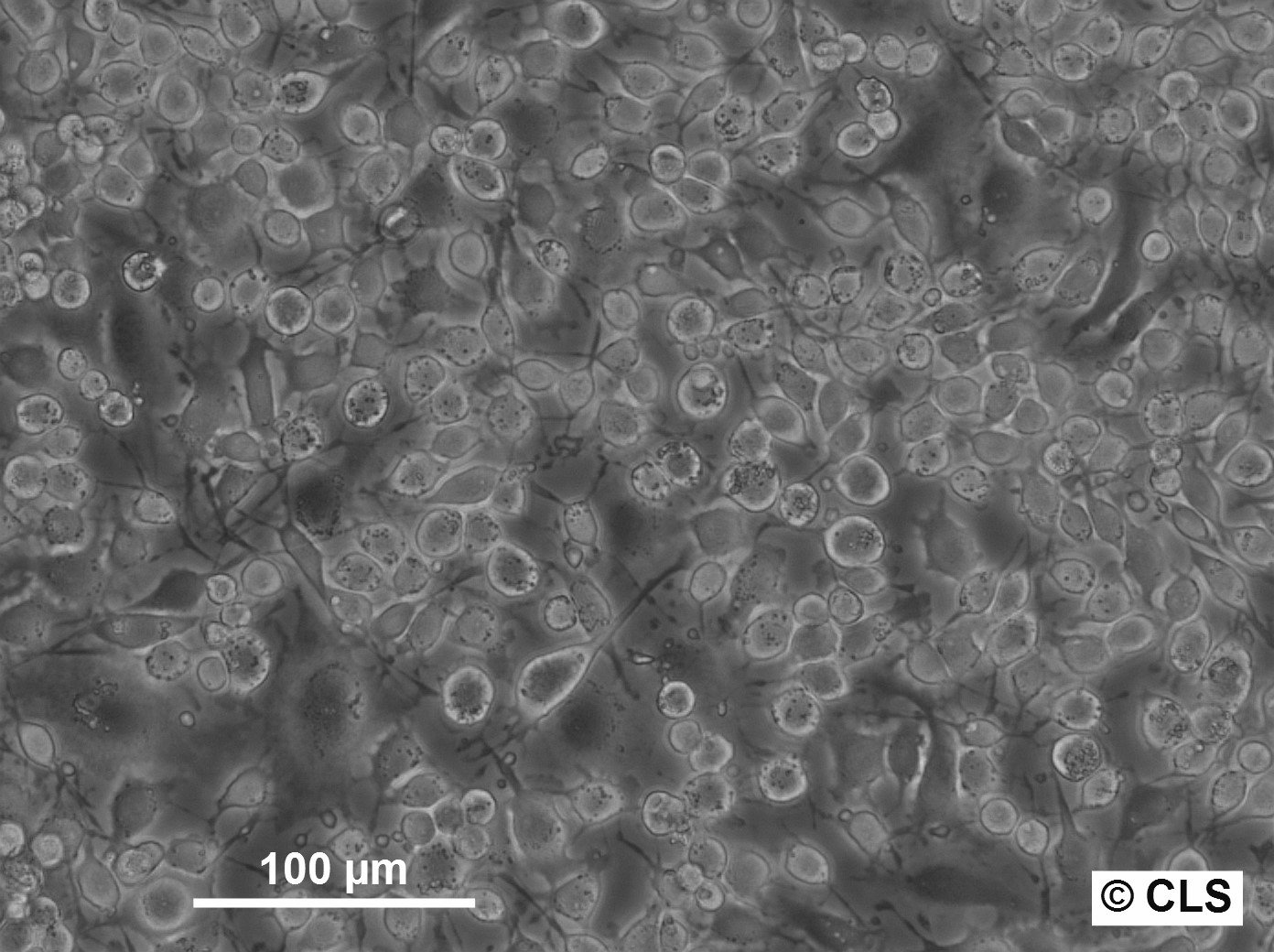

O-342 Cells
| Unit |
3 x 10^6 cells/ml |
|---|---|
| Cell Type |
Tumor Cells |
| Tissue Type |
Rat cell lines |
| Organism |
Rat |
| Donor History |
Adenocarcinoma |
| Growth Properties |
Adherent |
| Growth Conditions |
Culture medium: EMEM (MEM Eagle) ,w: 2 mM L-Glutamine ,w: 2.2 g/L NaHCO3 ,w: EBSS (Cytion article number 820100a). Supplements: Supplement the medium with 10% FBS and 1% NEAA. Dissociation reagent: Accutase. Freeze medium: As a cryopreservation medium ,we use complete growth medium (including FBS) + 10% DMSO for adequate post-thaw viability ,or CM-1 (Cytion catalog number 800100) ,which includes optimized osmoprotectants and metabolic stabilizers to enhance recovery and reduce cryo-induced stress. Incubation atmosphere: 37°C ,5% CO2 ,humidified atmosphere. |
| Immortalization Method | |
| Full Information |

The O-342 cell line is derived from a rat ovarian tumor and is widely used in cancer research, particularly in studies focusing on ovarian cancer and chemotherapy resistance. This cell line is characterized by its ability to grow in a monolayer and enter log-phase growth approximately 24 hours after seeding, with a cell population doubling time of about 24 hours. The O-342 cell line serves as the parental line for several sublines, including the cisplatin-resistant O-342/DDP subline, which was developed through the stepwise increase of cisplatin concentrations in vitro.
O-342 cells exhibit heteroploidy in their chromosomal structure, which contrasts with the near-diploid karyotype observed in the O-342/DDP subline. This karyotypic change is indicative of the selective pressure exerted by continuous cisplatin exposure, which eliminates the cisplatin-sensitive subpopulation, resulting in the predominance of resistant cells. Biochemical analyses have shown that the O-342/DDP cells possess a 33-fold increase in resistance to cisplatin compared to the parental O-342 cells. This resistance is reflected in the ID50 values, with the O-342/DDP cells having an ID50 of 33 μM compared to 1 μM in the O-342 cells.
Further studies have revealed that the O-342/DDP cells have significantly higher levels of intracellular total glutathione (GSH+GSSG) at 3.04 nmol/106 cells, compared to 1.37 nmol/106 cells in the O-342 cells. The increased glutathione levels are associated with enhanced detoxification capabilities, contributing to the chemoresistance observed in the O-342/DDP cells. Additionally, following cisplatin treatment, DNA interstrand crosslinks and single-strand breaks are markedly higher in the parental O-342 cells than in the resistant O-342/DDP cells, indicating an increased DNA repair capacity in the resistant subline.
Overall, the O-342 cell line, along with its cisplatin-resistant subline O-342/DDP, provides a robust model for investigating the mechanisms of chemoresistance in ovarian cancer. These cell lines are invaluable for identifying potential therapeutic targets and developing strategies to overcome resistance to chemotherapy, thereby improving treatment outcomes for ovarian cancer patients.
Společnost Cytion vznikla v roce 2004 v německém Heidelbergu s jasným vědeckým posláním: dodávat ověřené lidské a zvířecí buněčné linie bez kontaminace, připravené za přísně kontrolovaných laboratorních podmínek.
Postupně se vypracovala ve spolehlivou buněčnou banku, která slouží akademickým laboratořím, biotechnologickým firmám i farmaceutickým výzkumným týmům po celém světě. Klade přitom důraz na reprodukovatelnost výsledků, přísnou kontrolu kvality a dlouhodobá partnerství.