Genetika člověka
 Mikrobiologické aplikace
 NGS
 Rapid testy

 PCR plasty
 Pipetovací špičky
 Plasty pro buněčnou kultivaci
 Systém pro dlouhodobé skladování vzorků
 Zkumavky

 Třepačky
 Suché lázně
 Centrifugy
 End Point cyclery
 Real-time PCR cyclery
 Fluorometry
 Spektrofotometry
 Izolátory nukleových kyselin
 Pipetovací roboty
 Biobanking
 Live Cell Imaging

 Jednokanálové
 Multikanálové
 Sérologické pipety
 Jednorázové pipety

 Buněčné kultury
 PCR, qPCR, RT
 Detekce Mycoplasmat
 Reverzní transkripce

 Alergie
 Intolerance
 Elisa
 Imunologické analyzátory
 Veterinární imunologie
 Alergie u zvířat
 Intolerance u zvířat

 Čtečky identifikačních čipů
 Termočipy
 Biochemie
 Imunoanalýza


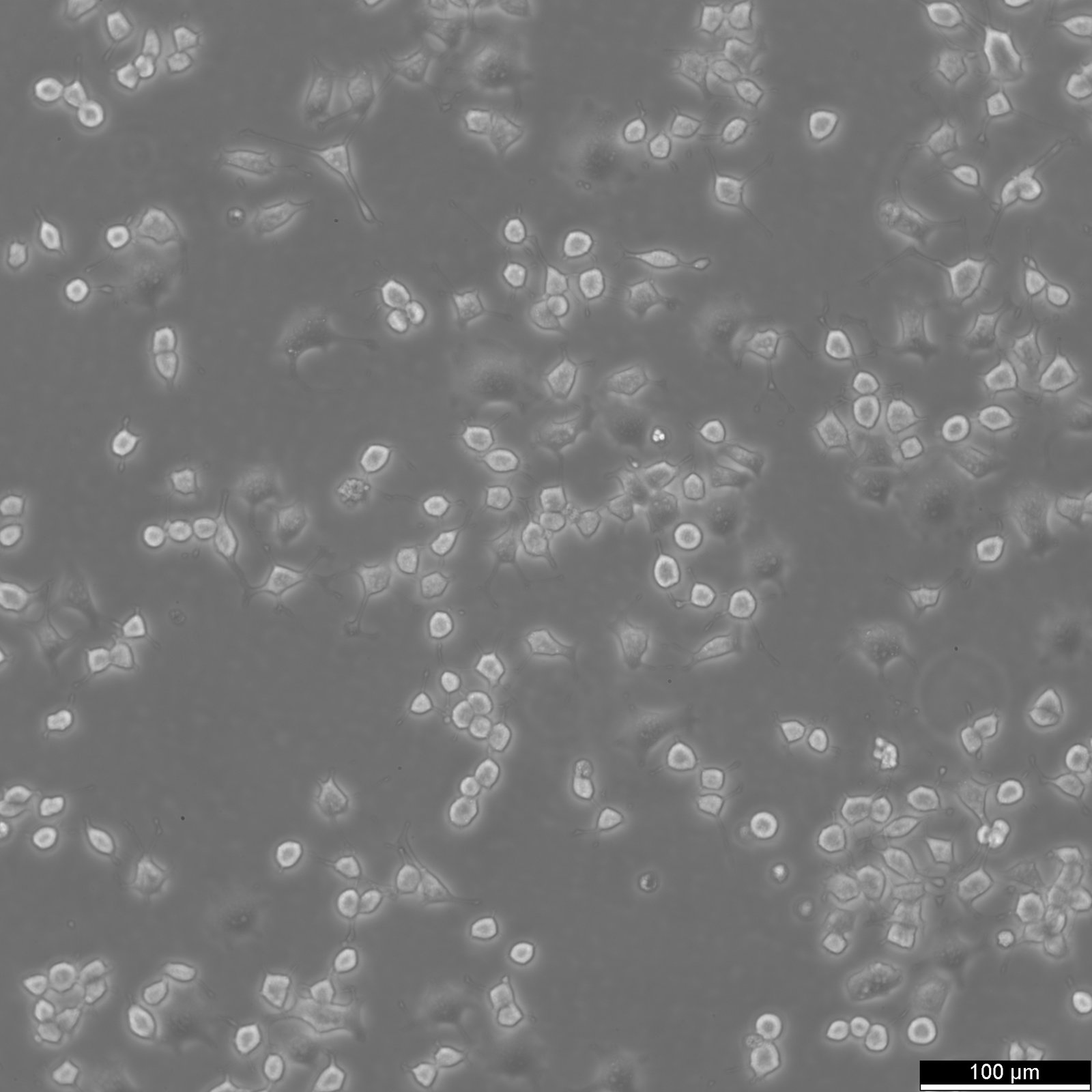

RLE-6TN Cells
| Unit |
3 x 10^6 cells/ml |
|---|---|
| Cell Type |
Immortalized Cells |
| Tissue Type |
Animal cells |
| Organism |
Rat |
| Donor History | |
| Growth Properties |
Adherent |
| Growth Conditions |
Culture medium: DMEM:Ham's F12 (1:1) ,w: 3.1 g/L Glucose ,w: 2.5 mM L-Glutamine ,w: 15 mM HEPES ,w: 0.5 mM Sodium pyruvate ,w: 1.2 g/L NaHCO3 (Cytion article number 820400a). Supplements: Supplement the medium with 5% FBS. Dissociation reagent: Accutase. Freeze medium: As a cryopreservation medium ,we use complete growth medium (including FBS) + 10% DMSO for adequate post-thaw viability ,or CM-1 (Cytion catalog number 800100) ,which includes optimized osmoprotectants and metabolic stabilizers to enhance recovery and reduce cryo-induced stress. Incubation atmosphere: 37°C ,5% CO2 ,humidified atmosphere. |
| Immortalization Method | |
| Full Information |

The RLE-6TN cell line is an immortalized rat alveolar type II epithelial cell line derived from adult Fischer 344 rats. RLE-6TN was established through spontaneous immortalization during attempts to introduce the SV40-T antigen gene into primary alveolar type II epithelial cells. Unlike its counterpart RLE-6T, which was positively transfected with the SV40-T antigen, RLE-6TN cells do not express the T-antigen gene. Despite this, RLE-6TN cells retain critical morphological and functional features characteristic of alveolar type II cells, including cytokeratin expression and the presence of lipid-containing lamellar inclusion bodies.
RLE-6TN cells have been widely used as an in vitro model for investigating lung epithelial cell biology, alveolar function, and responses to various physiological and pathological stimuli. They are particularly relevant for studying Na-K-ATPase regulation and activity in alveolar epithelial cells. Na-K-ATPase is essential for maintaining cellular ion gradients and trans-epithelial ion transport, processes critical for alveolar fluid clearance in the lungs. In studies, thyroid hormone (T3) has been shown to stimulate Na-K-ATPase activity in RLE-6TN cells by enhancing its translocation to the plasma membrane rather than increasing its transcription, highlighting a novel, rapid regulatory mechanism.
RLE-6TN cells demonstrate stable growth, with near-diploid karyotype stability, and are not tumorigenic in nude mice. They are negative for alkaline phosphatase activity but stain positive for cytokeratins 8, 18, and 19, confirming their epithelial origin. RLE-6TN cells can be maintained long-term in culture and serve as a reliable platform for mechanistic studies on alveolar epithelial repair, surfactant metabolism, and cellular responses to lung injury, toxins, and therapeutic agents.
Společnost Cytion vznikla v roce 2004 v německém Heidelbergu s jasným vědeckým posláním: dodávat ověřené lidské a zvířecí buněčné linie bez kontaminace, připravené za přísně kontrolovaných laboratorních podmínek.
Postupně se vypracovala ve spolehlivou buněčnou banku, která slouží akademickým laboratořím, biotechnologickým firmám i farmaceutickým výzkumným týmům po celém světě. Klade přitom důraz na reprodukovatelnost výsledků, přísnou kontrolu kvality a dlouhodobá partnerství.