
 Genetika člověka
 Mikrobiologické aplikace
 NGS
 Rapid testy

 PCR plasty
 Pipetovací špičky
 Plasty pro buněčnou kultivaci
 Systém pro dlouhodobé skladování vzorků
 Zkumavky

 Třepačky
 Suché lázně
 Centrifugy
 End Point cyclery
 Real-time PCR cyclery
 Fluorometry
 Spektrofotometry
 Izolátory nukleových kyselin
 Pipetovací roboty
 Biobanking
 Live Cell Imaging

 Jednokanálové
 Multikanálové
 Sérologické pipety
 Jednorázové pipety

 Buněčné kultury
 PCR, qPCR, RT
 Detekce Mycoplasmat
 Reverzní transkripce

 Alergie
 Intolerance
 Elisa
 Imunologické analyzátory
 Veterinární imunologie
 Alergie u zvířat
 Intolerance u zvířat

 Čtečky identifikačních čipů
 Termočipy
 Biochemie
 Imunoanalýza


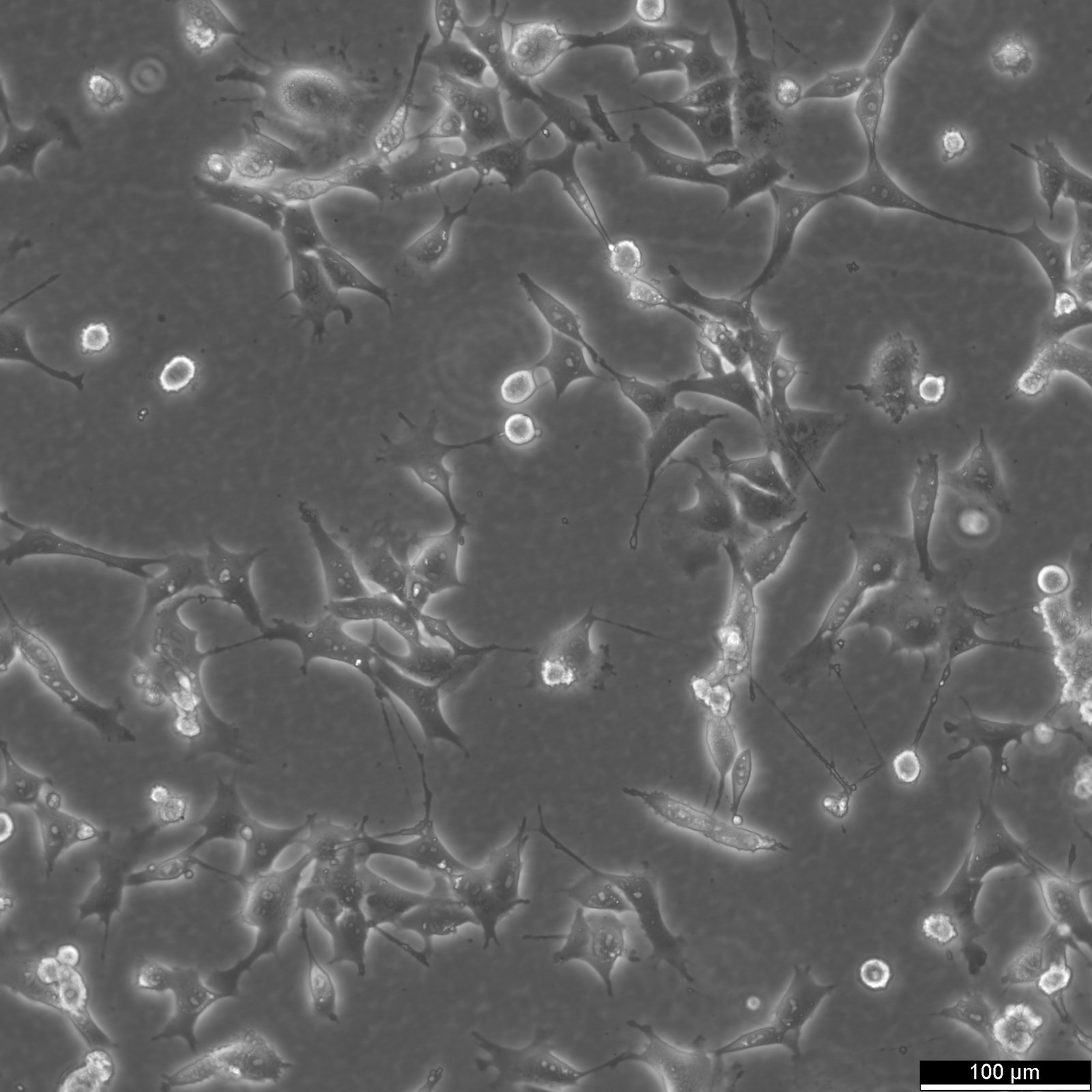

TC-1 Cells
| Unit |
3 x 10^6 cells/ml |
|---|---|
| Cell Type |
Tumor Cells |
| Tissue Type |
Animal cells ,Mouse cell lines |
| Organism |
Mouse |
| Donor History | |
| Growth Properties |
Adherent |
| Growth Conditions |
Culture medium: DMEM ,w: 4.5 g/L Glucose ,w: 4 mM L-Glutamine ,w: 3.7 g/L NaHCO3 ,w: 1.0 mM Sodium pyruvate (Cytion article number 820300a). Supplements: Supplement the medium with 10% FBS. Dissociation reagent: Accutase. Freeze medium: As a cryopreservation medium ,we use complete growth medium (including FBS) + 10% DMSO for adequate post-thaw viability ,or CM-1 (Cytion catalog number 800100) ,which includes optimized osmoprotectants and metabolic stabilizers to enhance recovery and reduce cryo-induced stress. Incubation atmosphere: 37°C ,5% CO2 ,humidified atmosphere. |
| Immortalization Method | |
| Full Information |

TC-1 is a murine lung epithelial cell line transformed with human papillomavirus type 16 (HPV16) E6 and E7 oncogenes, along with an activated H-ras oncogene. The cell line was developed from primary lung epithelial cells of C57BL/6 mice using a dual retroviral transduction strategy. Initially, a retroviral vector derived from Moloney murine leukemia virus (MoMLV), such as pLXSN-16E6E7, was used to deliver the E6 and E7 oncogenes. In this vector, the genes are expressed from the viral 5′ LTR promoter, and a neomycin resistance gene (NeoR) under the control of an internal SV40 promoter enabled selection with G418. Stable expression of E6 and E7 results in inactivation of p53 and Rb tumor suppressor pathways, driving cell immortalization.
Following initial selection, a second MoMLV-based retroviral vector encoding an activated H-ras (G12V) gene was introduced to complete transformation. This vector carried a different selectable marker, typically a hygromycin resistance gene (hph), driven by an internal promoter such as SV40 or PGK. Cells that survived sequential selection with G418 and hygromycin demonstrated stable integration of all three oncogenes, resulting in fully transformed and immortalized TC-1 cells.
In functional studies, TC-1 cells exhibit strong expression of MHC class I molecules, making them highly immunogenic and widely utilized for evaluating experimental vaccines and immunotherapies targeting HPV-associated malignancies. They have been instrumental in preclinical vaccine studies, particularly those aimed at eliciting CD8+ T-cell responses against HPV16 E7. Additionally, sublines with downregulated MHC class I expression have been developed to mimic immune escape mechanisms, providing further insights into the interplay between tumor cells and host immunity. These properties make TC-1 a robust and versatile model for immuno-oncology and HPV vaccine development.
Společnost Cytion vznikla v roce 2004 v německém Heidelbergu s jasným vědeckým posláním: dodávat ověřené lidské a zvířecí buněčné linie bez kontaminace, připravené za přísně kontrolovaných laboratorních podmínek.
Postupně se vypracovala ve spolehlivou buněčnou banku, která slouží akademickým laboratořím, biotechnologickým firmám i farmaceutickým výzkumným týmům po celém světě. Klade přitom důraz na reprodukovatelnost výsledků, přísnou kontrolu kvality a dlouhodobá partnerství.