Genetika člověka
 Mikrobiologické aplikace
 NGS
 Rapid testy

 PCR plasty
 Pipetovací špičky
 Plasty pro buněčnou kultivaci
 Systém pro dlouhodobé skladování vzorků
 Zkumavky

 Třepačky
 Suché lázně
 Centrifugy
 End Point cyclery
 Real-time PCR cyclery
 Fluorometry
 Spektrofotometry
 Izolátory nukleových kyselin
 Pipetovací roboty
 Biobanking
 Live Cell Imaging

 Jednokanálové
 Multikanálové
 Sérologické pipety
 Jednorázové pipety

 Buněčné kultury
 PCR, qPCR, RT
 Detekce Mycoplasmat
 Reverzní transkripce

 Alergie
 Intolerance
 Elisa
 Imunologické analyzátory
 Veterinární imunologie
 Alergie u zvířat
 Intolerance u zvířat

 Čtečky identifikačních čipů
 Termočipy
 Biochemie
 Imunoanalýza


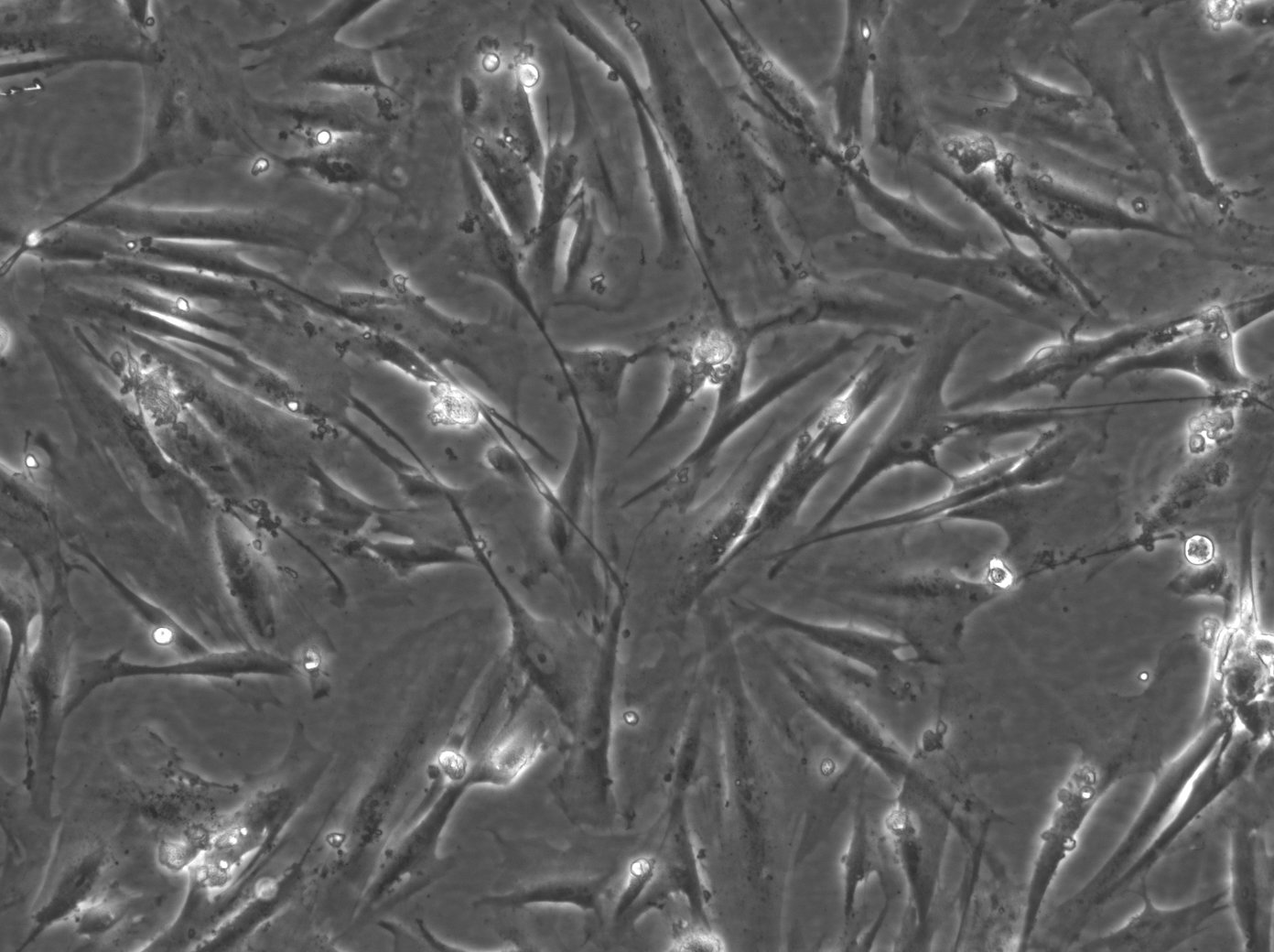

WI-38 Cells
| Unit |
3 x 10^6 cells/ml |
|---|---|
| Cell Type |
Primary Cells |
| Tissue Type |
Cell Lines |
| Organism |
Human |
| Donor History | |
| Growth Properties |
Adherent |
| Growth Conditions |
Culture medium: EMEM (MEM Eagle) ,w: 2 mM L-Glutamine ,w: 2.2 g/L NaHCO3 ,w: EBSS (Cytion article number 820100a). Supplements: Supplement the medium with 10% FBS and 1% NEAA. Dissociation reagent: Accutase. Seeding density: 3 to 5 × 10³ cells/cm². Freeze medium: As a cryopreservation medium ,we use complete growth medium (including FBS) + 10% DMSO for adequate post-thaw viability ,or CM-1 (Cytion catalog number 800100) ,which includes optimized osmoprotectants and metabolic stabilizers to enhance recovery and reduce cryo-induced stress. Incubation atmosphere: 37°C ,5% CO2 ,humidified atmosphere. |
| Immortalization Method | |
| Full Information |

Please note: The WI-38 cell line is not available for purchase anymore. Our stock reached senescence and therefore cannot be sold anymore. However, we continue to offer an immortalized variant of this cell line, WI 38VA13 Subline 2RA (Catalog No. 300421).
The WI-38 cell line, derived from the fetal lung tissue of a 3-month-old fetus obtained from an elective abortion in Sweden in 1962, represents a landmark in medical science, particularly in vaccine production. WI-38 cells have played a crucial role in the development of vaccines for a wide array of virus-based infectious diseases, including poliomyelitis, measles, mumps, rubella, varicella, herpes zoster, adenovirus, rabies, and Hepatitis A, thereby significantly reducing morbidity associated with these conditions.
Notably, WI-38 cells have been utilized in the production of several key vaccines, such as Merck’s rubella and Hepatitis A vaccines, Sanofi Pasteur’s Imovax rabies vaccine, and the adenovirus vaccine used by the U.S. military, highlighting their essential role in public health. These cells, characterized by their fibroblast cell type and excellent biocompatibility, offer an optimal environment for the culture of viruses and the production of human virus vaccines.
As a human diploid cell line with a finite lifespan of about 50 population doublings and a doubling time of roughly 24 hours, WI-38 cells have been used extensively in biological research, including the study of cellular aging, cancer, and genetics. WI-38 cells further have been instrumental in the field of virology, particularly in supporting the cultivation and study of human viruses. These cells provide a conducive environment for growing viruses extracted from clinical specimens, which is essential for the development of vaccines and for advancing our understanding of viral behaviors and genetics.
In summary, WI-38 cells, with their extensive applications in vaccine production remain a cornerstone in the field of virology. Their contribution to the development of cell-derived vaccines and the advancement of primary cells in scientific research underscores their invaluable role in enhancing human health worldwide.
Společnost Cytion vznikla v roce 2004 v německém Heidelbergu s jasným vědeckým posláním: dodávat ověřené lidské a zvířecí buněčné linie bez kontaminace, připravené za přísně kontrolovaných laboratorních podmínek.
Postupně se vypracovala ve spolehlivou buněčnou banku, která slouží akademickým laboratořím, biotechnologickým firmám i farmaceutickým výzkumným týmům po celém světě. Klade přitom důraz na reprodukovatelnost výsledků, přísnou kontrolu kvality a dlouhodobá partnerství.