Genetika člověka
 Mikrobiologické aplikace
 NGS
 Rapid testy

 PCR plasty
 Pipetovací špičky
 Plasty pro buněčnou kultivaci
 Systém pro dlouhodobé skladování vzorků
 Zkumavky

 Třepačky
 Suché lázně
 Centrifugy
 End Point cyclery
 Real-time PCR cyclery
 Fluorometry
 Spektrofotometry
 Izolátory nukleových kyselin
 Pipetovací roboty
 Biobanking
 Live Cell Imaging

 Jednokanálové
 Multikanálové
 Sérologické pipety
 Jednorázové pipety

 Buněčné kultury
 PCR, qPCR, RT
 Detekce Mycoplasmat
 Reverzní transkripce

 Alergie
 Intolerance
 Elisa
 Imunologické analyzátory
 Veterinární imunologie
 Alergie u zvířat
 Intolerance u zvířat

 Čtečky identifikačních čipů
 Termočipy
 Biochemie
 Imunoanalýza


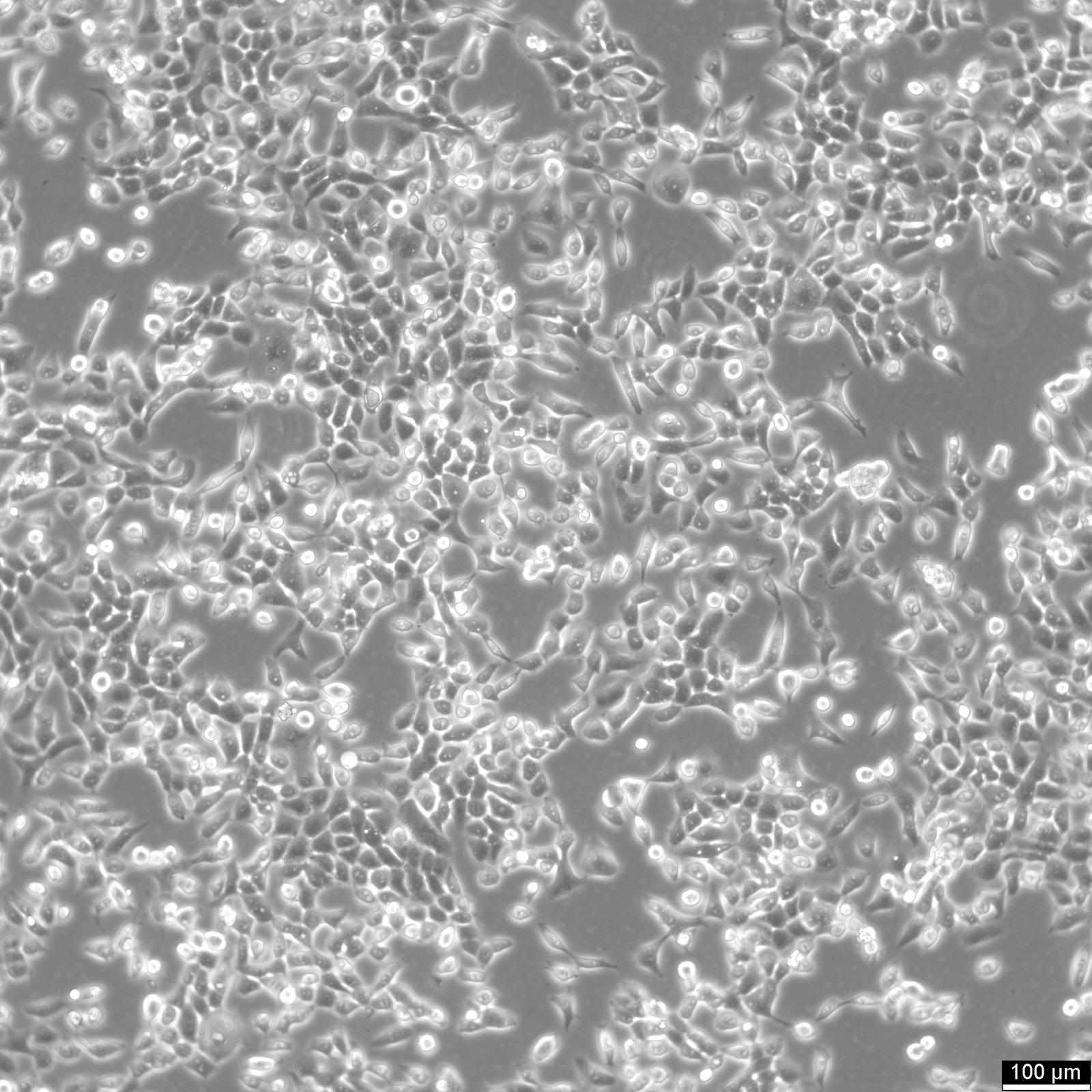

CAL 27 Cells
| Unit |
3 x 10^6 cells/ml |
|---|---|
| Cell Type |
Tumor Cells |
| Tissue Type |
Head-Neck cancer cell lines |
| Organism |
Human |
| Donor History |
Tongue squamous cell carcinoma |
| Growth Properties |
Adherent |
| Growth Conditions |
Culture medium: DMEM ,w: 4.5 g/L Glucose ,w: 4 mM L-Glutamine ,w: 3.7 g/L NaHCO3 ,w: 1.0 mM Sodium pyruvate (Cytion article number 820300a). Supplements: Supplement the medium with 10% FBS. Dissociation reagent: Accutase. Freeze medium: As a cryopreservation medium ,we use complete growth medium (including FBS) + 10% DMSO for adequate post-thaw viability ,or CM-1 (Cytion catalog number 800100) ,which includes optimized osmoprotectants and metabolic stabilizers to enhance recovery and reduce cryo-induced stress. Incubation atmosphere: 37°C ,5% CO2 ,humidified atmosphere. |
| Immortalization Method | |
| Full Information |

Cal 27 cells is a human squamous cell carcinoma cell line derived from a primary tumor located in the tongue of a 56-year-old male in 1982. Cal 27 cells are epithelial in morphology and are widely used in scientific research to study oral carcinogenesis, the biology of squamous cell and oropharyngeal carcinoma, and to evaluate potential therapeutic agents for head and neck cancers.
The Cal27 cell line has been employed in a variety of research applications, including studies on cell proliferation, apoptosis, particularly in the context of anticancer drug sensitivity and the search for novel anticancer agents, migration, and invasion. They have also been used to investigate the effects of various chemotherapeutic agents such as Cisplatin, radiation therapy, and targeted therapies.
The Cal-27 adenosquamous carcinoma cell line is further used as xenografts, which are instrumental for studying tumor angiogenesis, lymph node metastasis, as well as metastasis and chemoresistance mechanisms. The interaction of Cal27 cells with integrins α6β4 and αvβ3 is of interest, as these molecules play a crucial role in cell adhesion. Studies have explored the effects of targeting these pathways with drugs like vismodegib and itraconazole, substances known to modulate the hedgehog pathway.
Overall, the Cal 27 cell line serves as a robust model for investigating the complex biology of oral squamous cell carcinomas and for testing new therapeutic interventions, thereby contributing to advancements in the management and treatment of oral cancers.
Společnost Cytion vznikla v roce 2004 v německém Heidelbergu s jasným vědeckým posláním: dodávat ověřené lidské a zvířecí buněčné linie bez kontaminace, připravené za přísně kontrolovaných laboratorních podmínek.
Postupně se vypracovala ve spolehlivou buněčnou banku, která slouží akademickým laboratořím, biotechnologickým firmám i farmaceutickým výzkumným týmům po celém světě. Klade přitom důraz na reprodukovatelnost výsledků, přísnou kontrolu kvality a dlouhodobá partnerství.