Genetika člověka
 Mikrobiologické aplikace
 NGS
 Rapid testy

 PCR plasty
 Pipetovací špičky
 Plasty pro buněčnou kultivaci
 Systém pro dlouhodobé skladování vzorků
 Zkumavky

 Třepačky
 Suché lázně
 Centrifugy
 End Point cyclery
 Real-time PCR cyclery
 Fluorometry
 Spektrofotometry
 Izolátory nukleových kyselin
 Pipetovací roboty
 Biobanking
 Live Cell Imaging

 Jednokanálové
 Multikanálové
 Sérologické pipety
 Jednorázové pipety

 Buněčné kultury
 PCR, qPCR, RT
 Detekce Mycoplasmat
 Reverzní transkripce

 Alergie
 Intolerance
 Elisa
 Imunologické analyzátory
 Veterinární imunologie
 Alergie u zvířat
 Intolerance u zvířat

 Čtečky identifikačních čipů
 Termočipy
 Biochemie
 Imunoanalýza


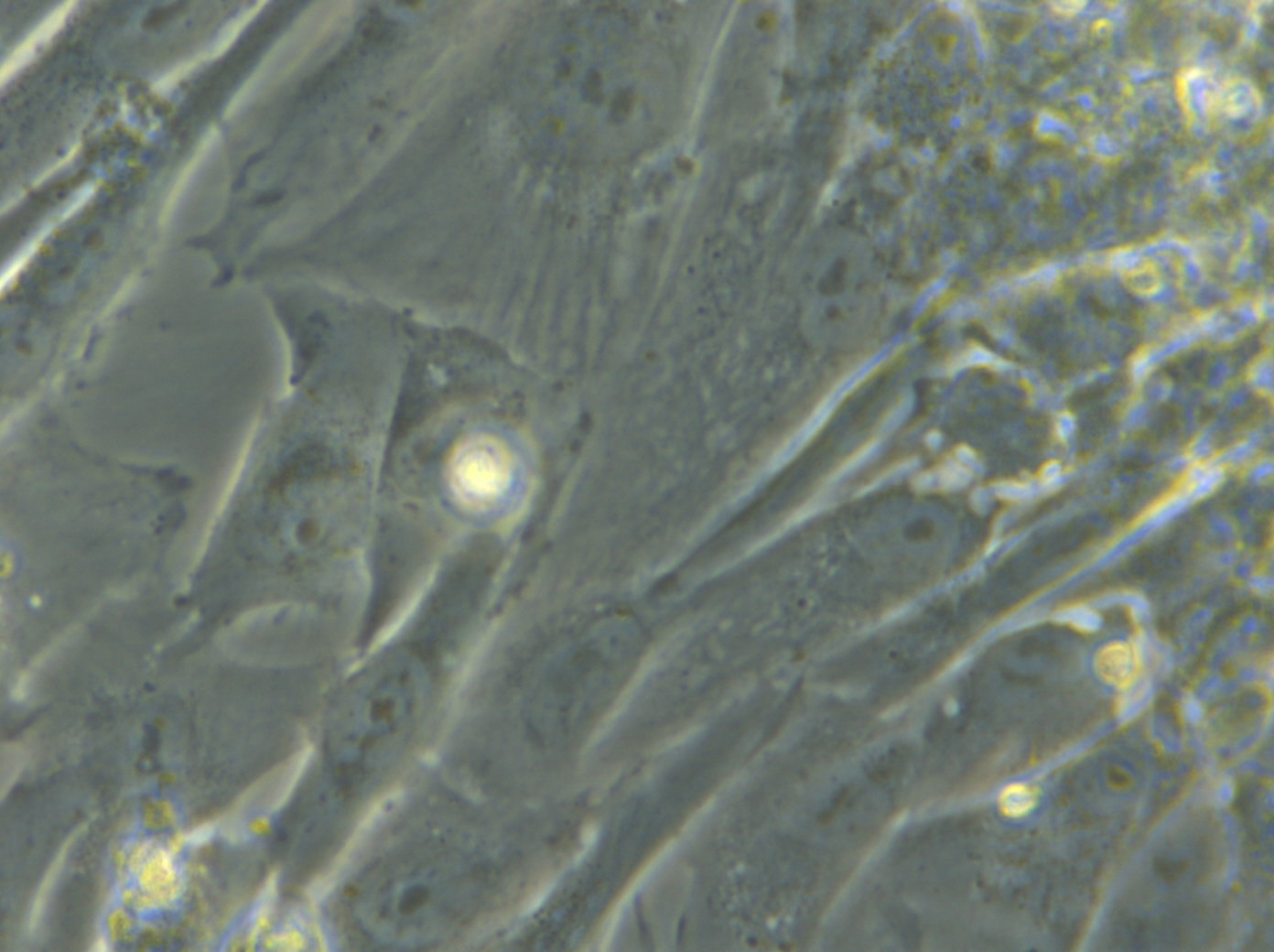

HROG17 T1 M1 Cells
| Unit |
3 x 10^6 cells/ml |
|---|---|
| Cell Type |
Tumor Cells |
| Tissue Type |
Brain cancer cell lines |
| Organism |
Human |
| Donor History |
Glioblastoma |
| Growth Properties |
Adherent |
| Growth Conditions |
Culture medium: DMEM:Ham's F12 (1:1) ,w: 3.1 g/L Glucose ,w: 2.5 mM L-Glutamine ,w: 15 mM HEPES ,w: 0.5 mM Sodium pyruvate ,w: 1.2 g/L NaHCO3 (Cytion article number 820400a). Supplements: Supplement the medium with 10% FBS. Dissociation reagent: TrypLE Express ,37°C ,10 min ,. Freeze medium: As a cryopreservation medium ,we use 50% basal medium + 40% FBS + 10% DMSO ,or CM-1 (Cytion catalog number 800100) ,which includes optimized osmoprotectants and metabolic stabilizers to enhance recovery and reduce cryo-induced stress. Incubation atmosphere: 37°C ,5% CO2 ,humidified atmosphere. |
| Immortalization Method | |
| Full Information |

HROG17 T1 M1 is a primary human glioblastoma multiforme (GBM) cell line established from a tumor specimen resected from an adult patient diagnosed with WHO grade IV glioblastoma. The designation “T1” indicates that the sample was obtained at the first surgical time point, while “M1” denotes the corresponding in vitro model derived from this tumor. The cell line was generated within the HROG (Hansestadt Rostock Glioma) platform, which focuses on establishing ultra-low passage glioma cultures that preserve patient-specific molecular and phenotypic characteristics.
HROG17 T1 M1 grows adherently under standard culture conditions and exhibits a fibroblast-like morphology typical of primary GBM cultures. Immunophenotypic characterization of HROG-derived lines demonstrates expression of glial and neural lineage-associated markers such as glial fibrillary acidic protein (GFAP), nestin, and vimentin, consistent with high-grade astrocytic tumor origin. Molecular profiling within the HROG collection includes evaluation of clinically relevant parameters such as MGMT promoter methylation, EGFR amplification status, and mutational analysis of key genes including TP53, IDH1/2, KRAS, and BRAF, supporting retention of tumor-specific genomic alterations in culture.
HROG17 T1 M1 has been used to assess sensitivity to standard-of-care agents for glioblastoma, including alkylating chemotherapeutics and additional targeted compounds. Comparative analyses across HROG models indicate that low-passage cultures maintain stable morphology, growth kinetics, and drug response profiles over early passages. As a patient-derived, low-passage glioblastoma model, HROG17 T1 M1 provides a clinically relevant in vitro platform for studying tumor biology, therapeutic response, and intertumoral heterogeneity in high-grade glioma.
Společnost Cytion vznikla v roce 2004 v německém Heidelbergu s jasným vědeckým posláním: dodávat ověřené lidské a zvířecí buněčné linie bez kontaminace, připravené za přísně kontrolovaných laboratorních podmínek.
Postupně se vypracovala ve spolehlivou buněčnou banku, která slouží akademickým laboratořím, biotechnologickým firmám i farmaceutickým výzkumným týmům po celém světě. Klade přitom důraz na reprodukovatelnost výsledků, přísnou kontrolu kvality a dlouhodobá partnerství.