Genetika člověka
 Mikrobiologické aplikace
 NGS
 Rapid testy

 PCR plasty
 Pipetovací špičky
 Plasty pro buněčnou kultivaci
 Systém pro dlouhodobé skladování vzorků
 Zkumavky

 Třepačky
 Suché lázně
 Centrifugy
 End Point cyclery
 Real-time PCR cyclery
 Fluorometry
 Spektrofotometry
 Izolátory nukleových kyselin
 Pipetovací roboty
 Biobanking
 Live Cell Imaging

 Jednokanálové
 Multikanálové
 Sérologické pipety
 Jednorázové pipety

 Buněčné kultury
 PCR, qPCR, RT
 Detekce Mycoplasmat
 Reverzní transkripce

 Alergie
 Intolerance
 Elisa
 Imunologické analyzátory
 Veterinární imunologie
 Alergie u zvířat
 Intolerance u zvířat

 Čtečky identifikačních čipů
 Termočipy
 Biochemie
 Imunoanalýza


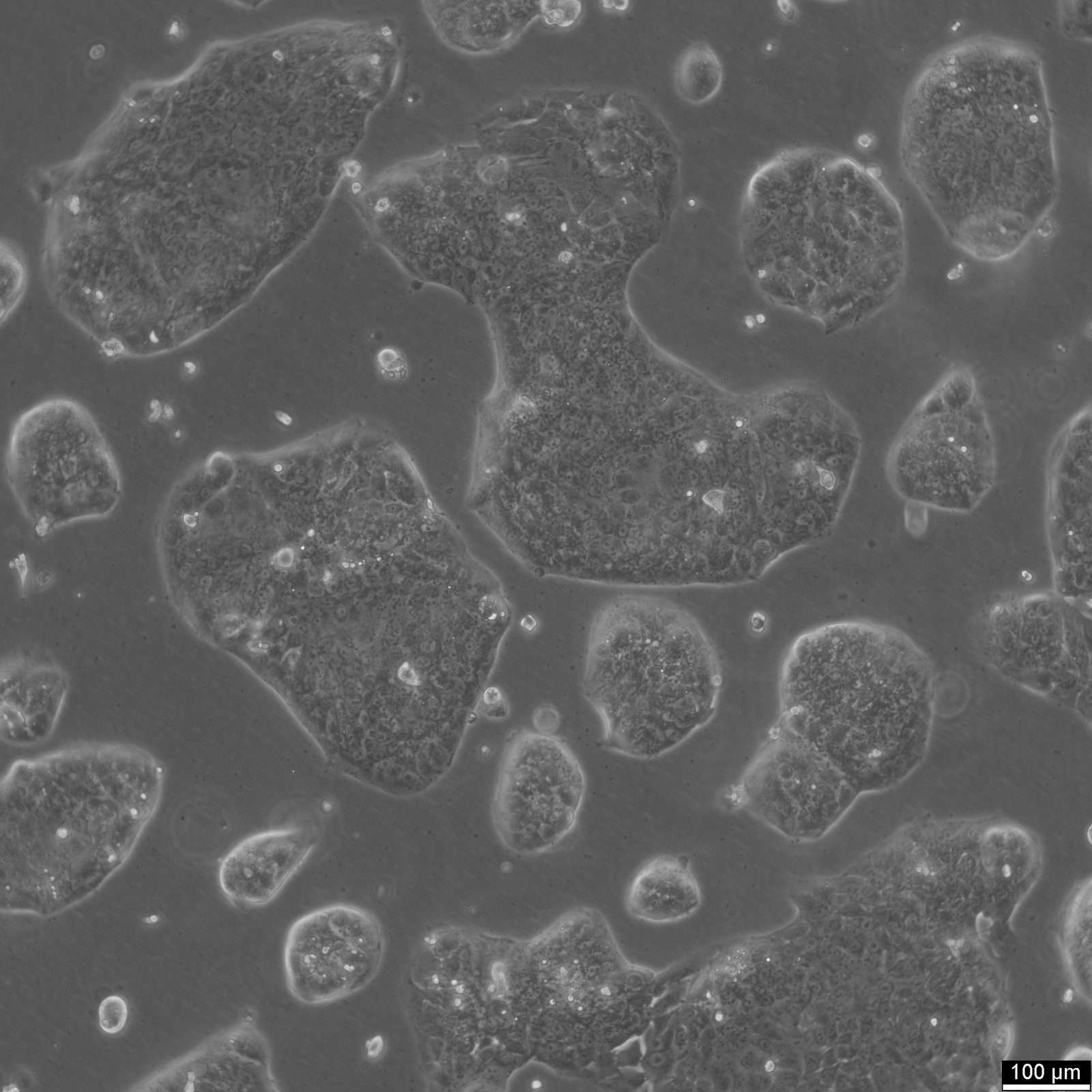

LCLC-97TM1 Cells
| Unit |
3 x 10^6 cells/ml |
|---|---|
| Cell Type |
Tumor Cells |
| Tissue Type |
Lung cancer cell lines |
| Organism |
Human |
| Donor History |
Large cell carcinoma |
| Growth Properties |
Adherent |
| Growth Conditions |
Culture medium: RPMI 1640 ,w: 2.0 mM stable Glutamine ,w: 2.0 g/L NaHCO3 (Cytion article number 820700a). Supplements: Supplement the medium with 10% FBS. Dissociation reagent: Accutase. Seeding density: 1 to 3 x 10⁵ cells/cm². Freeze medium: As a cryopreservation medium ,we use complete growth medium (including FBS) + 10% DMSO for adequate post-thaw viability ,or CM-1 (Cytion catalog number 800100) ,which includes optimized osmoprotectants and metabolic stabilizers to enhance recovery and reduce cryo-induced stress. Incubation atmosphere: 37°C ,5% CO2 ,humidified atmosphere. |
| Immortalization Method | |
| Full Information |

The LCLC-97TM1 cell line is derived from a large cell lung carcinoma (LCLC) and was established using a xenograft approach, specifically from the first nude mouse passage of a primary large cell carcinoma. This cell line exhibits densely packed epithelioid islets in culture, with cell borders that are typically indistinguishable under standard microscopic examination. Unlike many other cell lines, LCLC-97TM1 cultures do not generally reach confluency, which may be attributed to their unique growth patterns.
Cytologically, LCLC-97TM1 cells are characterized by a large, single, round nucleus that contains one or two prominent nucleoli, and an evenly distributed chromatin pattern. This nuclear morphology is indicative of the aggressive nature often associated with large cell lung carcinoma. The cell line is also noted for being PAS (Periodic Acid-Schiff) negative and showing no reactivity with Alcian blue staining, which are consistent with the characteristics observed in both the original tumor and the xenograft derived from the cell line.
Chromosomal analysis of LCLC-97TM1 reveals its complex karyotype, which is typical of large cell carcinomas and suggests significant genetic instability. This genetic profile, combined with its distinct morphological features, makes LCLC-97TM1 a valuable model for studying the pathobiology of large cell lung carcinoma, particularly in the context of tumorigenesis, metastasis, and therapeutic response in non-small cell lung cancer (NSCLC).
Společnost Cytion vznikla v roce 2004 v německém Heidelbergu s jasným vědeckým posláním: dodávat ověřené lidské a zvířecí buněčné linie bez kontaminace, připravené za přísně kontrolovaných laboratorních podmínek.
Postupně se vypracovala ve spolehlivou buněčnou banku, která slouží akademickým laboratořím, biotechnologickým firmám i farmaceutickým výzkumným týmům po celém světě. Klade přitom důraz na reprodukovatelnost výsledků, přísnou kontrolu kvality a dlouhodobá partnerství.