Genetika člověka
 Mikrobiologické aplikace
 NGS
 Rapid testy

 PCR plasty
 Pipetovací špičky
 Plasty pro buněčnou kultivaci
 Systém pro dlouhodobé skladování vzorků
 Zkumavky

 Třepačky
 Suché lázně
 Centrifugy
 End Point cyclery
 Real-time PCR cyclery
 Fluorometry
 Spektrofotometry
 Izolátory nukleových kyselin
 Pipetovací roboty
 Biobanking
 Live Cell Imaging

 Jednokanálové
 Multikanálové
 Sérologické pipety
 Jednorázové pipety

 Buněčné kultury
 PCR, qPCR, RT
 Detekce Mycoplasmat
 Reverzní transkripce

 Alergie
 Intolerance
 Elisa
 Imunologické analyzátory
 Veterinární imunologie
 Alergie u zvířat
 Intolerance u zvířat

 Čtečky identifikačních čipů
 Termočipy
 Biochemie
 Imunoanalýza


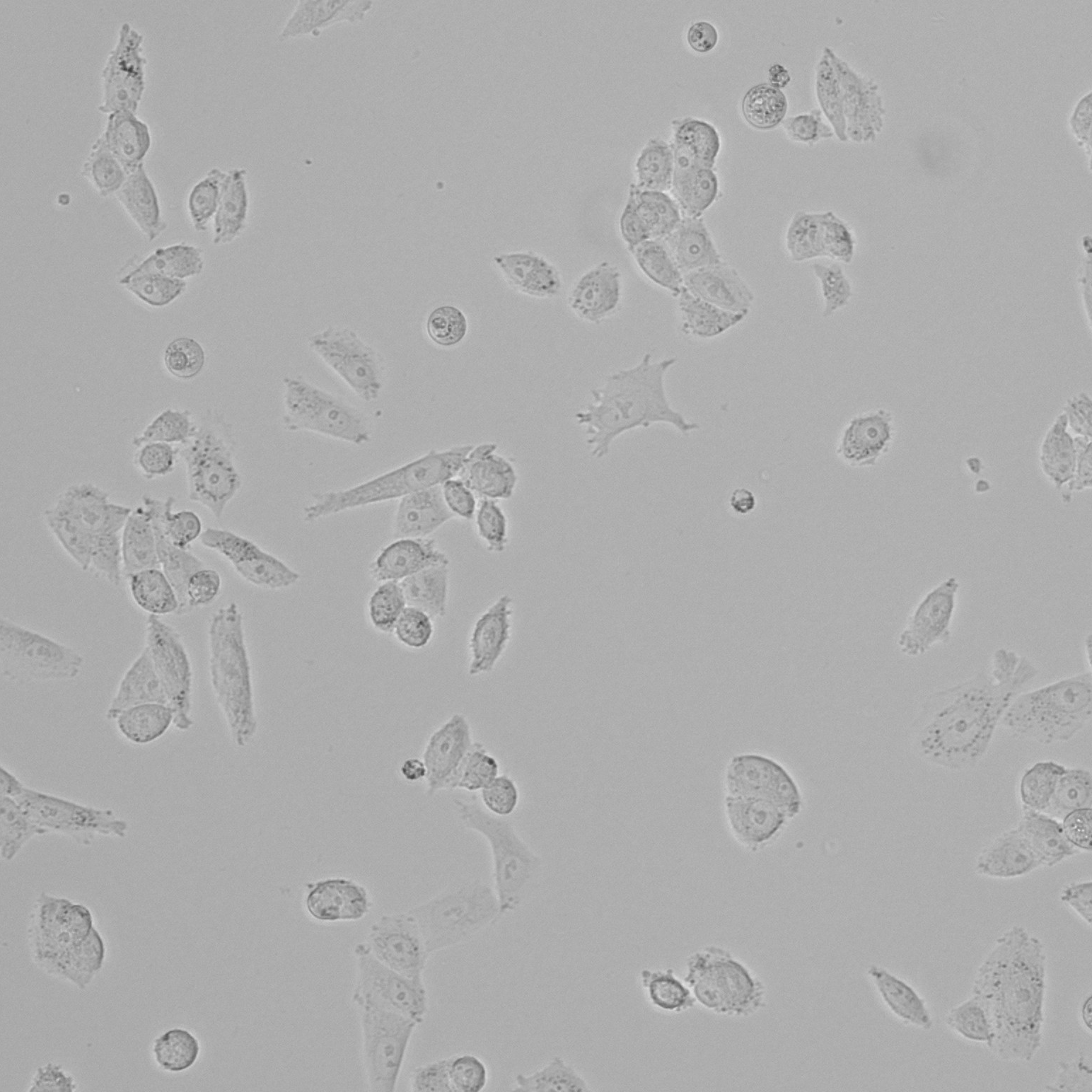

MES-SA Cells
| Unit |
3 x 10^6 cells/ml |
|---|---|
| Cell Type |
Tumor Cells |
| Tissue Type |
Reproductive system cancer cell lines |
| Organism |
Human |
| Donor History |
Uterine corpus sarcoma |
| Growth Properties |
Adherent |
| Growth Conditions |
Culture medium: McCoys 5a ,w: 3.0 g/L Glucose ,w: stable Glutamine ,w: 2.0 mM Sodium pyruvate ,w: 2.2 g/L NaHCO3 (Cytion article number 820200a). Supplements: Supplement the medium with 10% FBS. Dissociation reagent: Accutase. Freeze medium: As a cryopreservation medium ,we use complete growth medium (including FBS) + 10% DMSO for adequate post-thaw viability ,or CM-1 (Cytion catalog number 800100) ,which includes optimized osmoprotectants and metabolic stabilizers to enhance recovery and reduce cryo-induced stress. Incubation atmosphere: 37°C ,5% CO2 ,humidified atmosphere. |
| Immortalization Method | |
| Full Information |

MES-SA is a human uterine sarcoma cell line derived from the pleural effusion of an adult patient with high-grade uterine leiomyosarcoma. As a model of soft tissue sarcoma, MES-SA displays characteristics of mesenchymal origin, including spindle-shaped morphology and smooth muscle actin expression. Cytogenetic analysis of MES-SA reveals complex karyotypic abnormalities, including multiple numerical and structural chromosomal alterations. Importantly, this cell line is widely used in studies of multidrug resistance and chemotherapy response, due to its documented sensitivity to doxorubicin and the availability of its drug-resistant subline, MES-SA/Dx5.
MES-SA exhibits wild-type p53 and retinoblastoma protein (Rb), making it a useful tool for studying drug responses in p53-competent backgrounds. In various functional genomics and proteomics screens, MES-SA has demonstrated consistent patterns of signal transduction pathway engagement, particularly those involving PI3K/Akt and MAPK pathways. Reverse-phase protein array profiling has confirmed the activity of these pathways and revealed protein expression signatures relevant to targeted therapy exploration. Moreover, the cell line is included in large-scale pharmacogenomic resources such as the Cancer Cell Line Encyclopedia, where it has been utilized for integrative analyses of drug sensitivity, genetic dependencies, and epigenetic modifications.
Recent investigations into chromatin state and gene regulation in MES-SA have highlighted epigenetic vulnerabilities, particularly involving promoter methylation and histone modification patterns. MES-SA serves as a model system in studies of histone deacetylase inhibitors and agents targeting chromatin modifiers. Its inclusion in both reverse-phase protein array and DNA methylation databases further enhances its relevance in preclinical drug development, especially for sarcoma-focused therapeutics. Collectively, MES-SA provides a robust and well-characterized platform for investigating the molecular underpinnings of uterine sarcomas and for evaluating therapeutic strategies targeting mesenchymal tumors.
Společnost Cytion vznikla v roce 2004 v německém Heidelbergu s jasným vědeckým posláním: dodávat ověřené lidské a zvířecí buněčné linie bez kontaminace, připravené za přísně kontrolovaných laboratorních podmínek.
Postupně se vypracovala ve spolehlivou buněčnou banku, která slouží akademickým laboratořím, biotechnologickým firmám i farmaceutickým výzkumným týmům po celém světě. Klade přitom důraz na reprodukovatelnost výsledků, přísnou kontrolu kvality a dlouhodobá partnerství.