Genetika člověka
 Mikrobiologické aplikace
 NGS
 Rapid testy

 PCR plasty
 Pipetovací špičky
 Plasty pro buněčnou kultivaci
 Systém pro dlouhodobé skladování vzorků
 Zkumavky

 Třepačky
 Suché lázně
 Centrifugy
 End Point cyclery
 Real-time PCR cyclery
 Fluorometry
 Spektrofotometry
 Izolátory nukleových kyselin
 Pipetovací roboty
 Biobanking
 Live Cell Imaging

 Jednokanálové
 Multikanálové
 Sérologické pipety
 Jednorázové pipety

 Buněčné kultury
 PCR, qPCR, RT
 Detekce Mycoplasmat
 Reverzní transkripce

 Alergie
 Intolerance
 Elisa
 Imunologické analyzátory
 Veterinární imunologie
 Alergie u zvířat
 Intolerance u zvířat

 Čtečky identifikačních čipů
 Termočipy
 Biochemie
 Imunoanalýza


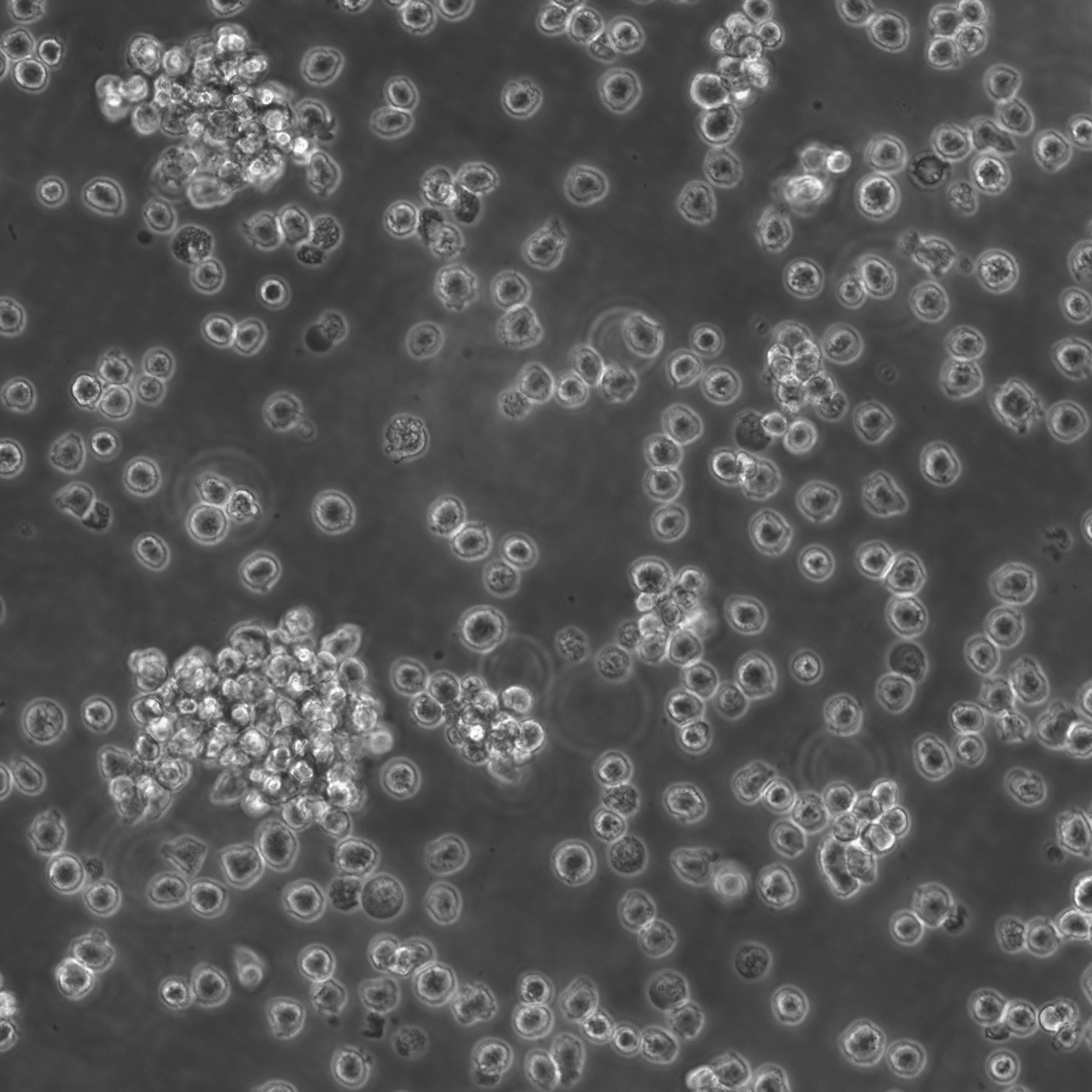

MOLM-13 Cells
| Unit |
5 x 10^6 cells/ml |
|---|---|
| Cell Type |
Tumor Cells |
| Tissue Type |
Leukemia cell lines |
| Organism |
Human |
| Donor History |
Adult acute myeloid leukemia |
| Growth Properties |
Suspension |
| Growth Conditions |
Culture medium: RPMI 1640 ,w: 2.0 mM stable Glutamine ,w: 2.0 g/L NaHCO3 (Cytion article number 820700a). Supplements: Supplement the medium with 10% FBS. Seeding density: Maintain culture between 4 x 10⁵ to 2 x 10⁶ cells/mL. Freeze medium: As a cryopreservation medium ,we use complete growth medium (including FBS) + 10% DMSO for adequate post-thaw viability ,or CM-1 (Cytion catalog number 800100) ,which includes optimized osmoprotectants and metabolic stabilizers to enhance recovery and reduce cryo-induced stress. Incubation atmosphere: 37°C ,5% CO2 ,humidified atmosphere. |
| Immortalization Method | |
| Full Information |

The MOLM-13 cell line is a human acute myeloid leukemia (AML) cell line, originally derived from a patient diagnosed with AML-M5a (acute monocytic leukemia, FAB classification). This line was established at the time of disease relapse, following prior progression from myelodysplastic syndrome (MDS). MOLM-13 cells harbor the MLL-AF9 gene fusion resulting from an insertion, ins(11;9)(q23;p22p23), and exhibit additional chromosomal abnormalities such as trisomy 8, a common feature associated with AML.
In terms of phenotypic characteristics, MOLM-13 cells express myeloid and monocyte-associated markers including CD33, CD13, and CD15. However, they lack expression of CD34, a marker of hematopoietic stem and progenitor cells, distinguishing them from other leukemia subtypes. MOLM-13 cells also display monoblastoid morphology with fine chromatin and prominent nucleoli. Functionally, they are capable of differentiation into macrophage-like cells upon exposure to specific cytokines such as interferon-gamma (IFN-γ) and tumor necrosis factor-alpha (TNF-α), which also enhance expression of myelomonocytic markers.
MOLM-13 serves as a critical model for studying leukemogenesis, particularly mechanisms underlying MLL-rearranged leukemias. It is also widely used in preclinical research, including the evaluation of novel therapies such as CD70-specific CAR-T cells, which have demonstrated efficacy against MOLM-13 in vitro and in xenograft models. This makes MOLM-13 an invaluable tool for exploring targeted therapeutic approaches for high-risk AML.
Společnost Cytion vznikla v roce 2004 v německém Heidelbergu s jasným vědeckým posláním: dodávat ověřené lidské a zvířecí buněčné linie bez kontaminace, připravené za přísně kontrolovaných laboratorních podmínek.
Postupně se vypracovala ve spolehlivou buněčnou banku, která slouží akademickým laboratořím, biotechnologickým firmám i farmaceutickým výzkumným týmům po celém světě. Klade přitom důraz na reprodukovatelnost výsledků, přísnou kontrolu kvality a dlouhodobá partnerství.