Genetika člověka
 Mikrobiologické aplikace
 NGS
 Rapid testy

 PCR plasty
 Pipetovací špičky
 Plasty pro buněčnou kultivaci
 Systém pro dlouhodobé skladování vzorků
 Zkumavky

 Třepačky
 Suché lázně
 Centrifugy
 End Point cyclery
 Real-time PCR cyclery
 Fluorometry
 Spektrofotometry
 Izolátory nukleových kyselin
 Pipetovací roboty
 Biobanking
 Live Cell Imaging

 Jednokanálové
 Multikanálové
 Sérologické pipety
 Jednorázové pipety

 Buněčné kultury
 PCR, qPCR, RT
 Detekce Mycoplasmat
 Reverzní transkripce

 Alergie
 Intolerance
 Elisa
 Imunologické analyzátory
 Veterinární imunologie
 Alergie u zvířat
 Intolerance u zvířat

 Čtečky identifikačních čipů
 Termočipy
 Biochemie
 Imunoanalýza


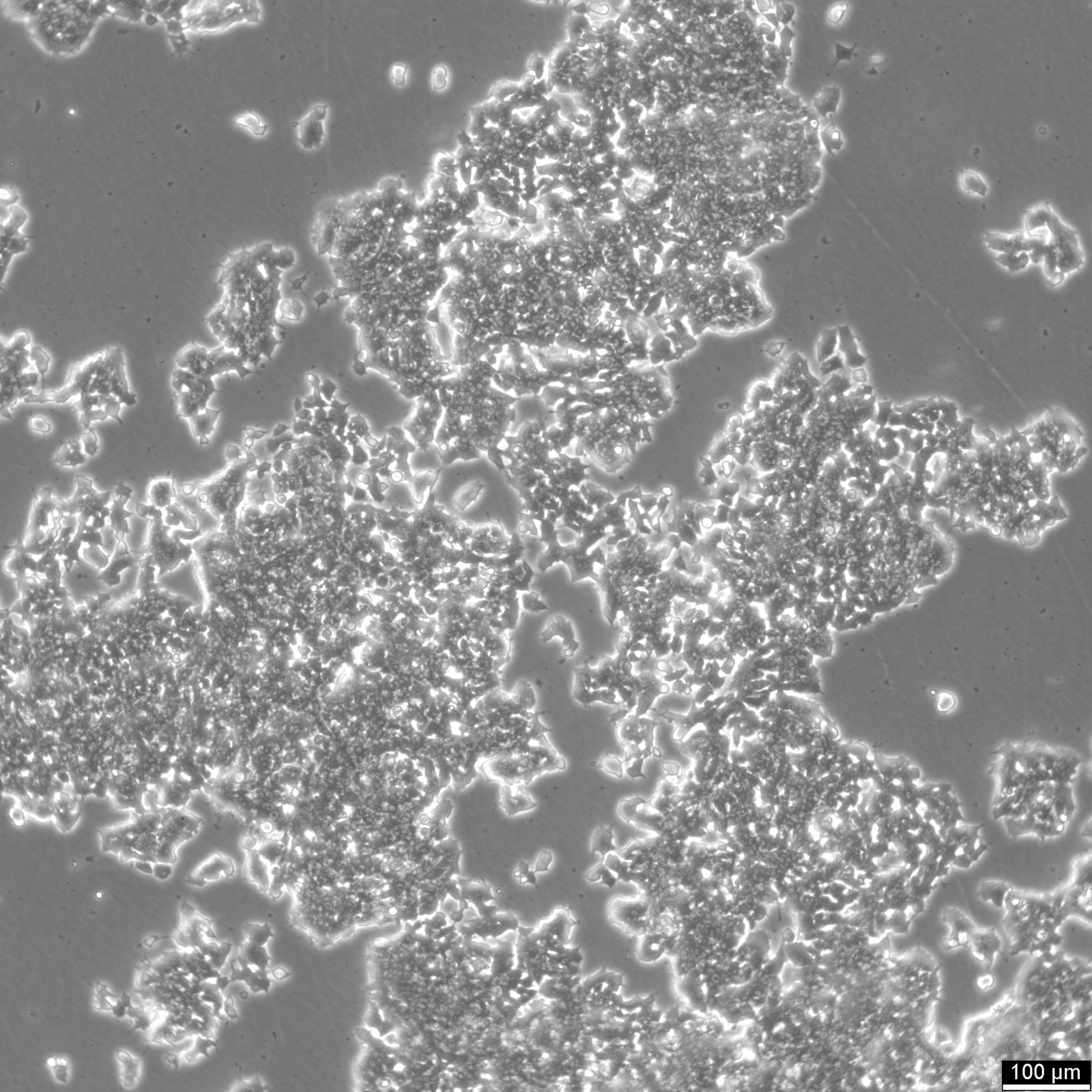

PC-12 Cells
| Unit |
3 x 10^6 cells/ml |
|---|---|
| Cell Type |
Tumor Cells |
| Tissue Type |
Rat cell lines |
| Organism |
Rat |
| Donor History |
Pheochromocytoma |
| Growth Properties |
Adherent/Suspension (grows on collagen-coated surfaces as adherent; also forms suspension clusters) |
| Growth Conditions |
Culture medium: RPMI 1640 ,w: 2.0 mM stable Glutamine ,w: 2.0 g/L NaHCO3 (Cytion article number 820700a). Supplements: Supplement the medium with 10% FBS. Dissociation reagent: TrypLE Express (adherent on collagen); pipetting resuspension for suspension culture. Seeding density: 1 x 10⁴ cells/cm². Freeze medium: As a cryopreservation medium ,we use 50% basal medium + 40% FBS + 10% DMSO ,or CM-1 (Cytion catalog number 800100) ,which includes optimized osmoprotectants and metabolic stabilizers to enhance recovery and reduce cryo-induced stress. Incubation atmosphere: 37°C ,5% CO2 ,humidified atmosphere. |
| Immortalization Method | |
| Full Information |

PC-12 cells are a cell line derived from a pheochromocytoma of the rat adrenal medulla. These cells are of embryonic origin, grow adherently and resemble a mixture of neuroblastic and eosinophilic cells. PC-12 cells are catecholamine cells that synthesize, store and release norepinephrine and dopamine. They have a diameter of approximately 10-12 microns and are small, irregularly shaped cells. The PC12 cell line is a classical neuronal cell model due to its ability to acquire sympathetic neuron features when dealing with nerve growth factor (NGF).
Studies on dopamine regulation have shown that PC12 cells synthesize, release, and reuptake dopamine and have been extensively characterized for neurosecretion and the presence of ion channels and neurotransmitter receptors. Moreover, the relative proportion of various subtypes of Ca channels changes during differentiation. The PC12 cell line is an established neuronal cell model that is particularly useful in studying cellular responses to nerve growth factors (NGF) and how these lead to the expression of differentiation-specific proteins and differentiation. When cultured in NGF, PC12 cells differentiate into sympathetic ganglion neurons morphologically and functionally. The differentiation results from the reversible induction of a neuronal phenotype by NGF. Collagen coating has been shown to be favourable to achieving neuronal characteristics in terms of length and density of neurites by NGF treatment.
PC12 cells are tumorigenic and were derived from male New England Deaconess Hospital strain rats. The PC-12 cell line has 40 chromosomes, 38 autosomes, plus xY. Nerve growth factor (NGF) is expressed in PC12 cells, and exposure to NGF is one crucial regulator of cell differentiation.
In conclusion, PC12 cells are a versatile and widely used model system in neurobiology due to their ability to acquire sympathetic neuron features when dealing with nerve growth factor (NGF). These cells have been extensively characterized for neurosecretion, ion channels, and neurotransmitter receptors. Their extreme versatility for pharmacological testing and use as an established model for studying the proliferation and differentiation of neuronal cells make them a valuable tool in neurobiology research.
Společnost Cytion vznikla v roce 2004 v německém Heidelbergu s jasným vědeckým posláním: dodávat ověřené lidské a zvířecí buněčné linie bez kontaminace, připravené za přísně kontrolovaných laboratorních podmínek.
Postupně se vypracovala ve spolehlivou buněčnou banku, která slouží akademickým laboratořím, biotechnologickým firmám i farmaceutickým výzkumným týmům po celém světě. Klade přitom důraz na reprodukovatelnost výsledků, přísnou kontrolu kvality a dlouhodobá partnerství.