Genetika člověka
 Mikrobiologické aplikace
 NGS
 Rapid testy

 PCR plasty
 Pipetovací špičky
 Plasty pro buněčnou kultivaci
 Systém pro dlouhodobé skladování vzorků
 Zkumavky

 Třepačky
 Suché lázně
 Centrifugy
 End Point cyclery
 Real-time PCR cyclery
 Fluorometry
 Spektrofotometry
 Izolátory nukleových kyselin
 Pipetovací roboty
 Biobanking
 Live Cell Imaging

 Jednokanálové
 Multikanálové
 Sérologické pipety
 Jednorázové pipety

 Buněčné kultury
 PCR, qPCR, RT
 Detekce Mycoplasmat
 Reverzní transkripce

 Alergie
 Intolerance
 Elisa
 Imunologické analyzátory
 Veterinární imunologie
 Alergie u zvířat
 Intolerance u zvířat

 Čtečky identifikačních čipů
 Termočipy
 Biochemie
 Imunoanalýza


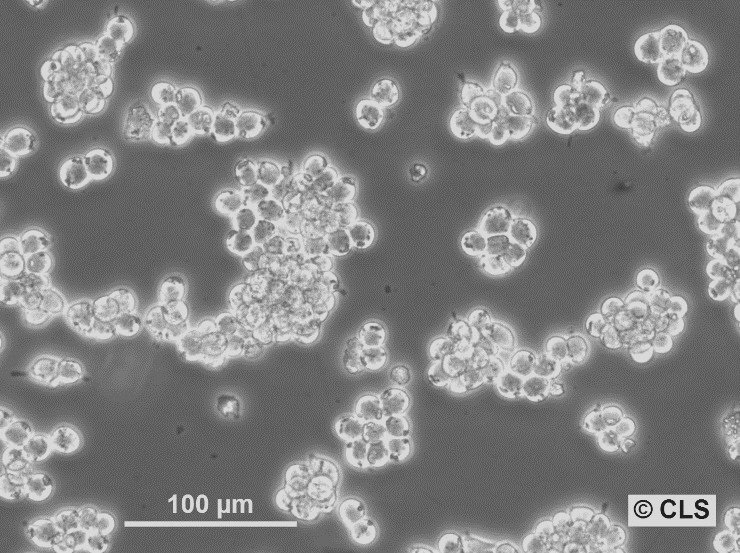

AR42J Cells
| Unit |
5 x 10^6 cells/ml |
|---|---|
| Cell Type |
Tumor Cells |
| Tissue Type |
Rat cell lines |
| Organism |
Rat |
| Donor History |
Neoplasia |
| Growth Properties |
Cells grow slowly ,in clusters and appear as hollow spheroid colonies. They can pile up and attach loosely. |
| Growth Conditions |
Culture medium: DMEM ,w: 4.5 g/L Glucose ,w: 4 mM L-Glutamine ,w: 3.7 g/L NaHCO3 ,w: 1.0 mM Sodium pyruvate (Cytion article number 820300a). Supplements: Supplement the medium with 10% FBS. Seeding density: 1 x 10⁴ cells/cm². Freeze medium: As a cryopreservation medium ,we use complete growth medium (including FBS) + 10% DMSO for adequate post-thaw viability ,or CM-1 (Cytion catalog number 800100) ,which includes optimized osmoprotectants and metabolic stabilizers to enhance recovery and reduce cryo-induced stress. Incubation atmosphere: 37°C ,5% CO2 ,humidified atmosphere. |
| Immortalization Method | |
| Full Information |

AR42J cells are a rat pancreatic tumor cell line derived from azaserine-induced tumors in rats. They are widely used as a model for studying pancreatic exocrine cell functions, pancreatitis, and pancreatic cancer research. AR42J cells exhibit acinar-like characteristics, making them particularly valuable for investigating the physiology and pathology of pancreatic acinar cells.
One of the defining features of AR42J cells is their ability to differentiate into cell types exhibiting more pronounced pancreatic exocrine functions when treated with various agents, such as dexamethasone or activators of protein kinase C. Upon differentiation, these cells produce and secrete digestive enzymes, including amylase, lipase, and chymotrypsin, mimicking the enzyme secretion profile of normal pancreatic acinar cells.
AR42J cells are also used to explore the mechanisms of acute pancreatitis. They respond to stimuli like cerulein, a cholecystokinin analog, which can induce a condition in the cells that resembles acute pancreatitis, characterized by enzyme overproduction, oxidative stress, and inflammatory responses. This makes AR42J cells a useful tool for testing potential therapeutic interventions for pancreatitis.
Furthermore, the AR42J cell line is utilized in research focused on pancreatic cancer, particularly for studies on tumorigenesis and the malignant transformation of acinar cells. They are instrumental in examining the effects of oncogenes, tumor suppressor genes, and growth factors on the development and progression of pancreatic cancer.
Overall, AR42J cells provide a versatile and dynamic model system for advancing our understanding of pancreatic diseases and for the development of new therapeutic strategies targeting these conditions.
Společnost Cytion vznikla v roce 2004 v německém Heidelbergu s jasným vědeckým posláním: dodávat ověřené lidské a zvířecí buněčné linie bez kontaminace, připravené za přísně kontrolovaných laboratorních podmínek.
Postupně se vypracovala ve spolehlivou buněčnou banku, která slouží akademickým laboratořím, biotechnologickým firmám i farmaceutickým výzkumným týmům po celém světě. Klade přitom důraz na reprodukovatelnost výsledků, přísnou kontrolu kvality a dlouhodobá partnerství.