
 Genetika člověka
 Mikrobiologické aplikace
 NGS
 Rapid testy

 PCR plasty
 Pipetovací špičky
 Plasty pro buněčnou kultivaci
 Systém pro dlouhodobé skladování vzorků
 Zkumavky

 Třepačky
 Suché lázně
 Centrifugy
 End Point cyclery
 Real-time PCR cyclery
 Fluorometry
 Spektrofotometry
 Izolátory nukleových kyselin
 Pipetovací roboty
 Biobanking
 Live Cell Imaging

 Jednokanálové
 Multikanálové
 Sérologické pipety
 Jednorázové pipety

 Buněčné kultury
 PCR, qPCR, RT
 Detekce Mycoplasmat
 Reverzní transkripce

 Alergie
 Intolerance
 Elisa
 Imunologické analyzátory
 Veterinární imunologie
 Alergie u zvířat
 Intolerance u zvířat

 Čtečky identifikačních čipů
 Termočipy
 Biochemie
 Imunoanalýza


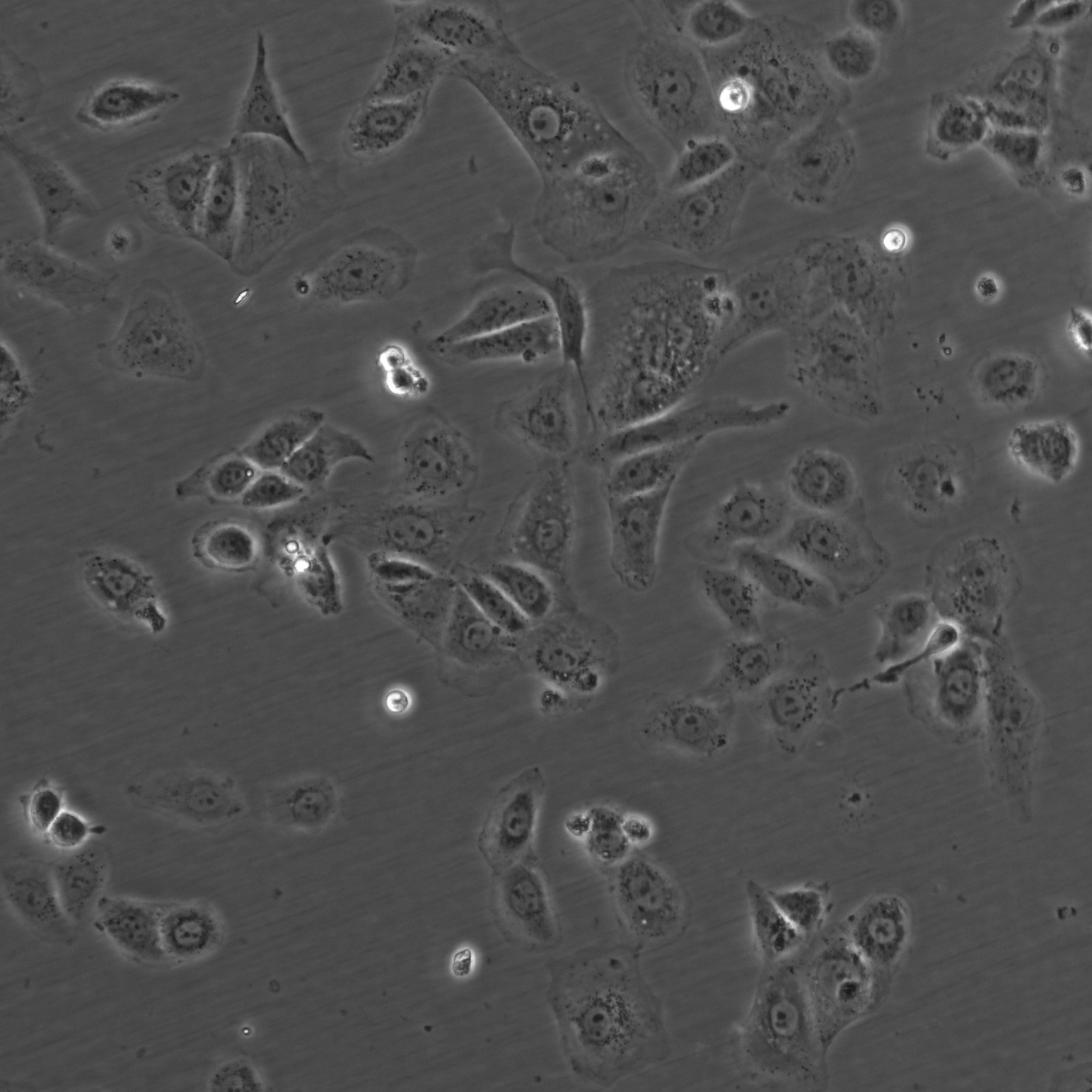

CAL-51 Cells
| Unit |
3 x 10^6 cells/ml |
|---|---|
| Cell Type |
Tumor Cells |
| Tissue Type |
Breast cancer cell lines |
| Organism |
Human |
| Donor History |
Carcinoma |
| Growth Properties |
Monolayer ,adherent |
| Growth Conditions |
Culture medium: DMEM ,w: 4.5 g/L Glucose ,w: 4 mM L-Glutamine ,w: 3.7 g/L NaHCO3 ,w: 1.0 mM Sodium pyruvate (Cytion article number 820300a). Supplements: Supplement the medium with 10% FBS. Dissociation reagent: Accutase. Seeding density: 1.25 x 10⁴ cells/cm². Freeze medium: As a cryopreservation medium ,we use complete growth medium (including FBS) + 10% DMSO for adequate post-thaw viability ,or CM-1 (Cytion catalog number 800100) ,which includes optimized osmoprotectants and metabolic stabilizers to enhance recovery and reduce cryo-induced stress. Incubation atmosphere: 37°C ,5% CO2 ,humidified atmosphere. |
| Immortalization Method | |
| Full Information |

The CAL-51 cell line is a human breast adenocarcinoma model established from a malignant pleural effusion of a patient with advanced breast cancer. Characterized by epithelial morphology and a normal diploid karyotype, CAL-51 is particularly notable for its triple-negative breast cancer (TNBC) profile, lacking estrogen receptor (ER), progesterone receptor (PR), and HER2 expression. The absence of these markers, commonly used as therapeutic targets, makes CAL-51 a valuable model for studying TNBC, an aggressive subtype of breast cancer with limited treatment options. CAL-51’s tumorigenicity in immunocompromised mice and growth in soft agar demonstrate its malignant potential, making it suitable for in vitro and in vivo cancer research.
CAL-51 has also shown utility in studies investigating SARS-CoV-2 infection mechanisms. High expression of cellular entry factors ACE2 and TMPRSS2, along with neuropilin-1 (NRP1), renders CAL-51 permissive to SARS-CoV-2, facilitating viral entry and replication in cell culture. This makes CAL-51 a suitable model for exploring viral pathogenesis, as well as testing antiviral compounds and neutralizing antibodies targeted at SARS-CoV-2. Experiments demonstrate that therapeutic antibodies can block SARS-CoV-2 entry effectively in CAL-51 cells, highlighting its relevance as a model system for COVID-19 research and potential therapeutic evaluation.
In cancer research, CAL-51 is particularly useful for examining tumor heterogeneity, especially through its subpopulations of stem-like cancer cells known as side populations (SP), which express high levels of the ABCG2 transporter. SP cells in CAL-51 exhibit enhanced drug resistance and potential self-renewal, characteristics relevant to studies on cancer stem cell behavior and treatment resistance. As such, CAL-51 is a versatile model contributing to both cancer and viral infection studies, supporting research into challenging therapeutic areas such as TNBC and SARS-CoV-2.
Společnost Cytion vznikla v roce 2004 v německém Heidelbergu s jasným vědeckým posláním: dodávat ověřené lidské a zvířecí buněčné linie bez kontaminace, připravené za přísně kontrolovaných laboratorních podmínek.
Postupně se vypracovala ve spolehlivou buněčnou banku, která slouží akademickým laboratořím, biotechnologickým firmám i farmaceutickým výzkumným týmům po celém světě. Klade přitom důraz na reprodukovatelnost výsledků, přísnou kontrolu kvality a dlouhodobá partnerství.