
 Genetika člověka
 Mikrobiologické aplikace
 NGS
 Rapid testy

 PCR plasty
 Pipetovací špičky
 Plasty pro buněčnou kultivaci
 Systém pro dlouhodobé skladování vzorků
 Zkumavky

 Třepačky
 Suché lázně
 Centrifugy
 End Point cyclery
 Real-time PCR cyclery
 Fluorometry
 Spektrofotometry
 Izolátory nukleových kyselin
 Pipetovací roboty
 Biobanking
 Live Cell Imaging

 Jednokanálové
 Multikanálové
 Sérologické pipety
 Jednorázové pipety

 Buněčné kultury
 PCR, qPCR, RT
 Detekce Mycoplasmat
 Reverzní transkripce

 Alergie
 Intolerance
 Elisa
 Imunologické analyzátory
 Veterinární imunologie
 Alergie u zvířat
 Intolerance u zvířat

 Čtečky identifikačních čipů
 Termočipy
 Biochemie
 Imunoanalýza


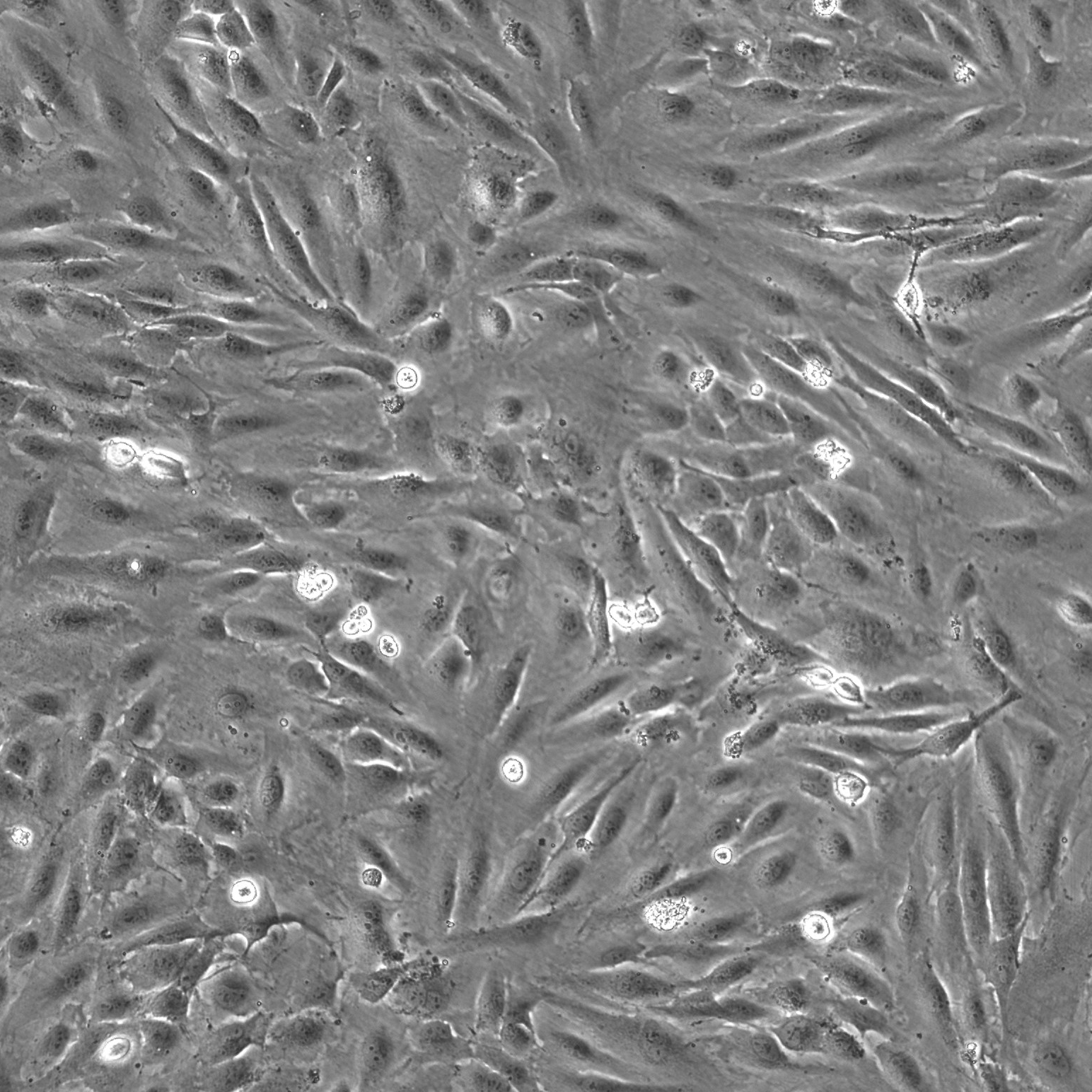

ETK-1 Cells
| Unit |
3 x 10^6 cells/ml |
|---|---|
| Cell Type |
Tumor Cells |
| Tissue Type |
Liver cancer cell lines |
| Organism |
Human |
| Donor History |
Cholangiocarcinoma |
| Growth Properties |
Adherent |
| Growth Conditions |
Culture medium: RPMI 1640 ,w: 2.0 mM stable Glutamine ,w: 2.0 g/L NaHCO3 (Cytion article number 820700a). Supplements: Supplement the medium with 10% FBS. Dissociation reagent: Accutase ,5 min. ,37°C. Seeding density: 1 to 3 x 10⁴ cells/cm². Freeze medium: As a cryopreservation medium ,we use complete growth medium + 10% DMSO for adequate post-thaw viability. Incubation atmosphere: 37°C ,5% CO2 ,humidified atmosphere. |
| Immortalization Method | |
| Full Information |

ETK-1 is a human intrahepatic cholangiocarcinoma (IHCCA) cell line originally established from the ascitic fluid of an adult patient with sarcomatoid cholangiocarcinoma. The tumor from which ETK-1 was derived exhibited both tubular adenocarcinoma and sarcomatoid components, and the cell line reflects the sarcomatoid phenotype. ETK-1 cells grow adherently as a uniform epithelial monolayer with a cobblestone appearance, composed mainly of small polygonal cells with round to oval nuclei and prominent nucleoli. Early passage cells demonstrated a population doubling time of approximately 70 hours and a hyperdiploid karyotype with a modal chromosome number in the mid-70s, consistent with chromosomal instability typical of aggressive biliary tract malignancies.
Immunophenotypically, ETK-1 cells express biliary epithelial markers including γ-glutamyl transpeptidase (GGT), cytokeratin 18 (CK18), and cytokeratin 19 (CK19), confirming their cholangiocytic origin. They are negative for hepatocyte-associated markers such as alpha-fetoprotein (AFP) and albumin under basal conditions. ETK-1 cells express vimentin, reflecting their sarcomatoid characteristics and partial mesenchymal phenotype, while lacking expression of carcinoembryonic antigen (CEA) and carbohydrate antigen 19-9 (CA19-9). This marker profile corresponds to the sarcomatoid component observed in the primary tumor and highlights features consistent with epithelial-mesenchymal transition-like properties.
ETK-1 has also been used as a model to study cellular plasticity and lineage differentiation in cholangiocarcinoma. Treatment with the DNA methyltransferase inhibitor 5-azacytidine induced morphological and phenotypic changes, resulting in a derivative cell line with hepatocyte-like features, including expression of AFP, albumin, integrin α1, and thrombopoietin, along with loss of certain biliary markers. In xenograft models, untreated ETK-1 cells form tumors consistent with tubular adenocarcinoma displaying a ductal phenotype. These findings demonstrate that ETK-1 retains differentiation plasticity and serves as a valuable in vitro system for investigating biliary epithelial-to-hepatocytic transdifferentiation, epigenetic regulation, and tumor heterogeneity in intrahepatic cholangiocarcinoma.
Společnost Cytion vznikla v roce 2004 v německém Heidelbergu s jasným vědeckým posláním: dodávat ověřené lidské a zvířecí buněčné linie bez kontaminace, připravené za přísně kontrolovaných laboratorních podmínek.
Postupně se vypracovala ve spolehlivou buněčnou banku, která slouží akademickým laboratořím, biotechnologickým firmám i farmaceutickým výzkumným týmům po celém světě. Klade přitom důraz na reprodukovatelnost výsledků, přísnou kontrolu kvality a dlouhodobá partnerství.