Genetika člověka
 Mikrobiologické aplikace
 NGS
 Rapid testy

 PCR plasty
 Pipetovací špičky
 Plasty pro buněčnou kultivaci
 Systém pro dlouhodobé skladování vzorků
 Zkumavky

 Třepačky
 Suché lázně
 Centrifugy
 End Point cyclery
 Real-time PCR cyclery
 Fluorometry
 Spektrofotometry
 Izolátory nukleových kyselin
 Pipetovací roboty
 Biobanking
 Live Cell Imaging

 Jednokanálové
 Multikanálové
 Sérologické pipety
 Jednorázové pipety

 Buněčné kultury
 PCR, qPCR, RT
 Detekce Mycoplasmat
 Reverzní transkripce

 Alergie
 Intolerance
 Elisa
 Imunologické analyzátory
 Veterinární imunologie
 Alergie u zvířat
 Intolerance u zvířat

 Čtečky identifikačních čipů
 Termočipy
 Biochemie
 Imunoanalýza


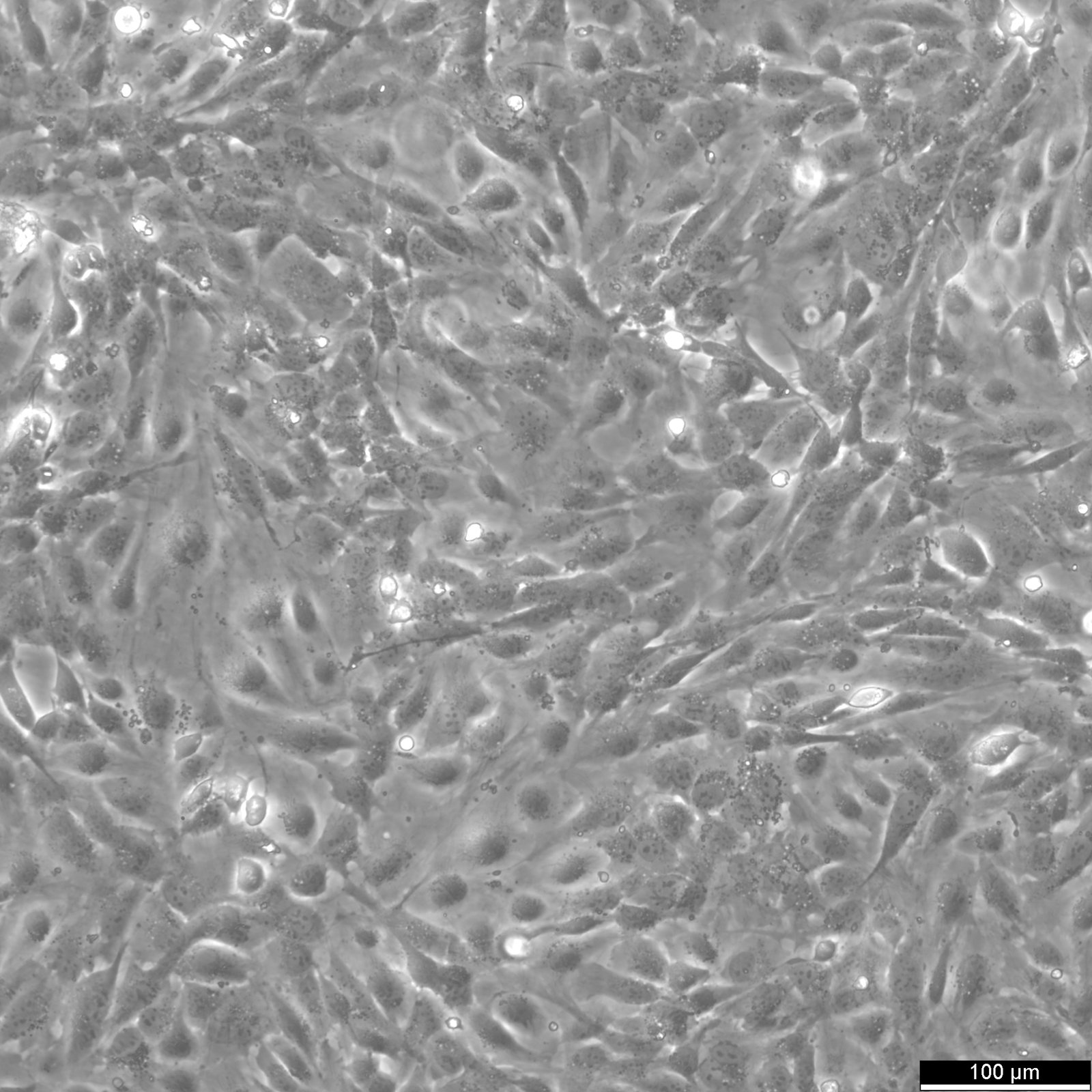

hCMEC/D3 Cells
| Unit |
3 x 10^6 cells/ml |
|---|---|
| Cell Type |
Immortalized Cells |
| Tissue Type |
Transformed cell lines |
| Organism |
Human |
| Donor History |
Normal cerebral microvascular endothelium (hTERT and SV40-immortalized; blood-brain barrier model; non-tumorigenic) |
| Growth Properties |
Adherent |
| Growth Conditions |
Culture medium: EGM -2 MV Microvascular Endothelial Cell Growth Medium-2 BulletKit (from Lonza ,Lonza catalog number CC-3202). Supplements: Supplement the supplied EBM-2 Basal Medium as recommended by the manufacturer. Dissociation reagent: Accutase or 0.25% Trypsin-EDTA (brief; do not over-trypsinize). Seeding density: 1 to 2 × 10⁴ cells/cm² (on collagen I-coated surfaces). Freeze medium: As a cryopreservation medium ,we use 50% basal medium + 40% FBS + 10% DMSO ,or CM-1 (Cytion catalog number 800100) ,which includes optimized osmoprotectants and metabolic stabilizers to enhance recovery and reduce cryo-induced stress. Incubation atmosphere: 37°C ,5% CO2 ,humidified atmosphere. |
| Immortalization Method | |
| Full Information |

The HCMEC/D3 cell line represents an immortalized human cerebral microvascular endothelial cell line, extensively utilized in the study of the blood-brain barrier (BBB). This cell line was generated through the transduction of primary human cerebral microvascular endothelial cells with a lentiviral vector expressing human telomerase reverse transcriptase (hTERT), a crucial enzyme for maintaining telomere length and thereby promoting cellular longevity without transforming the cell phenotype. The introduction of hTERT helps these cells to bypass the replicative senescence that limits the lifespan of primary cells, allowing sustained propagation in culture.
HCMEC/D3 cells retain key physiological and morphological characteristics of primary cerebral endothelial cells, making them a valuable model for in vitro studies of the BBB. These include the expression of tight junction proteins such as claudin-5, occludin, and zonula occludens-1, which are critical for maintaining barrier integrity. The cells also express various transporters and receptors typical of the cerebral endothelium, supporting their use in studies related to drug delivery and neurovascular disorders. The ability of HCMEC/D3 to form a tight monolayer with high electrical resistance underscores their suitability for BBB permeability assays.
Research utilizing HCMEC/D3 cells has covered a wide range of applications, including the investigation of cerebral pathologies such as stroke, multiple sclerosis, and metastasis of cancer to the brain. Their compatibility with various molecular biology techniques also makes them an excellent tool for studying endothelial cell responses to inflammatory stimuli, shear stress, and neurotoxic substances. This cell line provides a robust, reproducible platform for dissecting the molecular events at the cerebral endothelial level, contributing valuable insights into the complexities of neurovascular health and disease.
Společnost Cytion vznikla v roce 2004 v německém Heidelbergu s jasným vědeckým posláním: dodávat ověřené lidské a zvířecí buněčné linie bez kontaminace, připravené za přísně kontrolovaných laboratorních podmínek.
Postupně se vypracovala ve spolehlivou buněčnou banku, která slouží akademickým laboratořím, biotechnologickým firmám i farmaceutickým výzkumným týmům po celém světě. Klade přitom důraz na reprodukovatelnost výsledků, přísnou kontrolu kvality a dlouhodobá partnerství.