Genetika člověka
 Mikrobiologické aplikace
 NGS
 Rapid testy

 PCR plasty
 Pipetovací špičky
 Plasty pro buněčnou kultivaci
 Systém pro dlouhodobé skladování vzorků
 Zkumavky

 Třepačky
 Suché lázně
 Centrifugy
 End Point cyclery
 Real-time PCR cyclery
 Fluorometry
 Spektrofotometry
 Izolátory nukleových kyselin
 Pipetovací roboty
 Biobanking
 Live Cell Imaging

 Jednokanálové
 Multikanálové
 Sérologické pipety
 Jednorázové pipety

 Buněčné kultury
 PCR, qPCR, RT
 Detekce Mycoplasmat
 Reverzní transkripce

 Alergie
 Intolerance
 Elisa
 Imunologické analyzátory
 Veterinární imunologie
 Alergie u zvířat
 Intolerance u zvířat

 Čtečky identifikačních čipů
 Termočipy
 Biochemie
 Imunoanalýza


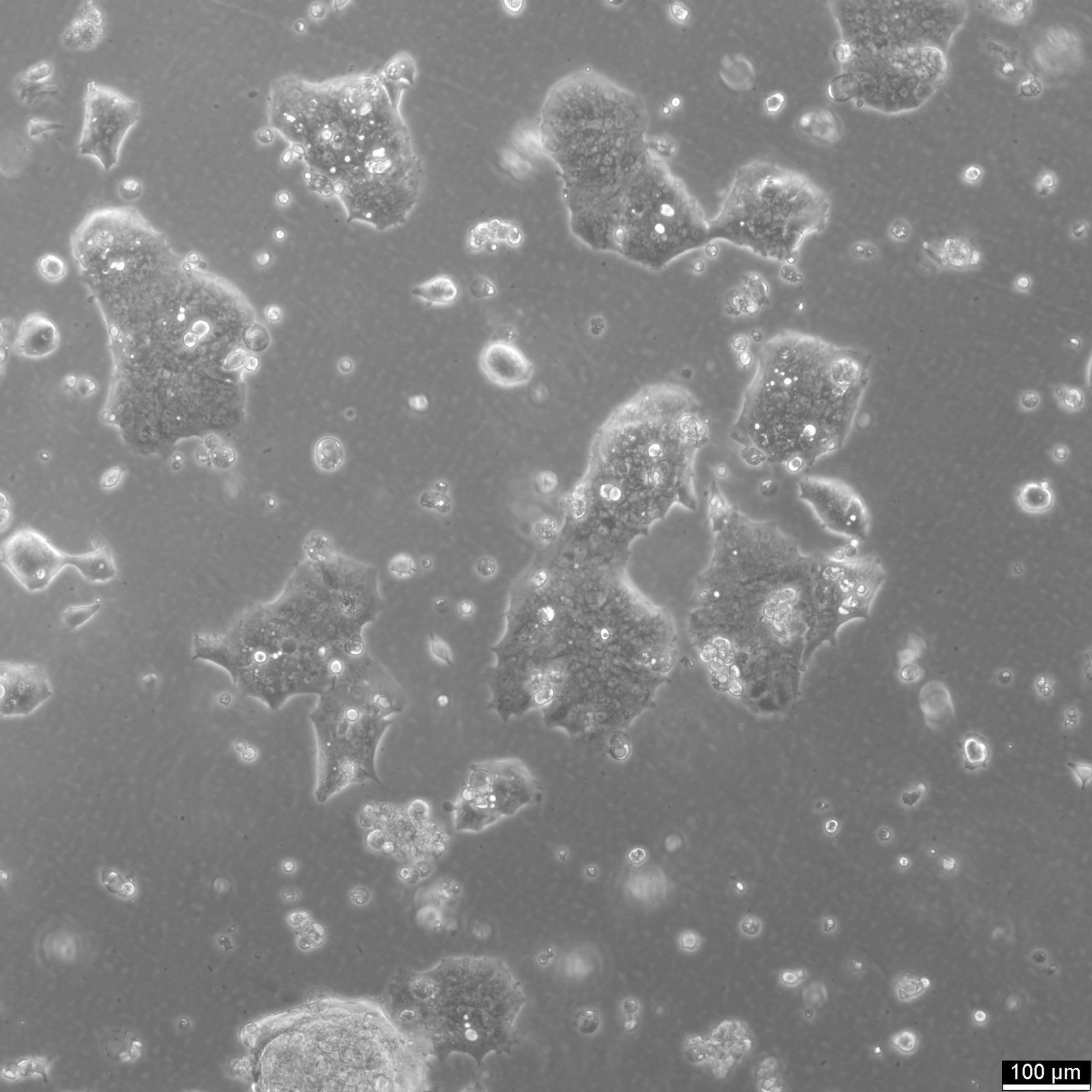

HROC395Met1 Cells
| Unit |
3 x 10^6 cells/ml |
|---|---|
| Cell Type |
Tumor Cells |
| Tissue Type |
HROC cell lines ,Liver cancer cell lines |
| Organism |
Human |
| Donor History |
Colorectal Adenocarcinoma |
| Growth Properties |
Adherent |
| Growth Conditions |
Culture medium: DMEM:Ham's F12 (1:1) ,w: 3.1 g/L Glucose ,w: 2.5 mM L-Glutamine ,w: 15 mM HEPES ,w: 0.5 mM Sodium pyruvate ,w: 1.2 g/L NaHCO3 (Cytion article number 820400a). Supplements: Supplement the medium with 10% FBS. Dissociation reagent: TrypLE Express 15 min 37°C. Freeze medium: As a cryopreservation medium ,we use complete growth medium + 10% DMSO for adequate post-thaw viability. Incubation atmosphere: 37°C ,5% CO2 ,humidified atmosphere. |
| Immortalization Method | |
| Full Information |

The HROC (Hansestadt Rostock Colorectal cancer) cell line panel comprises patient-derived colorectal cancer models developed from primary tumor tissue and/or matched metastatic lesions. These cell lines are frequently accompanied by corresponding patient-derived xenografts (PDXs) and organoids, enabling integrative modeling of colorectal cancer (CRC) in both in vitro and in vivo systems. HROC models preserve critical clinical and molecular diversity found in colorectal cancer, including variations in microsatellite instability (MSI vs. MSS) and key genetic drivers such as mutations in APC, KRAS, BRAF, PIK3CA, and TP53. Cultured as adherent epithelial monolayers and typically used at low passage numbers, HROC lines maintain phenotypic and genomic fidelity to their patient tumors, supporting translational relevance in drug and biomarker research.
The nomenclature system for HROC cell lines provides detailed metadata on origin and experimental history. For example, “Tu” identifies cell lines derived from primary tumors, “Met” from metastatic lesions, while “T#” and “M#” indicate the number of PDX transfers and the specific mouse host, respectively. This systematic naming allows for easy tracking of matched sets, such as primary-metastasis pairs or in vitro-in vivo derivatives. These matched models support studies on clonal evolution, metastasis, therapy resistance, and pharmacokinetic behavior—including transporter expression and barrier integrity relevant for drug absorption. Cell lines undergo routine authentication (e.g., STR profiling) and are tested regularly for mycoplasma contamination. Characterization data for numerous HROC models are publicly available in peer-reviewed publications.
HROC cell lines are particularly valuable for subtype-stratified drug screening, biomarker discovery across MSI-H and MSS tumors, and mechanistic studies involving primary vs. metastatic disease. When paired with PDXs and/or organoids, they provide a robust platform for preclinical evaluation, including drug sensitivity testing and modeling of tumor-stroma or immune interactions. Due to their comprehensive annotation and clinical relevance, HROC models are suitable for both basic and translational research in colorectal cancer.
Společnost Cytion vznikla v roce 2004 v německém Heidelbergu s jasným vědeckým posláním: dodávat ověřené lidské a zvířecí buněčné linie bez kontaminace, připravené za přísně kontrolovaných laboratorních podmínek.
Postupně se vypracovala ve spolehlivou buněčnou banku, která slouží akademickým laboratořím, biotechnologickým firmám i farmaceutickým výzkumným týmům po celém světě. Klade přitom důraz na reprodukovatelnost výsledků, přísnou kontrolu kvality a dlouhodobá partnerství.