Genetika člověka
 Mikrobiologické aplikace
 NGS
 Rapid testy

 PCR plasty
 Pipetovací špičky
 Plasty pro buněčnou kultivaci
 Systém pro dlouhodobé skladování vzorků
 Zkumavky

 Třepačky
 Suché lázně
 Centrifugy
 End Point cyclery
 Real-time PCR cyclery
 Fluorometry
 Spektrofotometry
 Izolátory nukleových kyselin
 Pipetovací roboty
 Biobanking
 Live Cell Imaging

 Jednokanálové
 Multikanálové
 Sérologické pipety
 Jednorázové pipety

 Buněčné kultury
 PCR, qPCR, RT
 Detekce Mycoplasmat
 Reverzní transkripce

 Alergie
 Intolerance
 Elisa
 Imunologické analyzátory
 Veterinární imunologie
 Alergie u zvířat
 Intolerance u zvířat

 Čtečky identifikačních čipů
 Termočipy
 Biochemie
 Imunoanalýza


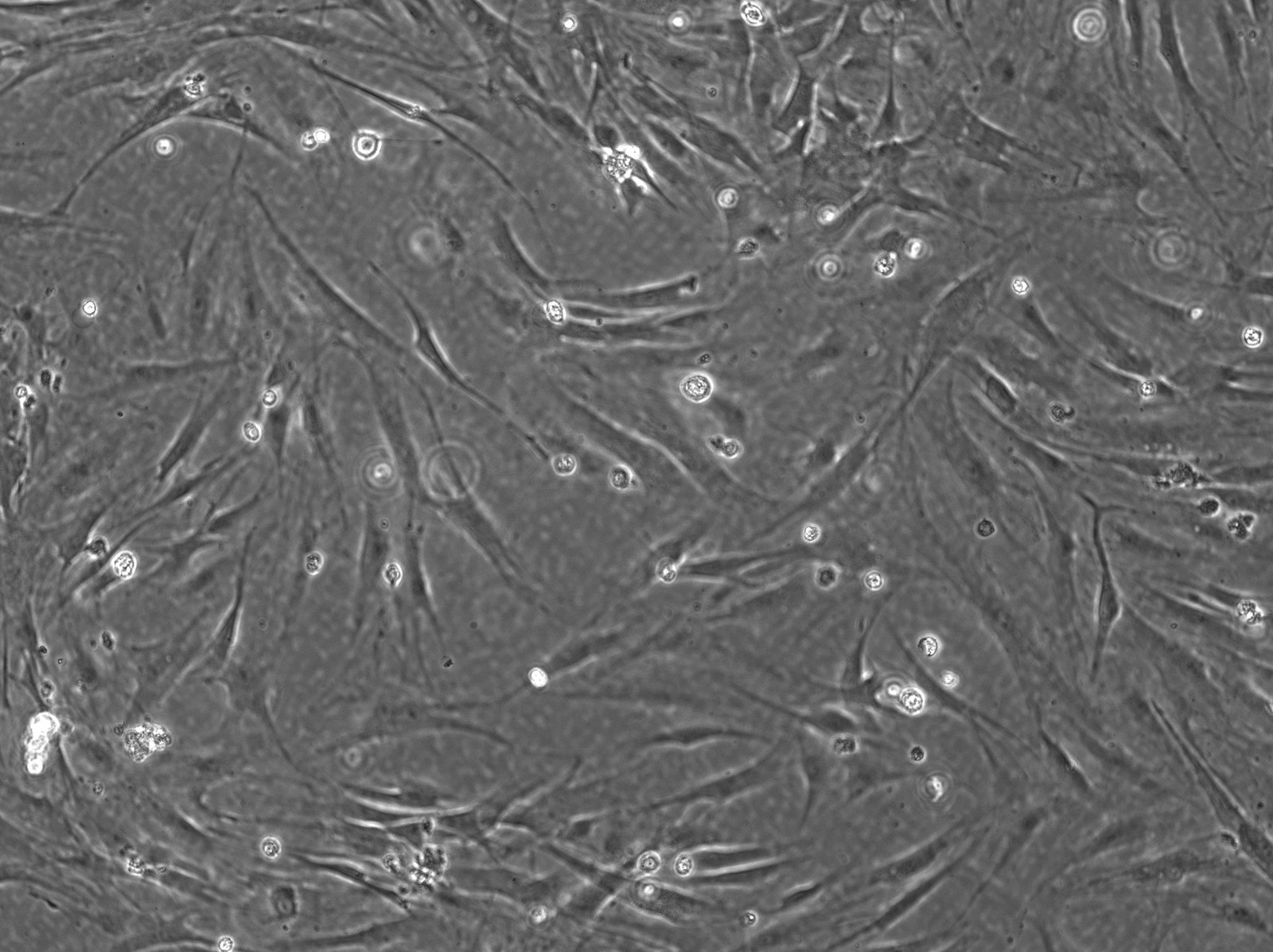

Human Dermal Fibroblast – Adult (HDF-Ad)
| Unit |
3 x 10^6 cells/ml |
|---|---|
| Cell Type |
Primary Cells |
| Tissue Type |
Fibroblasts |
| Organism |
Human |
| Donor History | |
| Growth Properties |
Adherent |
| Growth Conditions |
Culture medium: MEM ,w/o ribonucleosides ,w/o deoxyribonucleosides (We do not supply this product; please consider other suppliers. Please let us know if you need further assistance). Supplements: Supplement the medium with 10% FBS ,2 ng/mL hr-bFGF ,2 mM stable L-glutamine. Dissociation reagent: Trypsin-EDTA. Seeding density: 1 to 3*10³ cells/cm². Freeze medium: As a cryopreservation medium ,we use 90% FBS + 10% DMSO to maintain viability ,or CM-1 (Cytion catalog number 800100) ,which includes optimized osmoprotectants and metabolic stabilizers to enhance recovery and reduce cryo-induced stress. Incubation atmosphere: 37°C ,5% CO2 ,humidified atmosphere. |
| Immortalization Method | |
| Full Information |
https://www.cytion.com/Human-Dermal-Fibroblast-Adult-HDF-Ad/300606 |

Human Dermal Fibroblasts, Adult (HDF-Ad), are primary cells isolated from the dermis layer of adult human skin. These cells play a crucial role in skin physiology, being responsible for the production of extracellular matrix components, including collagen and elastin, which are essential for maintaining skin structure and function. HDF-Ad cells are frequently utilized in research related to wound healing, aging, and tissue engineering, given their significant role in skin repair and regeneration processes. Additionally, they serve as an important model for studying fibroblast behavior in various dermatological conditions and diseases.
HDF-Ad cells are highly responsive to external stimuli, making them a valuable tool for investigating the cellular responses to different environmental factors such as UV radiation, oxidative stress, and various pharmaceutical compounds. Their ability to proliferate and produce essential proteins under controlled conditions also makes them suitable for studies in drug development, particularly in the context of dermal toxicity and efficacy testing. These cells retain many of the physiological characteristics of their tissue of origin, providing a relevant model for in vitro studies aimed at understanding skin biology at the molecular and cellular levels.
Společnost Cytion vznikla v roce 2004 v německém Heidelbergu s jasným vědeckým posláním: dodávat ověřené lidské a zvířecí buněčné linie bez kontaminace, připravené za přísně kontrolovaných laboratorních podmínek.
Postupně se vypracovala ve spolehlivou buněčnou banku, která slouží akademickým laboratořím, biotechnologickým firmám i farmaceutickým výzkumným týmům po celém světě. Klade přitom důraz na reprodukovatelnost výsledků, přísnou kontrolu kvality a dlouhodobá partnerství.