Genetika člověka
 Mikrobiologické aplikace
 NGS
 Rapid testy

 PCR plasty
 Pipetovací špičky
 Plasty pro buněčnou kultivaci
 Systém pro dlouhodobé skladování vzorků
 Zkumavky

 Třepačky
 Suché lázně
 Centrifugy
 End Point cyclery
 Real-time PCR cyclery
 Fluorometry
 Spektrofotometry
 Izolátory nukleových kyselin
 Pipetovací roboty
 Biobanking
 Live Cell Imaging

 Jednokanálové
 Multikanálové
 Sérologické pipety
 Jednorázové pipety

 Buněčné kultury
 PCR, qPCR, RT
 Detekce Mycoplasmat
 Reverzní transkripce

 Alergie
 Intolerance
 Elisa
 Imunologické analyzátory
 Veterinární imunologie
 Alergie u zvířat
 Intolerance u zvířat

 Čtečky identifikačních čipů
 Termočipy
 Biochemie
 Imunoanalýza


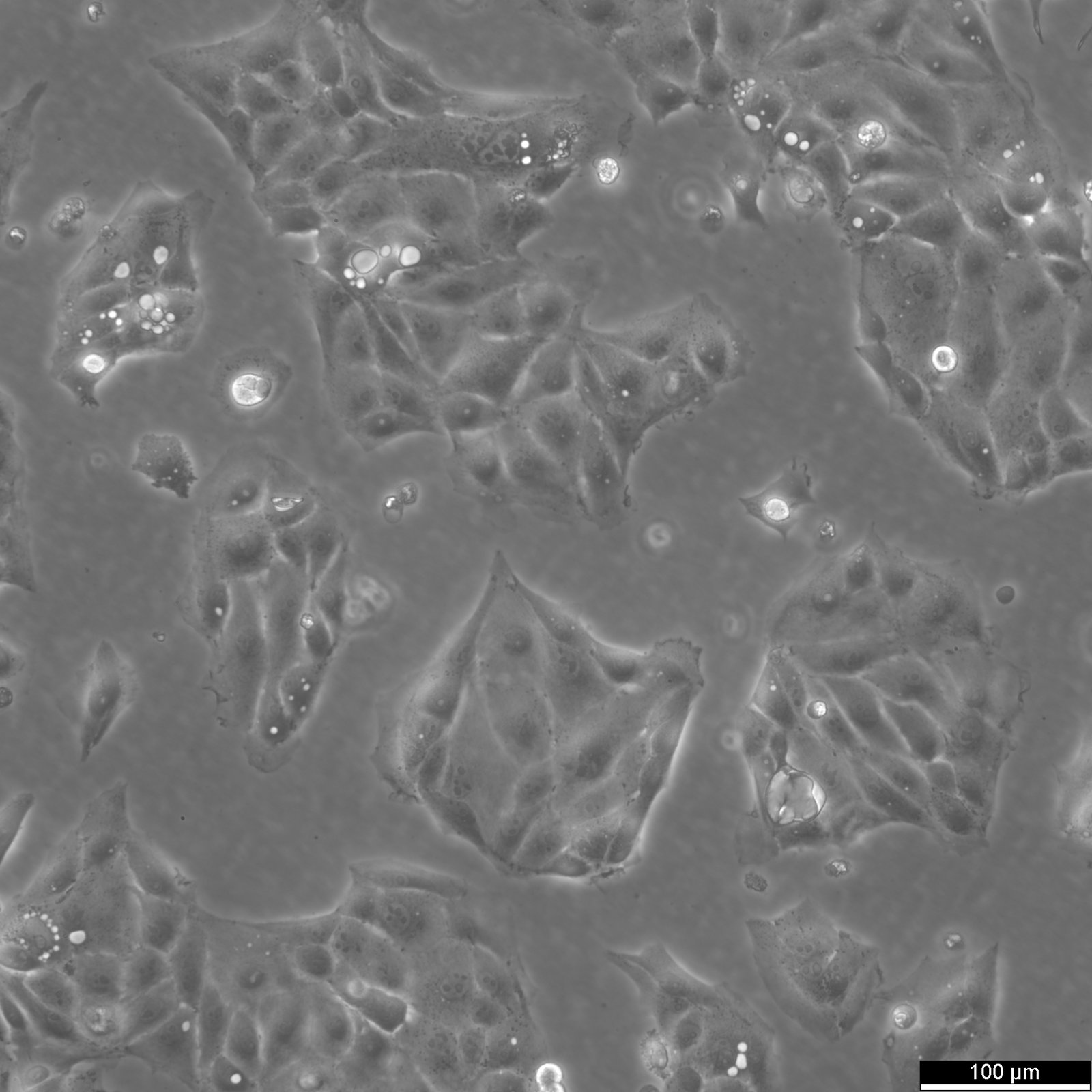

LLC-PK1 Cells
| Unit |
3 x 10^6 cells/ml |
|---|---|
| Cell Type |
Immortalized Cells |
| Tissue Type |
Pig cell lines |
| Organism |
Sus Scrofa |
| Donor History | |
| Growth Properties |
Adherent |
| Growth Conditions |
Culture medium: Medium 199 ,w: 2.7 mM stable Glutamine ,w: 2.2 g/L NaHCO3 ,w: EBSS (Cytion article number 820101a). Supplements: Supplement the medium with 3% FBS. Dissociation reagent: Accutase. Seeding density: 1 to 3 x 10⁶ cells/cm². Freeze medium: As a cryopreservation medium ,we use complete growth medium (including FBS) + 10% DMSO for adequate post-thaw viability ,or CM-1 (Cytion catalog number 800100) ,which includes optimized osmoprotectants and metabolic stabilizers to enhance recovery and reduce cryo-induced stress. Incubation atmosphere: 37°C ,5% CO2 ,humidified atmosphere. |
| Immortalization Method | |
| Full Information |

LLC-PK1 cells are a well-established and widely used cell line in biomedical research. These cells were derived from a healthy male pig's kidney, exhibiting typical epithelial morphology. The LLC-PK1 line is polarized and contains tight junctions, making it an ideal model for epithelial tissue.
One of the critical features of LLC-PK1 cells is their ability to produce plasminogen activator, a substance that stimulates fibrinolysis. This property has made LLC-PK1 cells particularly valuable in thrombosis research.
In recent years, plasminogen activator has been included in drugs used in thrombosis therapies since it facilitates the dissolution of small blood clots. In addition to producing plasminogen activators, LLC-PK1 cells produce large amounts of cytokeratin. This characteristic has made them popular for various pharmacologic and metabolic research investigations.
The LLC-PK1 line has been used in drug metabolism, transport, toxicity, and interaction studies. LLC-PK1 cells are also frequently used in permeability assays. The mechanism of uracil transport differs depending on cell lines, with a Na+-independent system on the basolateral membrane in Caco-2 cells and both Na+-dependent and Na+-independent systems on the apical membrane in LLC-PK1 cells.
Compared to other cell lines, LLC-PK1 cells share many characteristics of proximal tubular cells in vivo, including apical membrane microvilli, high activities of apical membrane enzymes, and expression of parathyroid hormone receptors and sodium-dependent glucose transporters. This makes LLC-PK1 cells a valuable tool in renal toxicology studies. Another cell line commonly used in renal toxicology studies is the MDCK cell line. Like LLC-PK1 cells, MDCK cells are epithelial but have characteristics more typical of distal tubular cells.
They express vasopressin, oxytocin, and prostaglandin receptors, which, when stimulated, activate adenylate cyclase. LLC-PK1 and MDCK cell lines proliferate rapidly and can be passaged easily for many generations in monolayer cultures. LLC-PK1 cells are also capable of forming 'domes', fluid-filled blisters resulting from water and solute transport, tight junctions, and adhesion of the cells to the substratum.
In conclusion, the LLC-PK1 cell line is a versatile and valuable tool for biomedical research. It has been widely used in various studies on drug metabolism, drug transport, drug toxicity, drug-drug interactions, renal toxicology, and permeability assays. With its well-established epithelial morphology and plasminogen activator and cytokeratin production, LLC-PK1 cells are an ideal model for epithelial tissue.
Společnost Cytion vznikla v roce 2004 v německém Heidelbergu s jasným vědeckým posláním: dodávat ověřené lidské a zvířecí buněčné linie bez kontaminace, připravené za přísně kontrolovaných laboratorních podmínek.
Postupně se vypracovala ve spolehlivou buněčnou banku, která slouží akademickým laboratořím, biotechnologickým firmám i farmaceutickým výzkumným týmům po celém světě. Klade přitom důraz na reprodukovatelnost výsledků, přísnou kontrolu kvality a dlouhodobá partnerství.