
 Genetika člověka
 Mikrobiologické aplikace
 NGS
NGS Rapid testy
 PCR plasty
 Pipetovací špičky
 Plasty pro buněčnou kultivaci
 Systém pro dlouhodobé skladování vzorků
 Zkumavky
 Třepačky
 Suché lázně
 Centrifugy
 End Point cyclery
 Real-time PCR cyclery
 Fluorometry
 Spektrofotometry
 Izolátory nukleových kyselin
 Pipetovací roboty
 Biobanking
 Live Cell Imaging
 Jednokanálové
 Multikanálové
 Sérologické pipety
 Jednorázové pipety
 Buněčné kultury
 PCR, qPCR, RT
 Detekce Mycoplasmat
 Reverzní transkripce
 Alergie
 Intolerance
 Elisa
Elisa Imunologické analyzátory
 Veterinární imunologie
 Alergie u zvířat
 Intolerance u zvířat
 Biochemie
 Imunoanalýza
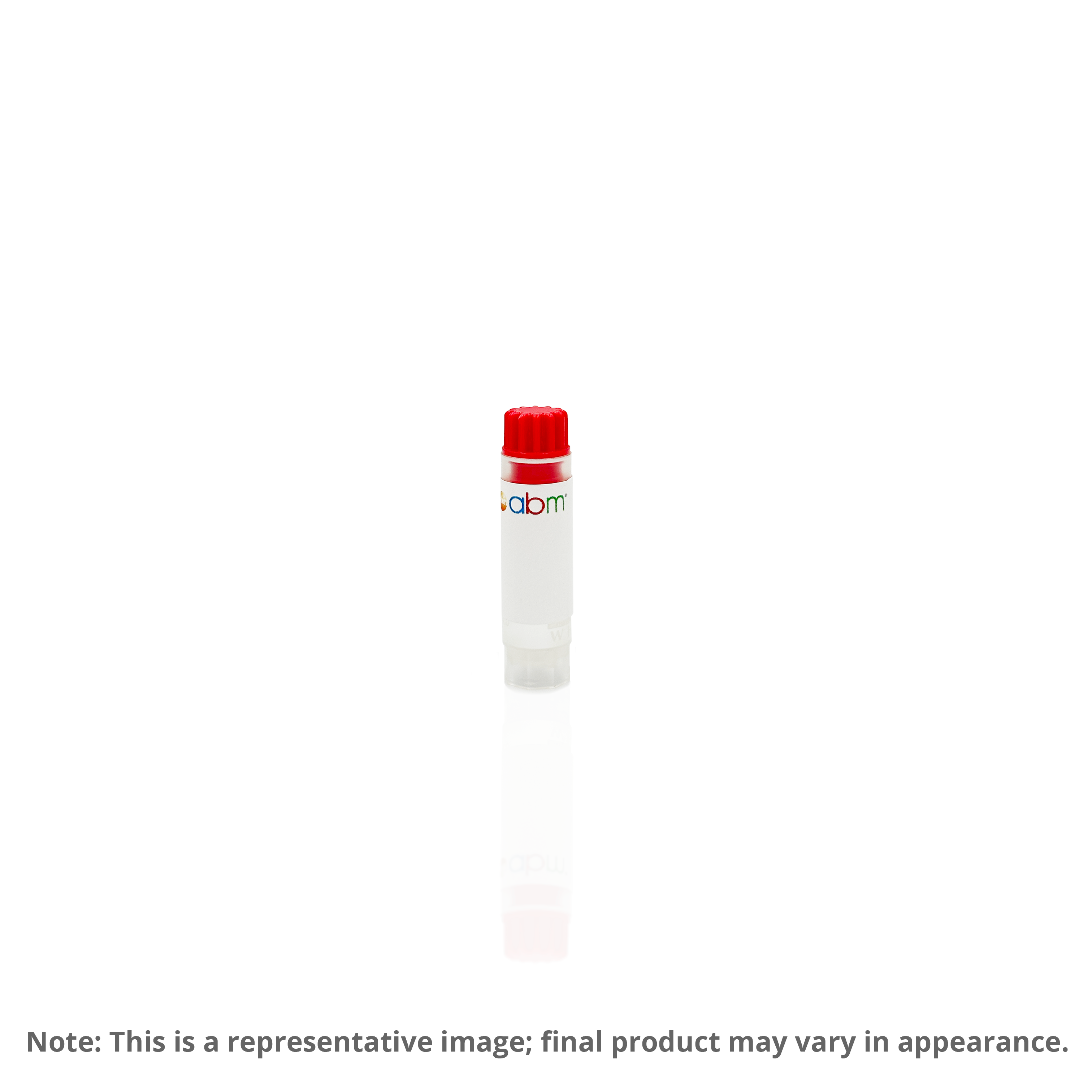

Local Metastasis Tumor Cell Line (T2-A)
| Unit |
1×10⁶ cells / 1.0 ml |
|---|---|
| Cell Type |
Tumor Cells |
| Tissue Type |
Muscle |
| Organism |
Mouse (M. musculus) |
| Donor History |
Obtained by intravenous injection of parent cell line (T1-A) in the tail vein of NIH Swiss mice and selection of cells from a local metastasis. |
| Growth Properties |
Adherent ,fibroblast |
| Growth Conditions |
PriCoat™ T25 Flasks (G299) or Applied Cell Extracellular Matrix (G422) are recommended for optimal cell culture. PriGrow III (TM003) + 10% FBS + 1% Penicillin/Streptomycin Solution (G255) ,37.0°C ,5% CO₂.Note: avoid excessive alkalinity in media; renew media twice weekly. |
| Immortalization Method |
Tumor Cell Line |
| Full Information |
https://www.abmgood.com/Local-Metastasis-Tumor-Cell-Line-T2-A-t8145.html |
This T-2A cell line was established while seeking a metastatic lesion derived from the i.v. injection of T1-A tumor cells (Cat. T8144) into the tail veins of a NIH Swiss mice. The T2-A cell line is derived from a fast-growing local surface metastasis in the mouse near the tail.This cell line is part of an eight cell R/J Model of Metastatic Progression designed using the NIH Swiss mice species to acquire isogenic cell types (T4138, T8981,T3317, T8144-T8148) that capture genetic/phenotypic stages in the progression to highly metastatic growth within this same species. Compared to some other models, the metastasis related changes captured in this unique progression model are easier to discern above their less noisy isogenic background and have progressed within their native NIH Swiss in vivo micro-environments. This isogenic R/J Metastasis Cell Model was produced by an in vitro/in vitro six-step progression from mortal normal NIH Swiss mouse cells (Cat. T4138) that were used to produce immortal pre-cancer NIH/3T3 cells (Cat. T8981) that were transfected with the human HRAS oncogene to produce transformed cancer GhrasT-NIH/3T3 cells (Cat. T3317). Then beginning with a series of in vivo/in vitro progressive transfers of GhrasT-NIH/3T3 cells produced primary tumor T1-A cells (Cat. T8144) that produced local metastatic lesion T2-A cells (Cat. T8145) that simultaneously produced twin distant metastatic lung lesion T3-PA cells (Cat. T8146) with its twin distant metastatic liver lesion cells (Cat. T1847). The liver derived cells produced highly distant metastatic lung lesion cells (Cat T1848) which retained the human HRAS oncogene and they demonstrated a highly metastatic phenotype as they produced wide-spread simultaneous external and internal metastases in multiple sites in multiple mice when injected i.v. into nude NIH Swiss mice.Complete list of cells included in the R/J Metastasis Model:Cat. T8981 – NIH-3T3 CellsCat. T4138 – Normal Primary Diploid Mortal NIH Swiss Mouse Embryonic CellsCat. T3317 – HRAS Stably Expressing Transformed NIH/3T3 Cell Line (GhrasT-NIH/3T3)Cat. T8144 – Primary Tumor Cell Line (T1-A )Cat. T8145 – Local Metastasis Tumor Cell Line (T2-A)Cat. T8146 – Distant Pulmonary Metastasis Tumor Cell Line (T3-PA)Cat. T8147 – Distant Hepatic Metastasis Tumor Cell Line (T3-HA)Cat. T8148 – Highly Metastatic Distant Pulmonary Tumor Cell Line (T4-PA)