Genetika člověka
 Mikrobiologické aplikace
 NGS
 Rapid testy

 PCR plasty
 Pipetovací špičky
 Plasty pro buněčnou kultivaci
 Systém pro dlouhodobé skladování vzorků
 Zkumavky

 Třepačky
 Suché lázně
 Centrifugy
 End Point cyclery
 Real-time PCR cyclery
 Fluorometry
 Spektrofotometry
 Izolátory nukleových kyselin
 Pipetovací roboty
 Biobanking
 Live Cell Imaging

 Jednokanálové
 Multikanálové
 Sérologické pipety
 Jednorázové pipety

 Buněčné kultury
 PCR, qPCR, RT
 Detekce Mycoplasmat
 Reverzní transkripce

 Alergie
 Intolerance
 Elisa
 Imunologické analyzátory
 Veterinární imunologie
 Alergie u zvířat
 Intolerance u zvířat

 Čtečky identifikačních čipů
 Termočipy
 Biochemie
 Imunoanalýza


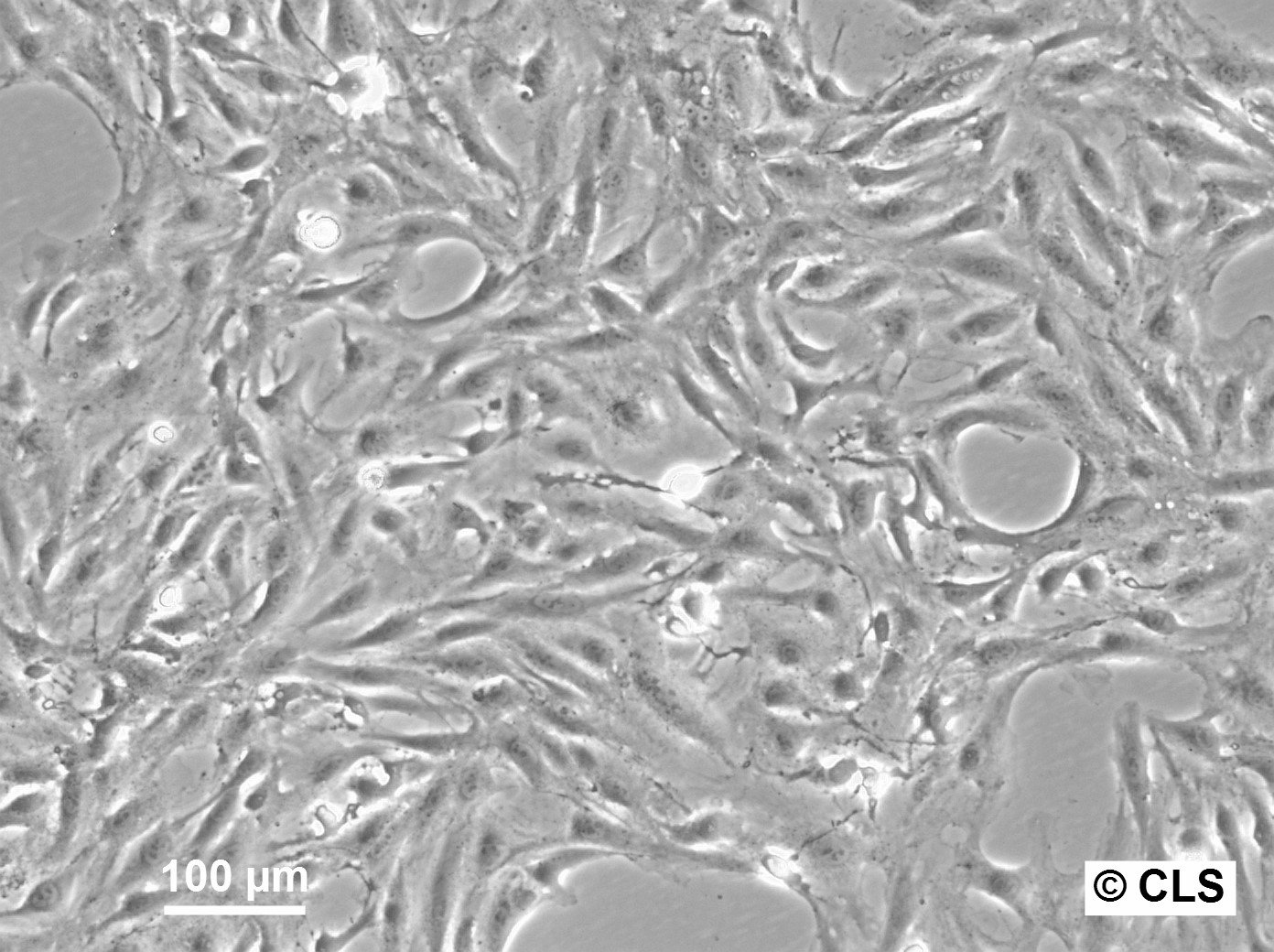

OK Cells
| Unit |
3 x 10^6 cells/ml |
|---|---|
| Cell Type |
Immortalized Cells |
| Tissue Type |
Opossum cell lines |
| Organism |
Opossum |
| Donor History | |
| Growth Properties |
Monolayer ,adherent |
| Growth Conditions |
Culture medium: EMEM (MEM Eagle) ,w: 2 mM L-Glutamine ,w: 2.2 g/L NaHCO3 ,w: EBSS (Cytion article number 820100a). Supplements: Supplement the medium with 10% FBS and 1% NEAA. Dissociation reagent: Accutase. Freeze medium: As a cryopreservation medium ,we use complete growth medium (including FBS) + 10% DMSO for adequate post-thaw viability ,or CM-1 (Cytion catalog number 800100) ,which includes optimized osmoprotectants and metabolic stabilizers to enhance recovery and reduce cryo-induced stress. Incubation atmosphere: 37°C ,5% CO2 ,humidified atmosphere. |
| Immortalization Method | |
| Full Information |

The OK cell line is a permanent epithelial-like cell culture derived from kidney tissue of an adult female American opossum (Didelphis virginiana). Established in vitro, this cell line is notable for its non-diploid chromosomal modal number of 23 and its adaptability to tissue culture conditions. Initially derived from mixed cell types, the culture evolved into predominantly epithelial cells after eight passages. The OK cell line has been extensively characterized in terms of morphology, chromosomal constitution, and growth dynamics, making it a robust model for cytogenetic and chromosome isolation studies.
One of the key features of the OK cell line is its utility in chromosome studies, especially for isolating the mammalian X chromosome. The opossum X chromosome is significantly smaller (approximately 30% smaller than the smallest autosomes) and does not contain large blocks of constitutive heterochromatin, facilitating separation from autosomes through techniques like flow microfluorometry and gradient centrifugation. The stable karyotype of the OK cells, with the presence of a distinctive metacentric marker chromosome, enhances their application in genomic and chromosomal studies. The paternal X chromosome’s preferential inactivation in this marsupial provides a comparative model for studying mechanisms underlying X-chromosome inactivation in mammals.
OK cells have also demonstrated resilience and adaptability in various culture conditions, including serum variations and different mitotic-arresting agents like Velban (vinblastine sulfate), which is particularly effective for achieving high mitotic indices for chromosome isolation. The cell line’s ability to synchronize and produce high yields of metaphase cells further underscores its suitability for detailed chromosomal analyses, including DNA content quantification and high-resolution imaging of chromosomal spreads.
Společnost Cytion vznikla v roce 2004 v německém Heidelbergu s jasným vědeckým posláním: dodávat ověřené lidské a zvířecí buněčné linie bez kontaminace, připravené za přísně kontrolovaných laboratorních podmínek.
Postupně se vypracovala ve spolehlivou buněčnou banku, která slouží akademickým laboratořím, biotechnologickým firmám i farmaceutickým výzkumným týmům po celém světě. Klade přitom důraz na reprodukovatelnost výsledků, přísnou kontrolu kvality a dlouhodobá partnerství.