
 Genetika člověka
 Mikrobiologické aplikace
 NGS
 Rapid testy

 PCR plasty
 Pipetovací špičky
 Plasty pro buněčnou kultivaci
 Systém pro dlouhodobé skladování vzorků
 Zkumavky

 Třepačky
 Suché lázně
 Centrifugy
 End Point cyclery
 Real-time PCR cyclery
 Fluorometry
 Spektrofotometry
 Izolátory nukleových kyselin
 Pipetovací roboty
 Biobanking
 Live Cell Imaging

 Jednokanálové
 Multikanálové
 Sérologické pipety
 Jednorázové pipety

 Buněčné kultury
 PCR, qPCR, RT
 Detekce Mycoplasmat
 Reverzní transkripce

 Alergie
 Intolerance
 Elisa
 Imunologické analyzátory
 Veterinární imunologie
 Alergie u zvířat
 Intolerance u zvířat

 Čtečky identifikačních čipů
 Termočipy
 Biochemie
 Imunoanalýza


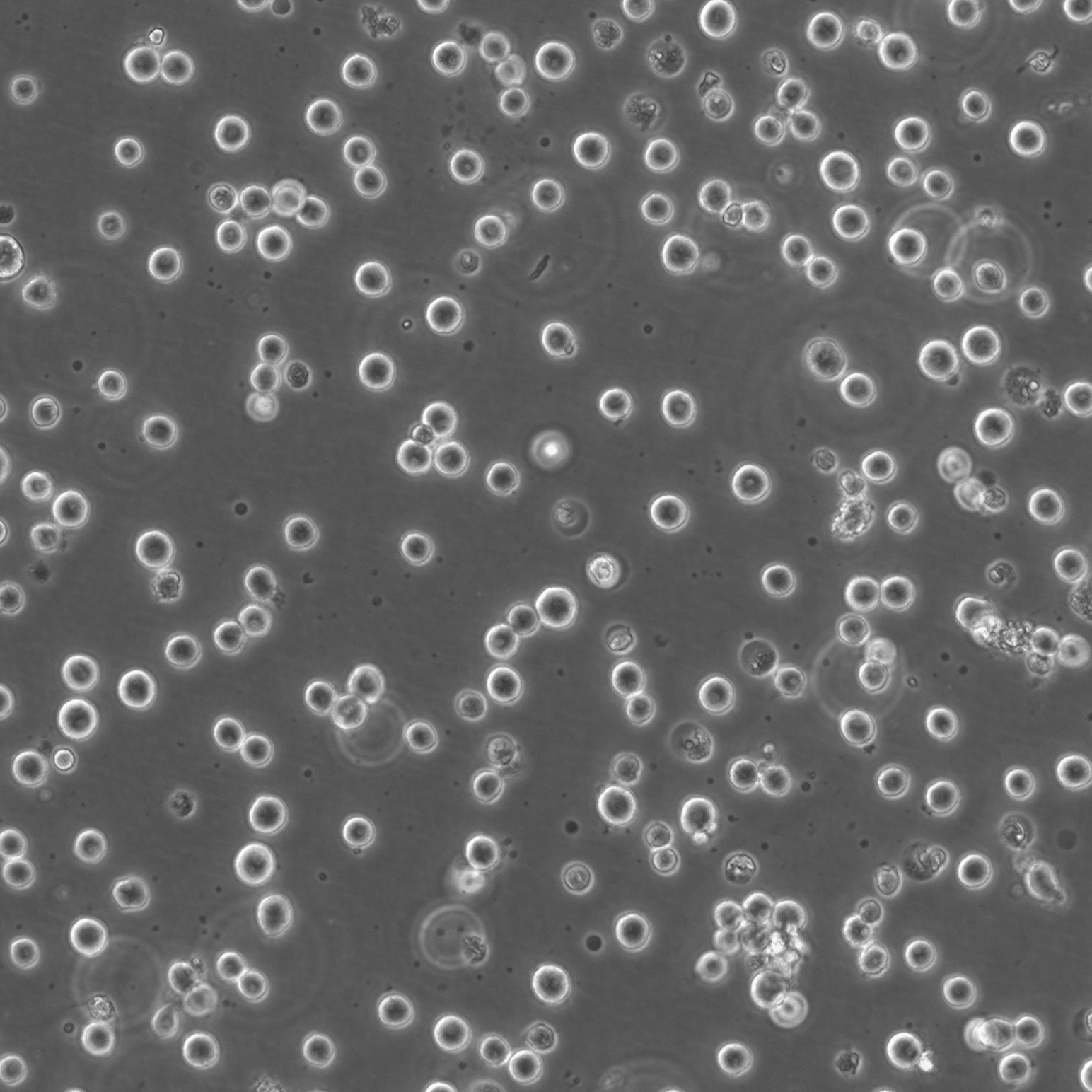

Pfeiffer Cells
| Unit |
5 x 10^6 cells/ml |
|---|---|
| Cell Type |
Tumor Cells |
| Tissue Type |
Lymphoma cell lines |
| Organism |
Human |
| Donor History |
Diffuse large B-cell lymphoma |
| Growth Properties |
Suspension |
| Growth Conditions |
Culture medium: RPMI 1640 ,w: 2.0 mM stable Glutamine ,w: 2.0 g/L NaHCO3 (Cytion article number 820700a). Supplements: Supplement the medium with 10% FBS. Seeding density: 2 to 10 x 10⁵ /ml. Freeze medium: As a cryopreservation medium ,we use complete growth medium + 10% DMSO for adequate post-thaw viability. Incubation atmosphere: 37°C ,5% CO2 ,humidified atmosphere. |
| Immortalization Method | |
| Full Information |

Pfeiffer is a human diffuse large B-cell lymphoma (DLBCL) cell line derived from the malignant lymphoid tissue of an adult patient. It represents a mature B-cell neoplasm and grows in suspension as single cells and small aggregates under standard culture conditions. Morphologically, Pfeiffer cells display features typical of large transformed B lymphocytes, including a high nuclear-to-cytoplasmic ratio, prominent nucleoli, and dispersed chromatin. The cell line expresses B-cell-associated surface markers, including CD19, CD20, CD22, and surface immunoglobulin, consistent with its origin from germinal center or post-germinal center B cells.
At the molecular level, Pfeiffer cells harbor genetic alterations characteristic of aggressive B-cell lymphomas. These commonly include abnormalities affecting key oncogenic pathways such as BCL6 deregulation and alterations in signaling cascades involved in proliferation and survival, including NF-κB and PI3K/AKT pathways. Like many DLBCL models, Pfeiffer exhibits complex karyotypic changes and somatic mutations in genes frequently implicated in lymphomagenesis. The cell line has been included in large-scale genomic and pharmacogenomic profiling efforts, supporting its use as a representative model for studying the genetic heterogeneity and therapeutic vulnerabilities of DLBCL.
Functionally, Pfeiffer is widely used to investigate mechanisms of B-cell receptor signaling, antibody-dependent cellular cytotoxicity (ADCC), and responses to targeted agents such as anti-CD20 monoclonal antibodies, kinase inhibitors, and epigenetic modulators. Its robust CD20 expression makes it a suitable in vitro model for evaluating rituximab-mediated immune effector functions. Consequently, Pfeiffer serves as a valuable experimental system for dissecting molecular drivers of aggressive B-cell lymphoma and for preclinical testing of novel immunotherapeutic and small-molecule strategies.
Společnost Cytion vznikla v roce 2004 v německém Heidelbergu s jasným vědeckým posláním: dodávat ověřené lidské a zvířecí buněčné linie bez kontaminace, připravené za přísně kontrolovaných laboratorních podmínek.
Postupně se vypracovala ve spolehlivou buněčnou banku, která slouží akademickým laboratořím, biotechnologickým firmám i farmaceutickým výzkumným týmům po celém světě. Klade přitom důraz na reprodukovatelnost výsledků, přísnou kontrolu kvality a dlouhodobá partnerství.