Genetika člověka
 Mikrobiologické aplikace
 NGS
 Rapid testy

 PCR plasty
 Pipetovací špičky
 Plasty pro buněčnou kultivaci
 Systém pro dlouhodobé skladování vzorků
 Zkumavky

 Třepačky
 Suché lázně
 Centrifugy
 End Point cyclery
 Real-time PCR cyclery
 Fluorometry
 Spektrofotometry
 Izolátory nukleových kyselin
 Pipetovací roboty
 Biobanking
 Live Cell Imaging

 Jednokanálové
 Multikanálové
 Sérologické pipety
 Jednorázové pipety

 Buněčné kultury
 PCR, qPCR, RT
 Detekce Mycoplasmat
 Reverzní transkripce

 Alergie
 Intolerance
 Elisa
 Imunologické analyzátory
 Veterinární imunologie
 Alergie u zvířat
 Intolerance u zvířat

 Čtečky identifikačních čipů
 Termočipy
 Biochemie
 Imunoanalýza


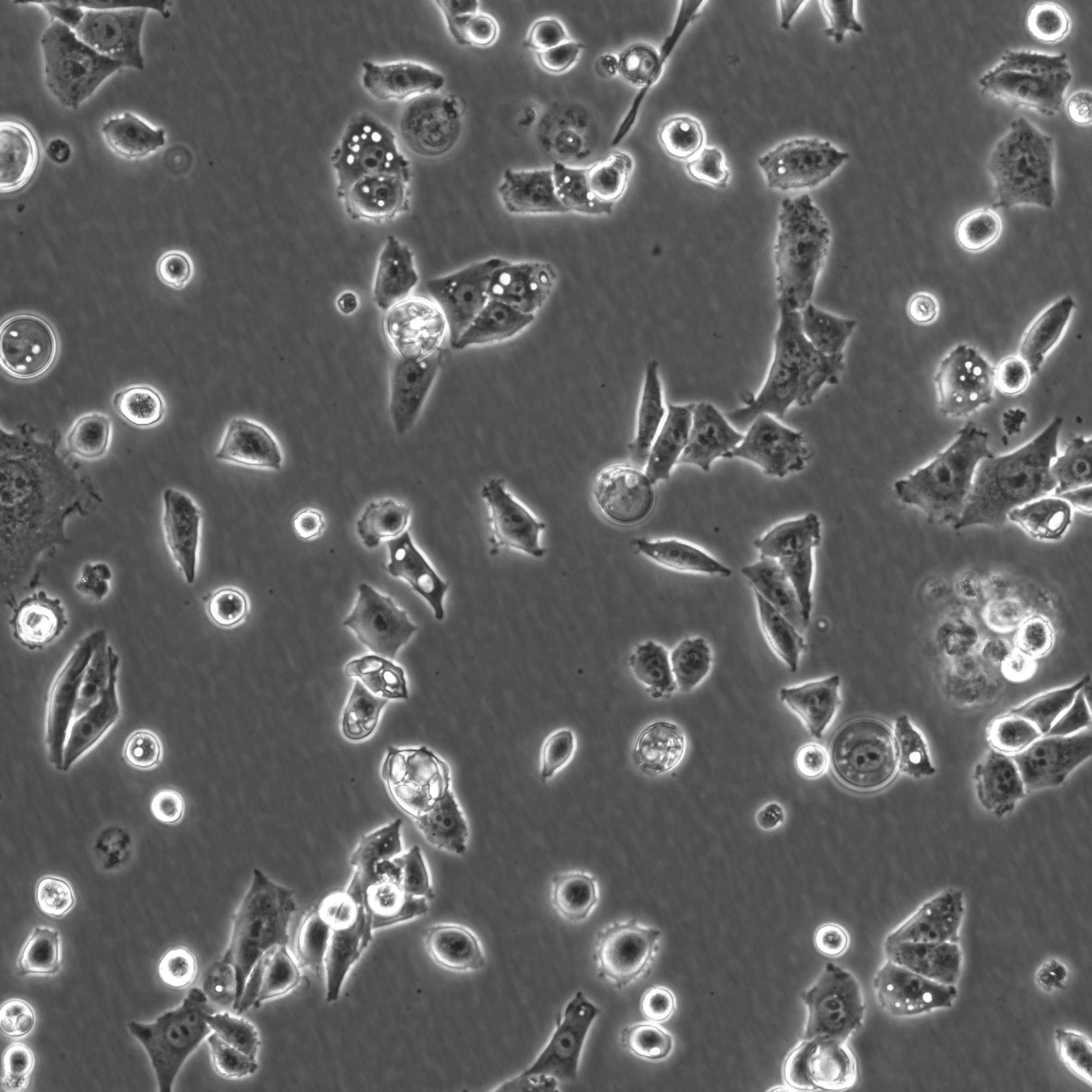

PY8119-GFP
| Unit |
3 x 10^6 cells/ml |
|---|---|
| Cell Type |
Stable (KO/Expressing) Cells |
| Tissue Type |
Mouse cell lines ,Reporter-labeled cells |
| Organism |
Mouse |
| Donor History |
Malignant neoplasms of the mouse mammary gland |
| Growth Properties |
Adherent |
| Growth Conditions |
Culture medium: DMEM ,w: 4.5 g/L Glucose ,w: 4 mM L-Glutamine ,w: 3.7 g/L NaHCO3 ,w: 1.0 mM Sodium pyruvate (Cytion article number 820300a). Supplements: Supplement the medium with 10% FBS. Seeding density: 1.5-4 X 10⁴ cells/cm². Freeze medium: As a cryopreservation medium ,we use complete growth medium + 10% DMSO for adequate post-thaw viability. Incubation atmosphere: 37°C ,5% CO2 ,humidified atmosphere. |
| Immortalization Method | |
| Full Information |

PY8119-GFP cells are a fluorescently labeled derivative of the murine PY8119 breast cancer cell line, which originates from a spontaneous mammary tumor in a mouse model. The parental PY8119 line is commonly associated with genetically engineered mouse models of breast cancer and is used to study tumor progression, immune interactions, and therapeutic responses in a syngeneic context. Stable expression of green fluorescent protein (GFP) enables direct visualization of tumor cell behavior, facilitating real-time tracking of proliferation, migration, and cellular interactions both in vitro and in vivo.
The GFP modification makes PY8119-GFP cells particularly well suited for applications such as live-cell imaging, intravital microscopy, and metastasis studies in immunocompetent mouse models. These cells retain key characteristics of the parental line, including aggressive growth and the ability to form tumors when implanted into syngeneic hosts. As a result, PY8119-GFP cells are widely used to investigate tumor–immune system dynamics, evaluate anti-cancer therapies, and study mechanisms of invasion and dissemination. However, as with all fluorescently modified lines, careful validation is recommended to ensure that GFP expression does not alter baseline cellular behavior.
Genetic modification: Stably modified by replication-incompetent lentiviral transduction to express the ZsGreen1 green fluorescent protein reporter; maintained as a polyclonal population under puromycin selection (1–5 µg/mL). S1/BSL-1 containment.
Společnost Cytion vznikla v roce 2004 v německém Heidelbergu s jasným vědeckým posláním: dodávat ověřené lidské a zvířecí buněčné linie bez kontaminace, připravené za přísně kontrolovaných laboratorních podmínek.
Postupně se vypracovala ve spolehlivou buněčnou banku, která slouží akademickým laboratořím, biotechnologickým firmám i farmaceutickým výzkumným týmům po celém světě. Klade přitom důraz na reprodukovatelnost výsledků, přísnou kontrolu kvality a dlouhodobá partnerství.