Genetika člověka
 Mikrobiologické aplikace
 NGS
 Rapid testy

 PCR plasty
 Pipetovací špičky
 Plasty pro buněčnou kultivaci
 Systém pro dlouhodobé skladování vzorků
 Zkumavky

 Třepačky
 Suché lázně
 Centrifugy
 End Point cyclery
 Real-time PCR cyclery
 Fluorometry
 Spektrofotometry
 Izolátory nukleových kyselin
 Pipetovací roboty
 Biobanking
 Live Cell Imaging

 Jednokanálové
 Multikanálové
 Sérologické pipety
 Jednorázové pipety

 Buněčné kultury
 PCR, qPCR, RT
 Detekce Mycoplasmat
 Reverzní transkripce

 Alergie
 Intolerance
 Elisa
 Imunologické analyzátory
 Veterinární imunologie
 Alergie u zvířat
 Intolerance u zvířat

 Čtečky identifikačních čipů
 Termočipy
 Biochemie
 Imunoanalýza


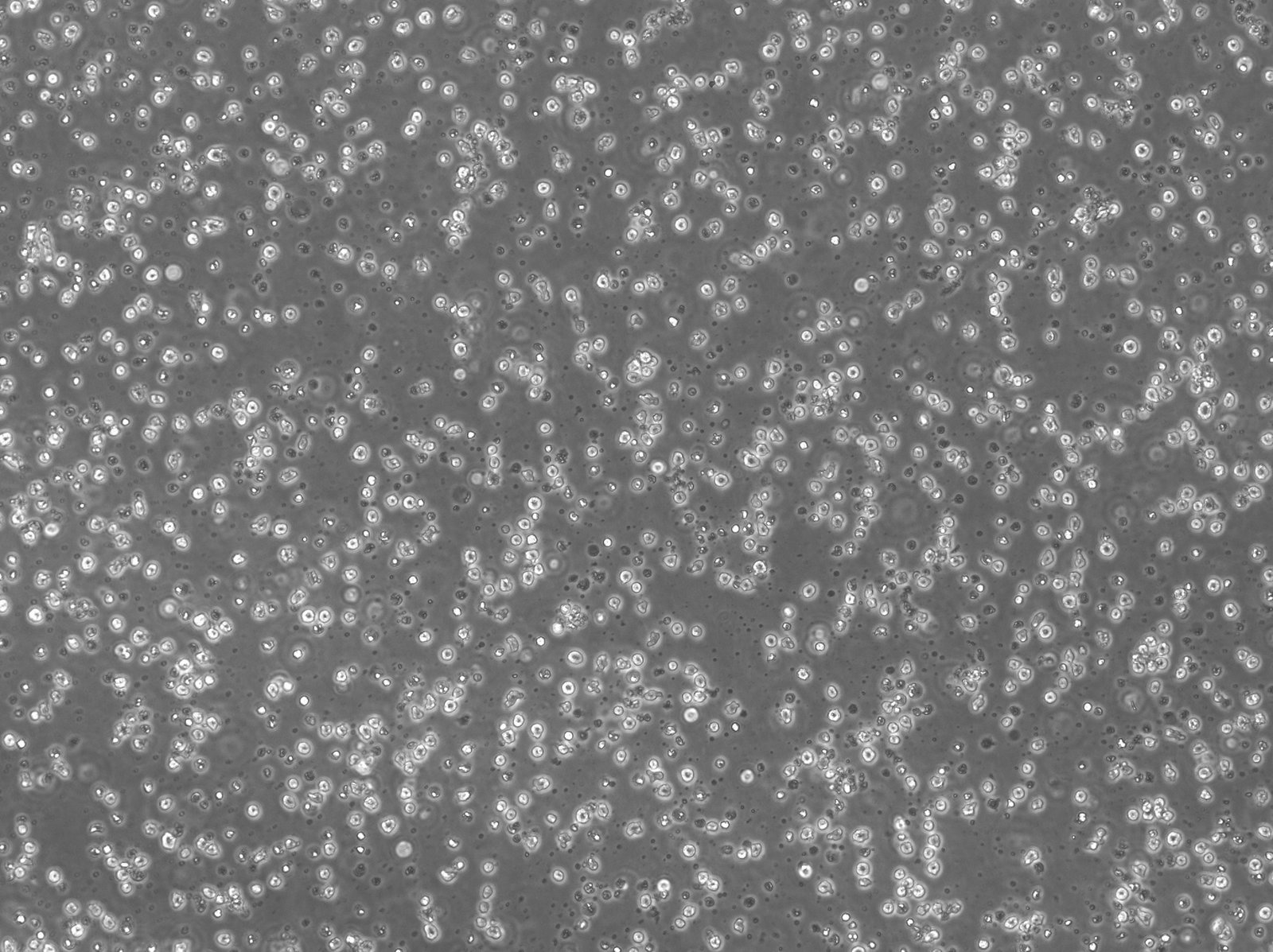

RS4:11 Cells
| Unit |
5 x 10^6 cells/ml |
|---|---|
| Cell Type |
Tumor Cells |
| Tissue Type |
Leukemia cell lines |
| Organism |
Human |
| Donor History |
Adult B acute lymphoblastic leukemia |
| Growth Properties |
Suspension |
| Growth Conditions |
Culture medium: RPMI 1640 ,w: 2 ,1 mM stabiles Glutamin ,w: 2 ,0 g/L NaHCO3 Medium (Cytion 820700a). Supplements: Supplement the medium with 10% heat-inactivated FBS. Seeding density: Seed cultures at 3-5 x 10⁵ cells/mL. Freeze medium: As a cryopreservation medium ,we use complete growth medium (including FBS) + 10% DMSO for adequate post-thaw viability ,or CM-1 (Cytion catalog number 800100) ,which includes optimized osmoprotectants and metabolic stabilizers to enhance recovery and reduce cryo-induced stress. Incubation atmosphere: 37°C ,5% CO2 ,humidified atmosphere. |
| Immortalization Method | |
| Full Information |

The RS4:11 cell line is derived from a 32-year-old female patient with relapsed acute lymphoblastic leukemia (ALL) characterized by the t(4:11)(q21:q23) chromosomal translocation. This translocation results in the formation of the **KMT2A-AFF1 (formerly MLL-AF4)** fusion gene, which is a hallmark of this leukemia subtype. RS4:11 cells exhibit a biphenotypic profile, co-expressing both B-cell and monocytic markers, reflecting the mixed-lineage characteristics associated with this genetic rearrangement. The cell line is widely used as a model for understanding the biology of KMT2A-rearranged leukemias, which are associated with aggressive disease and poor prognosis.
RS4:11 cells display features typical of pre-B lymphoblasts, including expression of markers such as CD19, HLA-DR, and terminal deoxynucleotidyl transferase (TdT), along with rearranged immunoglobulin heavy and light chain genes. Interestingly, upon treatment with differentiation-inducing agents like phorbol esters, RS4:11 cells adopt a monocyte-like phenotype, highlighting their lineage plasticity. This characteristic makes the cell line particularly valuable for studying the molecular drivers of differentiation and lineage commitment in leukemia.
Genetically, the t(4:11) translocation disrupts the **KMT2A gene at 11q23**, fusing it with **AFF1 (AF4)** on 4q21, leading to a chimeric protein that aberrantly regulates gene expression, including Hox genes involved in hematopoietic development. RS4:11 cells have also been used to study secondary mutations, such as those in **FLT3**, which contribute to leukemogenesis and treatment resistance. The cell line serves as a robust preclinical model for testing targeted therapies, including inhibitors of the KMT2A-AFF1 interaction and agents aimed at associated signaling pathways.
Společnost Cytion vznikla v roce 2004 v německém Heidelbergu s jasným vědeckým posláním: dodávat ověřené lidské a zvířecí buněčné linie bez kontaminace, připravené za přísně kontrolovaných laboratorních podmínek.
Postupně se vypracovala ve spolehlivou buněčnou banku, která slouží akademickým laboratořím, biotechnologickým firmám i farmaceutickým výzkumným týmům po celém světě. Klade přitom důraz na reprodukovatelnost výsledků, přísnou kontrolu kvality a dlouhodobá partnerství.