
 Genetika člověka
 Mikrobiologické aplikace
 NGS
 Rapid testy

 PCR plasty
 Pipetovací špičky
 Plasty pro buněčnou kultivaci
 Systém pro dlouhodobé skladování vzorků
 Zkumavky

 Třepačky
 Suché lázně
 Centrifugy
 End Point cyclery
 Real-time PCR cyclery
 Fluorometry
 Spektrofotometry
 Izolátory nukleových kyselin
 Pipetovací roboty
 Biobanking
 Live Cell Imaging

 Jednokanálové
 Multikanálové
 Sérologické pipety
 Jednorázové pipety

 Buněčné kultury
 PCR, qPCR, RT
 Detekce Mycoplasmat
 Reverzní transkripce

 Alergie
 Intolerance
 Elisa
 Imunologické analyzátory
 Veterinární imunologie
 Alergie u zvířat
 Intolerance u zvířat

 Čtečky identifikačních čipů
 Termočipy
 Biochemie
 Imunoanalýza


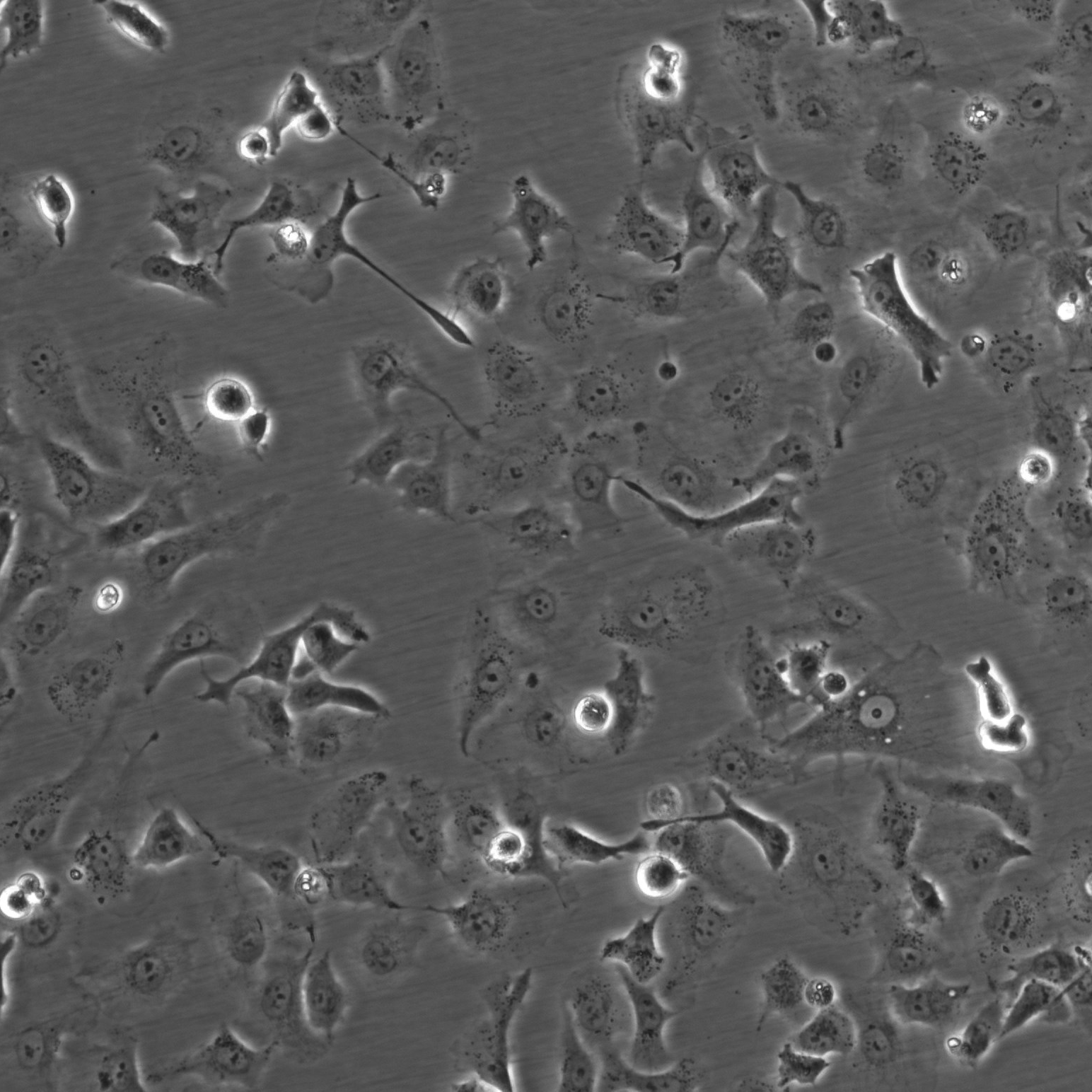

TOV-21G Cells
| Unit |
3 x 10^6 cells/ml |
|---|---|
| Cell Type |
Tumor Cells |
| Tissue Type |
Reproductive system cancer cell lines |
| Organism |
Human |
| Donor History |
Clear cell adenocarcinoma of the ovary |
| Growth Properties |
Adherent |
| Growth Conditions |
Culture medium: RPMI 1640 ,w: 2.0 mM stable Glutamine ,w: 2.0 g/L NaHCO3 (Cytion article number 820700a). Supplements: Supplement the medium with 15% FBS. Dissociation reagent: Accutase. Seeding density: 1 to 3 x 10⁴ cells/cm². Freeze medium: As a cryopreservation medium ,we use complete growth medium + 10% DMSO for adequate post-thaw viability. Incubation atmosphere: 37°C ,5% CO2 ,humidified atmosphere. |
| Immortalization Method | |
| Full Information |

TOV-21G is a human epithelial ovarian cancer cell line derived from a primary clear cell carcinoma tumor obtained from an adult patient who had not received prior chemotherapy or radiation treatment. The cell line was established as part of a panel of spontaneously immortalized ovarian cancer models that retain many biological characteristics of the original tumors from which they were derived. TOV-21G grows as an adherent epithelial monolayer in culture and exhibits morphological and molecular features consistent with clear cell ovarian carcinoma, a distinct histological subtype of epithelial ovarian cancer characterized by aggressive clinical behavior and unique molecular alterations.
Molecular and genomic analyses of ovarian cancer cell line panels have demonstrated that TOV-21G contains alterations in genes and pathways commonly implicated in ovarian tumorigenesis, including mutations affecting tumor suppressor and cell cycle regulatory pathways. Comparative gene expression profiling using high-density microarrays has shown that TOV-21G displays transcriptional patterns that clearly distinguish it from normal ovarian surface epithelial cells and align more closely with profiles observed in aggressive epithelial ovarian tumors. These analyses highlight dysregulation of numerous genes involved in proliferation, cellular signaling, and tumor progression, supporting the relevance of TOV-21G as a model for studying ovarian cancer biology.
Functional studies using TOV-21G have demonstrated pronounced neoplastic properties, including anchorage-independent growth, invasive behavior, and tumorigenic potential in experimental systems. Chromosomal and genomic investigations further indicate that introduction of specific normal chromosomes, such as chromosomes 6 or 18, can suppress aspects of the malignant phenotype, suggesting the presence of tumor suppressor loci affecting ovarian cancer progression. These properties make TOV-21G a valuable experimental model for investigating mechanisms of ovarian carcinogenesis, tumor suppressor gene function, and the evaluation of targeted therapeutic strategies for clear cell ovarian cancer.
Společnost Cytion vznikla v roce 2004 v německém Heidelbergu s jasným vědeckým posláním: dodávat ověřené lidské a zvířecí buněčné linie bez kontaminace, připravené za přísně kontrolovaných laboratorních podmínek.
Postupně se vypracovala ve spolehlivou buněčnou banku, která slouží akademickým laboratořím, biotechnologickým firmám i farmaceutickým výzkumným týmům po celém světě. Klade přitom důraz na reprodukovatelnost výsledků, přísnou kontrolu kvality a dlouhodobá partnerství.